TCL TV Warranty Claim Denied: What TCL’s Own Policy Actually Says About Your Case
Last updated: August 2026
🕒 8 min read
Disclosure: GearPulse360 is a participant in the Amazon Associates Program. Some pages on this site contain affiliate links, and we may earn a commission from qualifying purchases at no extra cost to you.
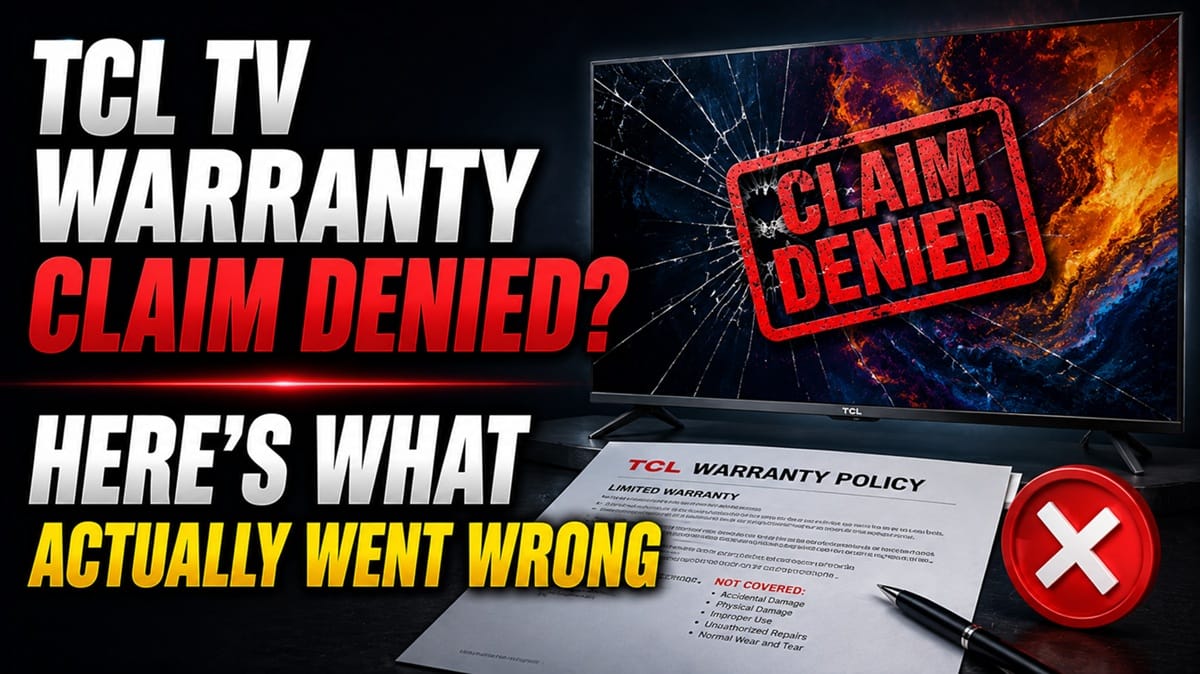
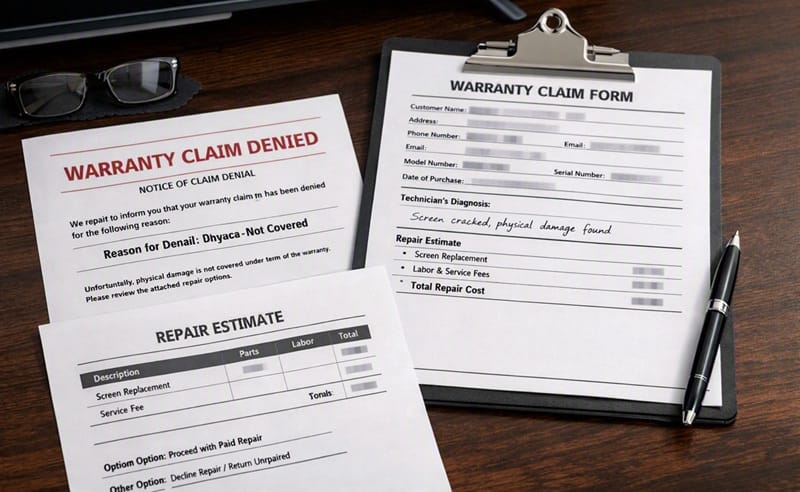
TCL’s warranty document runs about a page long, and its language is plain: defects in materials or workmanship are covered for the original owner. A denial notice rarely matches that language — it’s usually a short line like “not covered under warranty terms,” with nothing telling you which clause on that page applied.
If your TCL TV warranty claim was denied, you’re probably trying to figure out whether that’s the end of it or whether it’s worth pushing back. Not every screen failure counts as a covered defect — that assumption is what trips up most denied claims — but a genuine defect getting misclassified as customer damage happens too, and the difference usually comes down to documentation TCL already has on file.
The gap that trips most people up is that TCL’s denial notice and TCL’s actual policy text are two different documents — the notice tells you a decision, not the reasoning, and that reasoning is what determines whether pushing back is worth the effort. Backlight failures get their own section below because they’re the case most likely to look like customer damage when they’re not, and RTINGS’ testing on how these panels actually fail explains why. A different symptom — dead or stuck pixels — runs on a separate set of warranty rules entirely, covered in our guide to TCL TV dead stuck pixel out of the box.
Table of Contents
The Short Answer: Why TCL TV Warranty Claims Get Denied
Most TCL TV warranty claim denials come down to one of three things: TCL’s inspection classified the damage as customer-caused rather than a manufacturing defect, the paperwork (proof of purchase, serial number, service pre-authorization) was incomplete, or the unit fell outside the coverage window or use category. Which one applied determines whether an appeal has a real chance.
What TCL’s Warranty Actually Covers
Coverage Window and Who Qualifies
Based on TCL’s official North America warranty documentation, standard coverage runs one year from the purchase date for parts and labor on non-commercial use, or six months for commercial use. Some current-generation model lines carry longer terms under separate model-specific warranty statements — check your unit’s own documentation rather than assume the standard window applies.
Coverage applies only to the original owner, purchased new from an authorized dealer in the United States. TCL confirms this against the dealer name and purchase date on your receipt, so a unit bought used, as-is, refurbished, or from an unauthorized seller gets rejected at that check — before the TV itself is ever inspected.
What Counts as a Defect vs. What Doesn’t
TCL’s documentation covers defects in materials or workmanship, and explicitly excludes damage from misuse, abuse, neglect, mishandling, power surges, improper installation, and normal wear and tear. It also excludes damage from improper packaging during return shipping. TCL provides packing instructions with the prepaid shipping label, and a claim can still get denied if the unit arrives at the service center damaged in a way that doesn’t match the problem originally reported.
Why Claims Get Denied in Practice
The Most Common Denial Reasons
Three patterns show up repeatedly. First, the required phone or email troubleshooting step wasn’t completed before service was requested — TCL’s warranty requires a representative to review the issue first, and skipping that step stalls the claim before it starts. Second, proof of purchase was missing or didn’t clearly show the dealer, date, and model/serial number. Third, TCL’s inspection attributed the damage to an external cause rather than a manufacturing defect.
That third reason is also the hardest to settle, because a cracked panel from a drop and a panel crack from internal stress during a defect-driven failure can leave a similar-looking mark. TCL’s service centers are weighing physical evidence at that point, not taking either side’s word for it. It also helps to rule out a software problem before filing a hardware claim at all — a TV that’s frozen or stuck in a reboot loop can look like a dying panel from the outside, but it’s a different fault with a different fix, covered separately in our guide to TCL Google TV freezing or stuck in a reboot loop.
Backlight Failure Claims Specifically
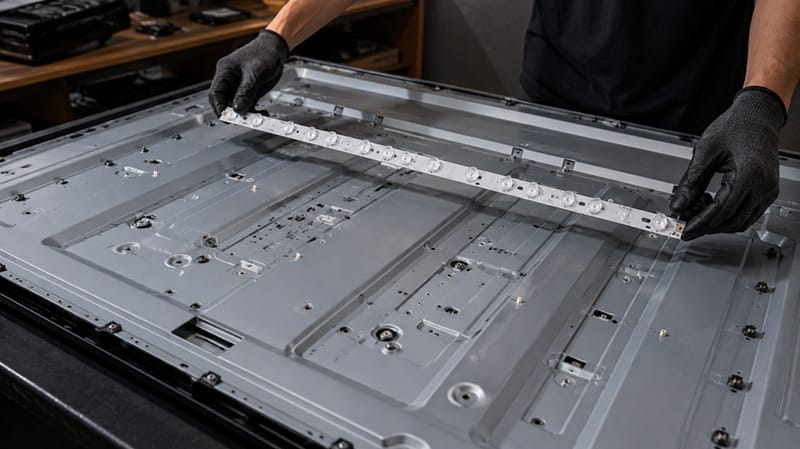
Backlight failures are common enough among TCL warranty disputes to deserve their own breakdown. According to RTINGS’ accelerated longevity testing, LED backlights are typically wired in series or paired zones, so a single failed LED can take out an entire row or zone rather than one point on the screen. In several of RTINGS’ documented failures, one dead LED was enough to trigger the TV’s internal protection mode and stop it from powering on at all — which can look far more catastrophic than the single component actually driving it.
That mechanism matters for a warranty claim because it explains why a backlight failure can look sudden and severe even when the root cause is one small manufacturing defect. TCL’s service inspection checks whether the failure pattern points to a defect (a cascading LED failure, a light guide plate crack from internal stress) or an external cause (impact damage, liquid exposure, a modified unit). Photos of the failure pattern, plus a clear timeline of when it started, strengthen a defect claim; a unit showing signs of physical impact or an altered serial number gets denied regardless of anything else.
TCL isn’t an outlier on backlight durability. Of the ten TCL models RTINGS included in its multi-year longevity test, only one — the S546 2021 QLED — failed outright over more than 10,000 hours of accelerated use, which points to backlight defect claims being real but uncommon, not a sign of a systemic problem with TCL panels.
If TCL’s inspection findings don’t match what you can see on the panel yourself, that’s a real reason to escalate rather than accept the first answer. A single denied claim is one data point, not a verdict on the brand — our best 4K TVs of 2026 roundup tracks how TCL, Samsung, Hisense, and LG compare on longevity and support history side by side, useful context whether you’re sticking with this set or shopping around later.
What to Do If You Think a Denial Was Wrong
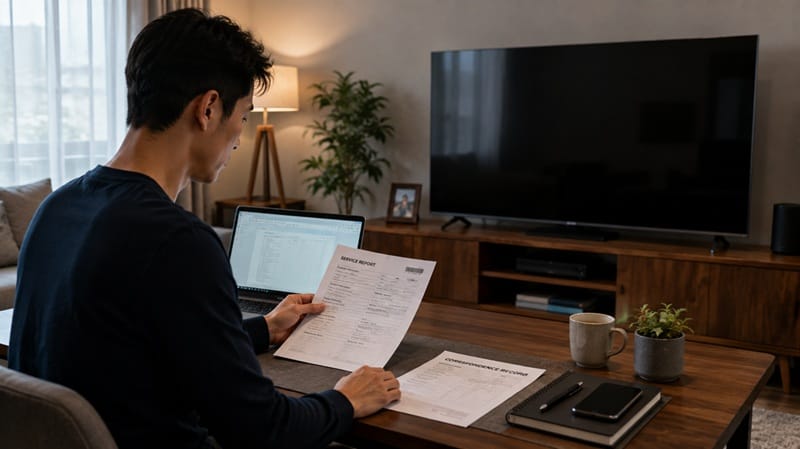
Start by asking TCL support, in writing, exactly which warranty clause applied to the denial — email creates a paper trail that a phone call doesn’t. Request the specific inspection notes if a technician examined the unit; TCL’s service centers document what they found, and that documentation is the strongest tool for a legitimate appeal.
If the denial cites “customer damage” and you have no reason to believe the unit was mishandled, ask for photo or written evidence behind that classification. Keep your original proof of purchase, all service correspondence, and photos of the issue from the day it appeared — timestamped photos carry more weight than a description written weeks later. An appeal isn’t guaranteed to succeed, but a documented one has a real chance where an undocumented complaint usually doesn’t.
What This Means for You in Practice
Who Should Pay Attention to This
Anyone whose TCL TV developed a hardware issue within the coverage window — backlight failure, dead sections of the screen, or a unit that won’t power on — should read TCL’s warranty terms before treating a denial as final. This matters most if you’re still deciding between repair, exchange, or replacement, since the right path depends on which failure category applies. If you’re weighing TCL’s Mini-LED lineup against OLED as part of that decision, our OLED vs Mini LED compared breakdown covers how the two hold up on picture quality and long-term durability.
Getting the claim approved is only half the process. If TCL sends a technician out and the set develops a new symptom shortly after — shutting off on its own with no clear trigger — that’s worth troubleshooting separately from the original denial. Our guide to TCL TV randomly turns off after warranty repair walks through how to tell a leftover settings reset from a repair that didn’t fully take.
Who Doesn’t Need to Worry
If your TV is well outside the one-year (or model-specific) coverage window, or you’re dealing with a cosmetic issue like scratches or minor wear, warranty coverage was never going to apply regardless of documentation — that’s a repair-cost decision, not a claims dispute. The same goes for units bought used or from an unauthorized reseller; the warranty conversation doesn’t apply there at all.
FAQs: TCL TV Warranty Claim Denied
Why was my TCL TV warranty claim denied even though it stopped working on its own?
A “stopped working on its own” description doesn’t automatically confirm a manufacturing defect from TCL’s side — the service inspection checks for physical evidence of impact, liquid exposure, or an altered unit before attributing the failure to a defect. According to RTINGS’ longevity testing data, backlight and LED failures are a documented, real failure mode across LCD TV brands generally, so a denial without a clear external cause is worth challenging in writing.
Does TCL’s warranty cover accidental damage?
No. TCL’s documentation explicitly excludes damage from misuse, abuse, neglect, mishandling, and improper installation. Accidental damage — drops, spills, impacts — falls outside standard warranty coverage no matter how recently the TV was purchased.
How long do I have to file a TCL warranty claim?
Standard non-commercial coverage runs one year from the original purchase date for most model lines, though some current-generation TCL TVs carry longer model-specific terms. The clock starts at purchase, not delivery or first use, so check the date on your original receipt rather than estimate from memory.
Does where I bought my TCL TV affect whether the warranty holds up?
Yes. TCL’s warranty applies only to units purchased new from an authorized dealer — a private resale, an unauthorized third-party seller, or a unit bought outside the US voids coverage entirely, regardless of the TV’s physical condition. Our guide on whether where you buy a TV affects your warranty covers this in more depth if you’re not sure your purchase source qualifies.
Is it worth buying an extended warranty if TCL’s standard coverage is this easy to get denied?
It depends on what the denial risk looks like for your situation. Extended coverage doesn’t change how TCL evaluates defect versus damage, but it can stretch the window and, depending on the provider, add a separate appeals process. That’s a cost-versus-risk call specific to your TV and how you use it, not something with one universal answer.

iYaiii
Editor, GearPulse360
iYaiii is the editor and founder of GearPulse360, specializing in TV reviews and consumer electronics. He researches every recommendation before publishing.
✅ Based on TCL’s official warranty documentation and RTINGS data — last verified August 2026