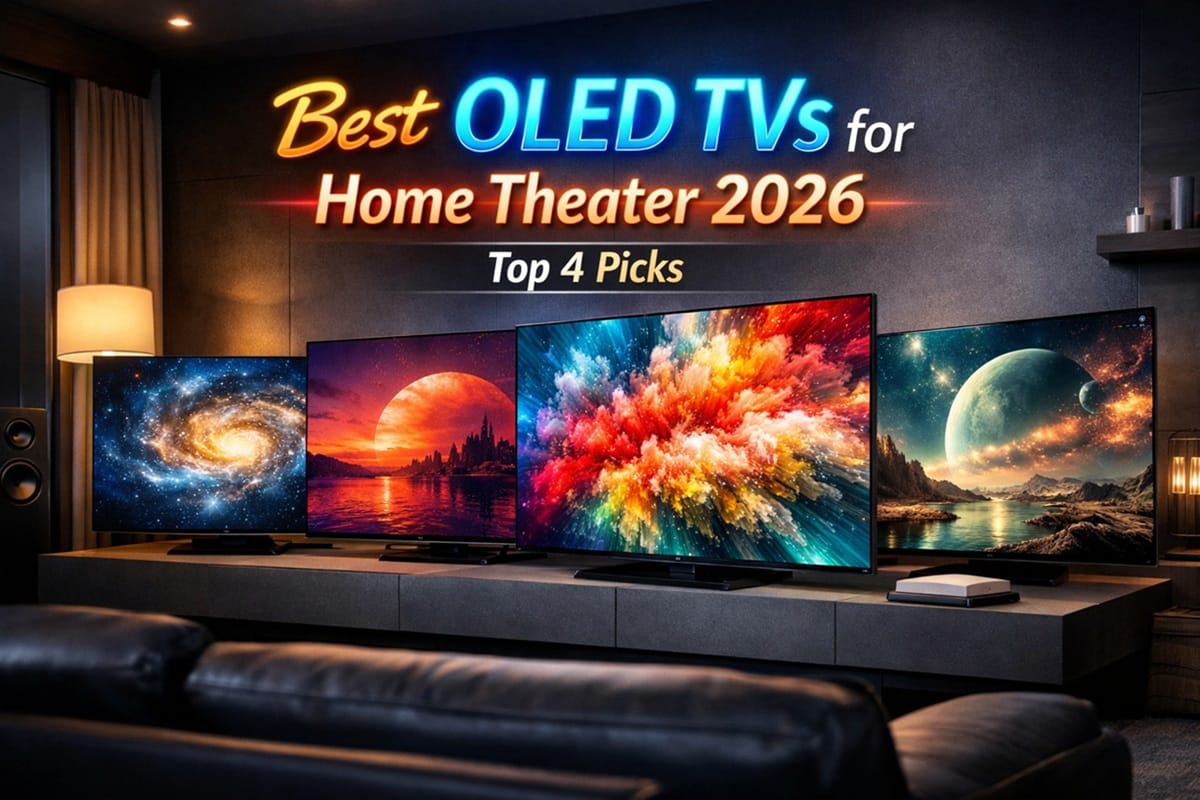
Best OLED TVs for Home Theater in 2026: Top Picks for Dedicated Rooms
Last updated: June 2026 | 🕒 10 min read
Disclosure: As an Amazon Associate I earn from qualifying purchases. This article contains affiliate links — we may earn a small commission if you buy through them, at no extra cost to you.
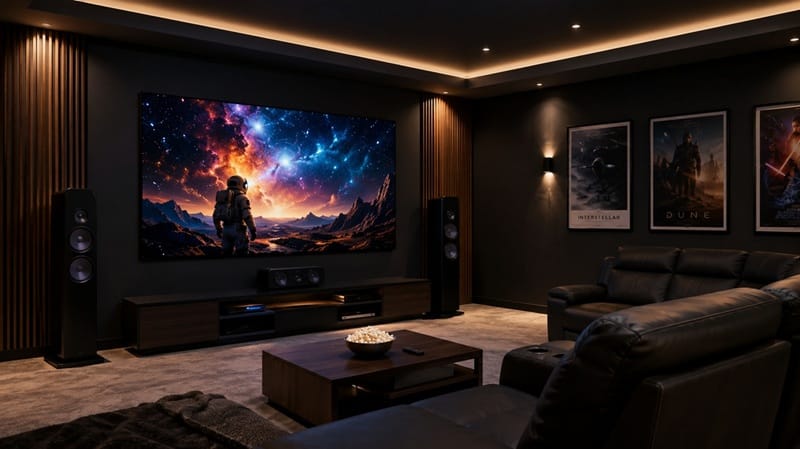
A dedicated theater room changes the math on which OLED actually makes sense. Once the lights go down and stay down, the brightness war that dominates most TV buying guides matters a lot less than contrast, color accuracy, and how the panel handles 24fps film motion. That’s the best OLED TV for home theater question this guide answers — not which panel is brightest, but which one disappears into the picture once your room is dark.
We cross-checked official spec sheets across the current LG and Samsung OLED lineups, prioritizing contrast and out-of-the-box accuracy over the peak-brightness numbers that matter more for sunlit living rooms. Our overall pick is the LG C5, with a more affordable QD-OLED option, a flagship step-up, and a larger-screen pick rounding out the list below.
Table of Contents
Best OLED TVs for Home Theater: Quick Comparison
| Pick | Model | Panel | Best For | Price |
|---|---|---|---|---|
| Best overall | LG C5 (65″) | WOLED | Accurate picture out of the box | Amazon ↗ |
| Best value | Samsung S85F (65″) | QD-OLED | Budget QD-OLED contrast | Amazon ↗ |
| Best premium | LG G5 (65″) | WOLED | Reference-grade picture, no compromises | Amazon ↗ |
| Best for large rooms | LG G5 (77″) | WOLED | Filling a bigger wall without losing contrast | Amazon ↗ |
↻ Prices change frequently — click through for current pricing.
✓ Picks reflect our independent editorial assessment, not Amazon customer ratings.
Best Overall OLED TV for Home Theater: LG C5
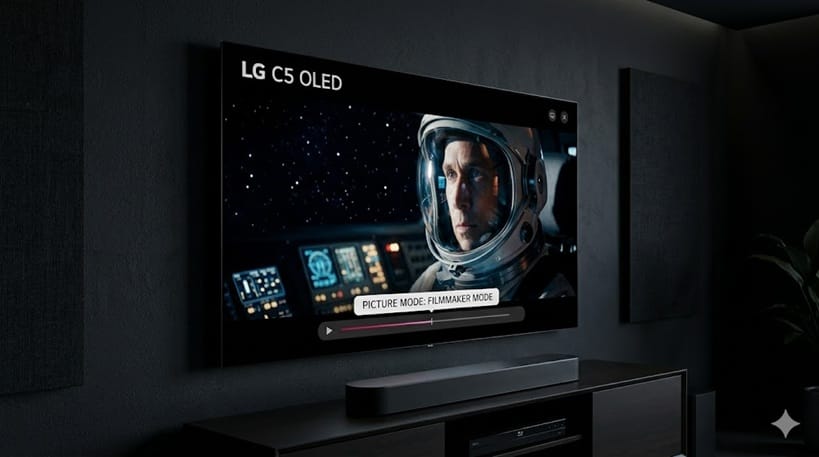
For a dedicated theater room, the C5's case is simple: Filmmaker Mode and out-of-the-box color accuracy matter more here than the extra brightness headroom LG's flagship tier carries, based on how LG positions Filmmaker Mode across its 2025 lineup. WOLED's wide viewing angle also matters in a room built around a couch row rather than a single seat — off-axis viewers lose far less color shift than they would on a typical LCD panel.
Best Value OLED TV for Home Theater: Samsung S85F
The S85F sacrifices peak brightness and a faster refresh-rate ceiling compared to Samsung's higher tiers, but a controlled-light theater room is exactly where that trade-off costs you the least. Its QD-OLED panel still produces the same fundamental contrast advantage over LED-based TVs — black levels don't depend on which tier of the lineup you bought.
Best Premium OLED TV for Home Theater: LG G5
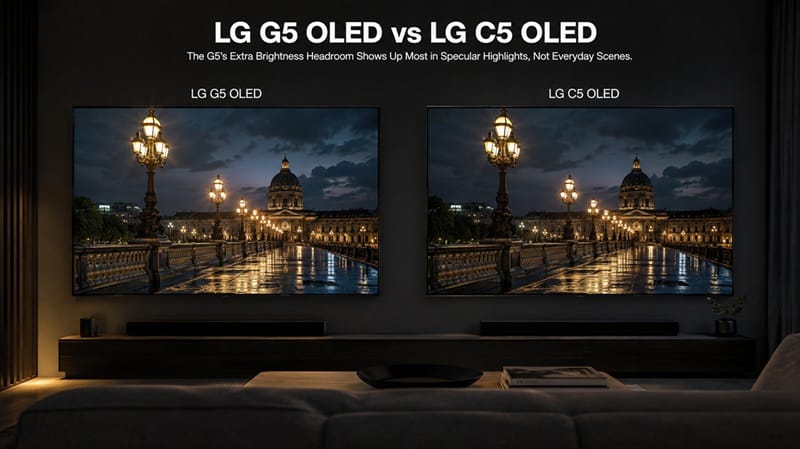
In a fully dark room, the G5's extra brightness headroom over the C5 shows up less in everyday scenes and more in how specular highlights — a streetlamp, a muzzle flash, sunlight through a window — punch through without blooming. If that ceiling matters to you, it's a real step up; if it doesn't, the C5 above gets you most of the way there for less.
Best OLED TV for Large Home Theater Rooms: LG G5 77"
Bigger rooms usually mean a longer throw from seat to screen, which is exactly where a 77" panel earns its size — you get the scale without sitting close enough for individual pixels or panel uniformity issues to become visible. If 77" is the size range you're locked into regardless of brand, our best 77-inch OLED TVs roundup compares more options at that size. The trade-off here is mostly cost and the practical challenge of getting a panel this size into the room.
Beyond size and brightness tier, how you weigh these four picks depends partly on which underlying panel technology you're more comfortable trading off against — our OLED vs Mini LED compared guide walks through that broader trade-off if you're not fully set on OLED yet.
What to Look for in an OLED TV for Home Theater
Native Contrast Over Peak Brightness
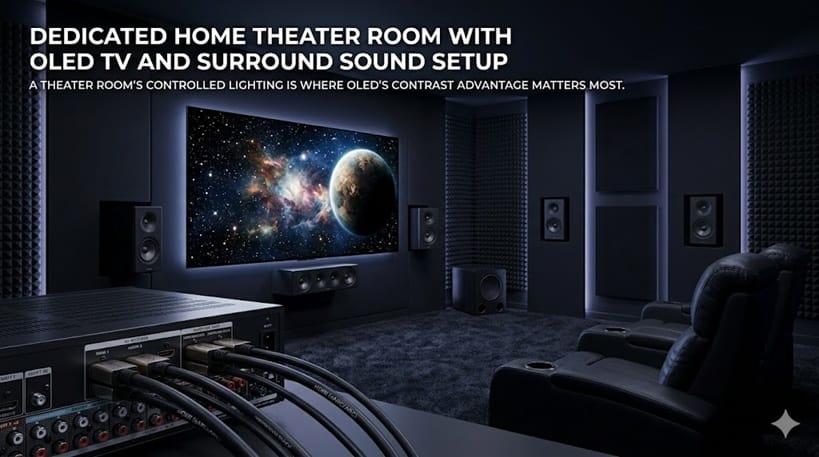
A dedicated theater room is the one scenario where OLED's traditional weakness — peak brightness compared to Mini LED — barely matters, while its core strength, per-pixel black levels, matters the most. Every pick on this list shares that same fundamental contrast advantage; where they differ is brightness headroom and price, not the floor.
Dolby Vision and Dolby Atmos Passthrough
Three of the four picks here — the LG C5 and both LG G5 sizes — support Dolby Vision, which matters for home theater specifically because most prestige film releases on streaming and disc are mastered in it. The Samsung S85F is the exception: Samsung doesn't support Dolby Vision on any of its TVs, relying on HDR10+ instead, so factor that in if Dolby Vision titles are a priority for your room.
Based on Dolby's own technology overview, Dolby Vision's dynamic, scene-by-scene metadata is built to preserve more shadow and highlight detail than static HDR10 alone, which is precisely the kind of detail a dark room is best positioned to reveal. Confirm eARC support on whichever model you pick if you're running a separate AV receiver for Atmos — and if the connection acts up once it's hooked up, our eARC/CEC troubleshooting guide covers the common fixes.
Filmmaker Mode and Out-of-the-Box Accuracy
Filmmaker Mode strips out motion smoothing and forces a more film-accurate color and gamma target — useful in a theater room where you're less likely to want sports-style motion processing fighting the director's intended look. Independent settings breakdowns for this generation of panels generally treat Filmmaker Mode as a reasonable starting point out of the box, even if you ultimately prefer to fine-tune further (see the FAQ below for a specific reference).
Wide Viewing Angle for Multi-Seat Rooms
If your theater room seats more than one or two people, viewing angle stops being a minor spec. OLED's wide viewing angle keeps color and contrast far more consistent off-axis than most LCD-based panels, which matters a lot more here than in a single-recliner setup facing the screen dead-on.
Is OLED Actually the Right Call for a Home Theater Room?
For most dedicated or semi-dedicated theater rooms, yes — a controlled-light room is the scenario where OLED's brightness disadvantage against Mini LED and QLED essentially disappears, while its contrast and color advantages stay fully intact. If you're set on a budget tier specifically, our QD-OLED vs WOLED compared breakdown is worth reading before you pick a panel type, since the two technologies trade off slightly differently on color volume versus motion handling.
If movie night specifically is your main use case rather than a full-room AV setup, our best OLED TVs for movies guide narrows the picks further around film-watching alone. And if you're working from lighting conditions rather than room purpose — say, a living room that's merely dim rather than a dedicated dark theater space — our best OLED TVs for dark rooms guide is framed around that angle specifically.
How We Picked These TVs
We started from the current LG and Samsung OLED lineups available through Amazon, then filtered for models whose published specs and feature sets are explicitly built around contrast, color accuracy, and film-mode picture handling rather than peak HDR brightness — the spec that matters most for a sunlit living room, not a dark theater room.
We didn't have hands-on units for this guide, so picks are based on manufacturer specifications and how each model is positioned within its own lineup, cross-checked against the panel-technology fundamentals (WOLED vs QD-OLED) that don't change pick to pick. Where an independent settings reference existed for a specific model, we cited it rather than asserting our own measured numbers.
📍 Still weighing your options beyond home theater? See how every 2026 OLED pick stacks up across every use case, not just dark-room viewing. See Best OLED TVs 2026 →
Home Theater OLED TV FAQs
Which OLED TV is best overall for a home theater room?
The LG C5 is the best overall pick for most dedicated theater rooms — it pairs Filmmaker Mode accuracy with a wide viewing angle without the price premium of LG's flagship tier.
Is it worth paying more for a flagship OLED in a dark room?
It depends on how much you value extra brightness headroom for specular highlights specifically — the core contrast advantage is shared across every tier, so a flagship model is a brightness-and-polish upgrade, not a fundamentally different picture.
Do OLED TVs need special settings for a home theater room?
Filmmaker Mode is the main one worth using out of the box for film content, since it disables motion smoothing and targets a more accurate color and gamma curve — the RTINGS settings guide for the LG C5 is a reasonable reference point if you want to go further than the out-of-box mode.
Is OLED better than Mini LED for a home theater room specifically?
For a controlled-light room, yes in most cases — Mini LED's main advantage is brightness in rooms with ambient light, which a dedicated theater room is designed to minimize. We cover that broader OLED vs Mini LED trade-off in more depth earlier in this guide for borderline rooms that aren't fully dark. If movies specifically are what fills most of your screen time in this room, our OLED vs Mini LED for movies comparison narrows that same trade-off around film content directly.

iYaiii
Editor, GearPulse360
iYaiii is the editor and founder of GearPulse360, specializing in TV reviews and consumer electronics. He researches every recommendation before publishing.
✅ Based on manufacturer spec analysis, cross-checked against an independent settings reference — last verified June 2026