LG OLED Anti-Glare Filter Problem: Why It Happens and What Actually Fixes It
Last updated: July 2026 | 🕒 8 min read
Disclosure: As an Amazon Associate I earn from qualifying purchases. This article contains affiliate links — we may earn a small commission if you buy through them, at no extra cost to you.
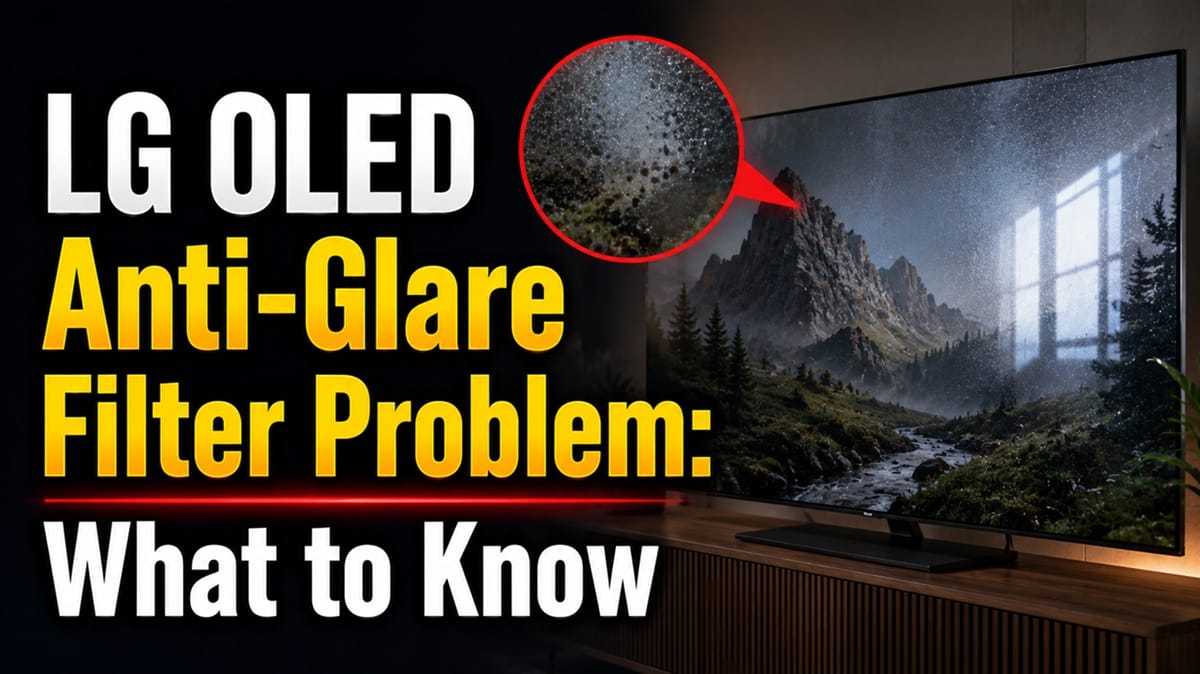
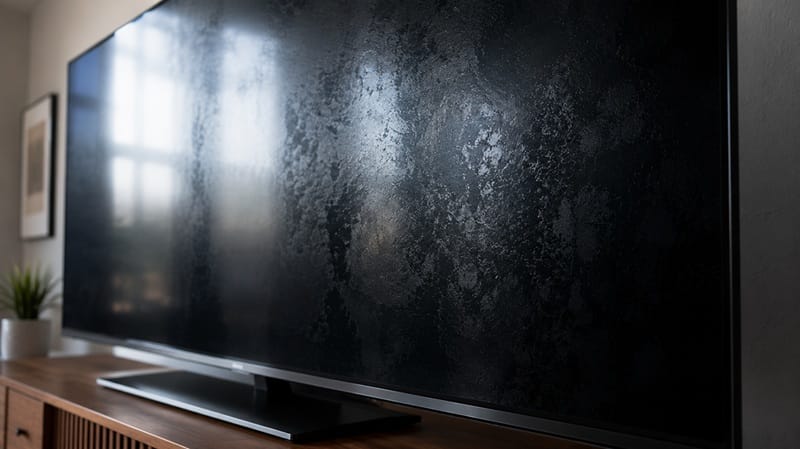
You wipe the screen once, and now there’s a hazy patch that won’t go away no matter how gently you try to clean it. That’s usually the first sign of the LG OLED anti-glare filter problem.
Most people searching for this aren’t dealing with a factory defect — they’re staring at a streaky, cloudy, or faintly rainbow-tinted patch that showed up after a cleaning attempt, and they want to know if it’s permanent, if it’s covered, and whether they did something wrong. Based on manufacturer support documentation, it depends almost entirely on what touched the screen — not on a factory flaw.
This guide covers what the anti-glare layer actually is, why the LG OLED anti-glare filter problem tends to show up after cleaning rather than out of nowhere, and what your realistic options are. If you’re also seeing bright or dark spots rather than haze, that’s a different issue — see our guide to LG OLED dead pixels for that scenario instead.
Table of Contents
The Short Answer: What Causes the LG OLED Anti-Glare Filter Problem
In almost every reported case, the LG OLED anti-glare filter problem comes down to the thin polymer coating on the screen’s surface reacting to something it wasn’t designed to handle — usually a chemical cleaner, an abrasive cloth, or firm pressure during wiping. The coating sits above the actual pixel layer, so the picture itself is usually unaffected once the TV is on and playing content.
What the Anti-Glare Filter Actually Is
A Coating, Not a Removable Screen Protector
The layer people call the “anti-glare filter” isn’t a separate film you can peel off and replace — it’s a thin, chemically bonded polymer coating applied directly to the panel’s outer surface. Its job is to scatter ambient light so reflections don’t wash out the picture in a bright room.
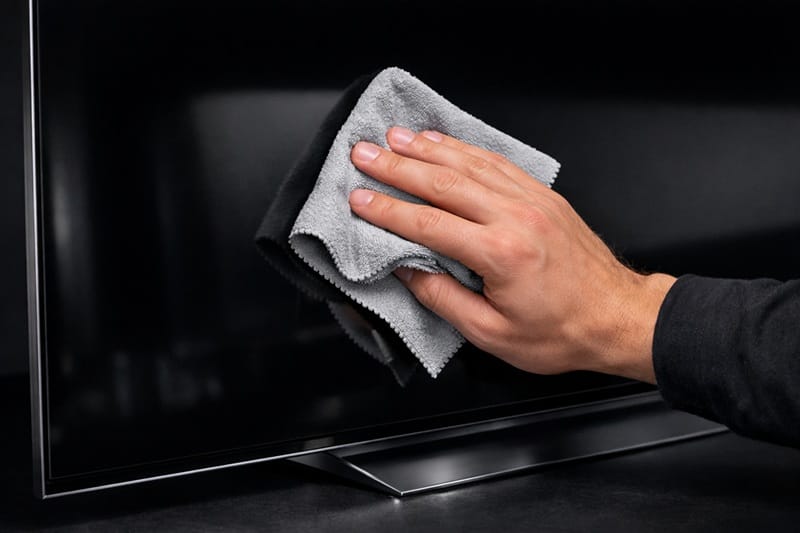
That’s also what makes this coating issue so frustrating once it shows up — there’s no simple peel-and-replace fix at home. According to LG’s own support guidance, screens should only ever be cleaned with a dry or lightly dampened microfiber cloth — never with alcohol, ammonia, or general glass cleaners, since those chemicals are what typically strip the coating in the first place.
Why It’s More Fragile Than It Looks
Think of the coating like the anti-reflective layer on a pair of eyeglasses: it’s durable enough for normal use, but it’s not built to withstand solvents or scrubbing. Coatings like this are generally understood to be sensitive to pH, with alkaline cleaners breaking down the coating’s structure faster than dust or fingerprints ever would, and once it’s damaged in one spot, that spot doesn’t self-heal.
Why This Shows Up More on Newer LG OLED Models
Evo Panels Use Updated Coating Chemistry
Based on editorial research, LG has adjusted its anti-glare coating formulation across several OLED generations, including the Evo panels used in recent C-series and G-series models. The exact chemistry appears to vary by generation, but the underlying vulnerability — sensitivity to chemical cleaners and abrasive pressure — has carried over across the generations LG has updated so far.
That matters for anyone trying to understand this problem across different model years: this isn’t a one-off issue tied to a single panel batch, but a structural trade-off of how anti-reflective OLED coatings are made. For a deeper look at how this differs from OLED’s other well-known screen concern, see our breakdown of screen retention vs burn-in — coating damage and burn-in are frequently confused but are completely unrelated failure modes.
It’s Cosmetic More Often Than People Assume
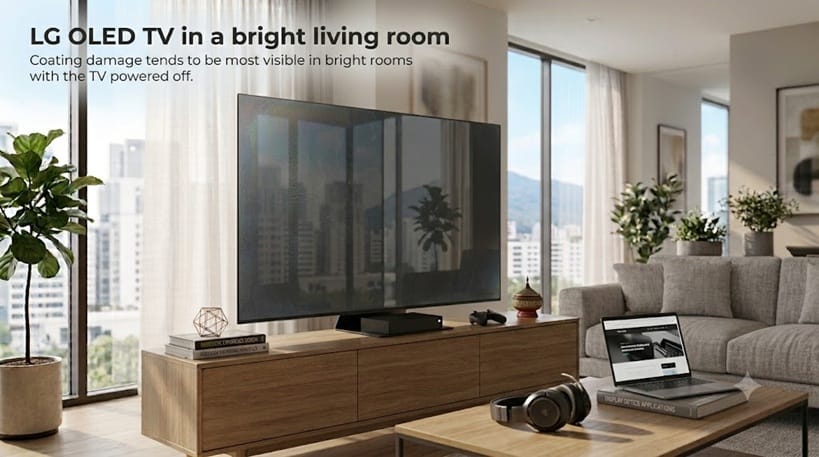
In many reported cases, the haze or discoloration is only visible when the TV is off or lit by strong ambient light. Once content is playing, the difference is far less noticeable for a lot of owners, though this varies by how severe the damage is and how bright your room gets.
If you’re still deciding which OLED to buy and coating durability is part of that decision, it’s worth comparing panels side by side before you commit. Our best OLED TVs in 2026 roundup ranks the current lineup by picture quality, gaming performance, and overall value.
Can It Be Fixed, and What Actually Helps
Once the anti-glare coating is damaged, there’s no verified at-home method that reliably restores it — attempts to buff, polish, or chemically re-treat the surface risk making the damage worse rather than better. The table below breaks down the most commonly reported symptoms.
[SCF-1] Symptom → Cause → Fix Table
| SYMPTOM | LIKELY CAUSE | FIX | DIFFICULTY |
|---|---|---|---|
| Hazy, cloudy patches that won’t wipe off | Alcohol, ammonia, or glass cleaner stripped the coating | Coating damage is generally permanent — contact LG support to check panel service options | Hard |
| Faint rainbow or blotchy discoloration under bright light | Excessive pressure or an abrasive cloth during cleaning | No reliable home fix — switch to a lint-free microfiber cloth going forward to stop it spreading | Hard |
| Smudging visible only when the TV is off, not during playback | Coating-only damage that hasn’t reached the pixel layer | Often cosmetic — check it against your normal viewing conditions before pursuing a repair | Easy |
If the issue persists or the damage is severe, contact LG’s official support line to ask about panel service options and remaining warranty coverage.
If coating fragility is a dealbreaker for you and you’re weighing options within LG’s own lineup, our LG OLED roundup compares how current models handle everyday care, alongside picture quality and gaming performance.
What This Means for You in Practice
Who Doesn’t Need to Worry
You’re comfortable sticking to a microfiber-only cleaning routine and treating the anti-glare coating the way you’d treat coated eyeglasses lenses — gentle, dry, and chemical-free. Handled that way, most owners never run into this problem at all.
Who Should Pay Attention to This
You know you’ll reach for glass cleaner, disinfectant wipes, or paper towels out of habit. If that’s a realistic risk in your household, coating fragility is worth factoring into your decision before you buy — not after the damage is done. Our LG OLED buying guide walks through what else to weigh model by model.
Coating fragility isn’t the only LG OLED ownership quirk worth knowing about before it catches you off guard. Pairing drops and a frozen Magic Remote pointer show up just as often — our breakdown of LG OLED remote control problems covers the fixes for that one.
FAQs: LG OLED Anti-Glare Filter Problem
Is the LG OLED anti-glare filter problem covered under warranty?
Only sometimes. Coating damage traced back to cleaning with unapproved products is typically treated as accidental damage rather than a manufacturing defect, so standard warranty coverage often won’t apply. RTINGS’ screen-care guidance outlines the same core rule LG gives: skip the cleaning solution entirely and stick to a dry or barely-damp microfiber cloth.
Does the anti-glare coating problem affect picture quality when the TV is on?
Often only mildly. Because the coating sits above the pixel layer, the underlying image usually still displays correctly. Many owners report the haze is most noticeable when the screen is off or under strong ambient light, and far less obvious once content is playing.
What’s the difference between this and OLED burn-in?
They’re unrelated. The LG OLED anti-glare filter problem is surface-level coating damage caused by cleaning products or pressure, while burn-in involves the organic pixels themselves degrading unevenly from static content over time. One is a cleaning issue; the other is a usage pattern issue.
How do I clean my LG OLED screen without risking this?
Use only a dry or barely-damp lint-free microfiber cloth, wipe gently in one direction, and never apply alcohol, ammonia, glass cleaner, or paper towels to the screen — this single habit avoids most coating damage. For a full walkthrough of safe habits that also help avoid unrelated wear issues, see our guide on how to prevent OLED burn-in.
Will this get better on newer LG OLED models?
LG has updated its anti-glare coating chemistry across recent generations, but based on editorial research, the fundamental trade-off — better glare reduction in exchange for a chemically sensitive surface — hasn’t disappeared. Careful cleaning habits remain the most reliable way to avoid the LG OLED anti-glare filter problem regardless of model year.

iYaiii
Editor, GearPulse360
iYaiii is the editor and founder of GearPulse360, specializing in TV reviews and consumer electronics. He researches every recommendation before publishing.
✅ Based on spec analysis and RTINGS data — last verified July 2026