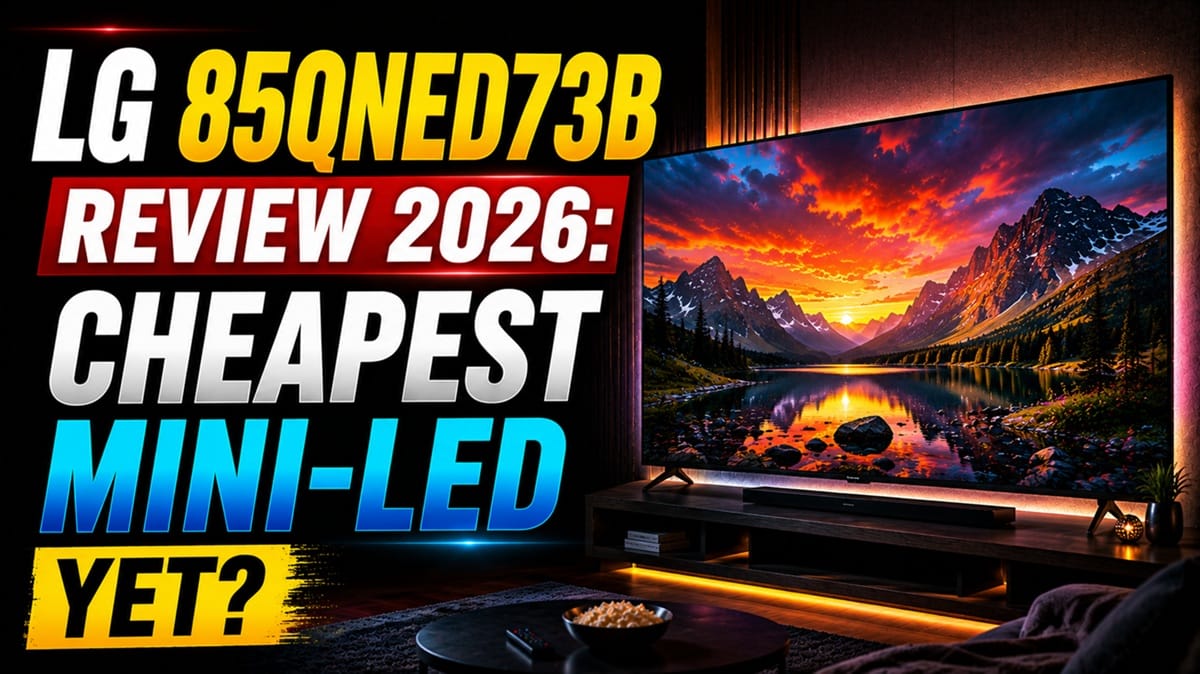
LG 85QNED73B Review 2026: Does LG’s Cheapest Mini-LED Actually Hold Up at 85 Inches?
Last updated: July 2026
🕒 9 min read
Disclosure: As an Amazon Associate I earn from qualifying purchases. This article contains affiliate links — we may earn a small commission if you buy through them, at no extra cost to you.
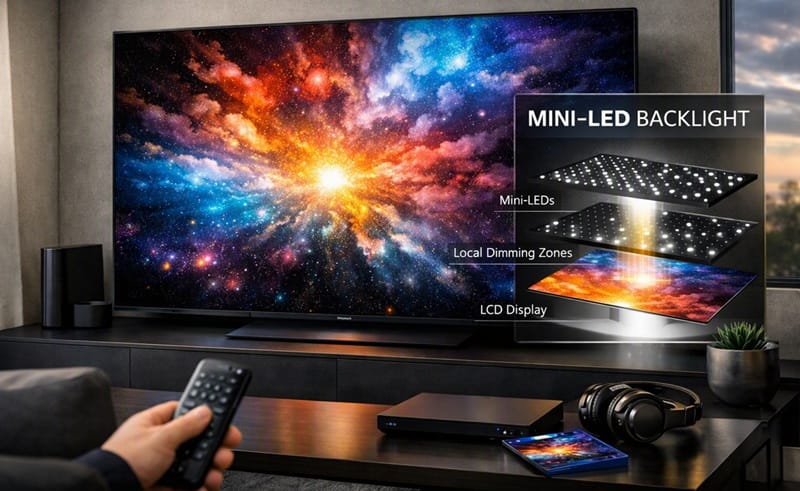
For most of LG’s QNED history, the cheapest tier in the lineup meant one specific compromise: an edge-lit backlight with no meaningful local dimming behind it. That changed for 2026. LG’s entry, non-evo QNED tier now ships with real Mini-LED backlighting for the first time, and the LG 85QNED73B review question is really whether that upgrade survives being stretched across an 85-inch panel.
This is an Amazon-exclusive model, sitting in the same 73B family as its 75-inch sibling, and it’s built to answer one thing: can you get actual Mini-LED contrast at a massive size without paying evo-tier prices? Based on LG’s published specifications and the pattern we’ve seen from the smaller 75QNED73B, the answer depends heavily on what you’re using the screen for. Anyone cross-shopping LG’s step-up evo lineup, or 85-inch sets from TCL and Hisense, can check our best 4K TVs of 2026 picks for how those price brackets stack up size for size. What follows is the spec sheet LG has actually published, and the places where a budget-tier panel at this size tends to show its limits.
Table of Contents
Quick Verdict
At a Glance
★★★☆★ 6.8 / 10
👍 Best For: Buyers who want the most screen size for the money and mostly watch casual streaming, cable, or sports without needing a high refresh rate.
👎 Skip If: You’re a competitive gamer, watch in a very bright room, or expect evo-tier peak brightness and dimming precision.
One-Line Verdict: A real step up for LG’s entry tier in 2026, but the 85-inch size asks more of a Mini-LED system built to hit a low price point.
🛒 Check Availability on AmazonProduct Specs at a Glance
Product Specs
LG 85QNED73B
Mini-LED QNED · 4K · webOS — entry tier, Amazon-exclusive SKU
| 📺 Panel type | Mini-LED QNED (entry tier) |
| 🔄 Refresh rate | 60Hz native |
| 🌈 HDR formats | Dolby Vision, HDR10, HDR10+ |
| 🧠 Processor | Alpha 7 AI Processor Gen9 |
| 💻 Smart platform | webOS |
| 🖥️ Screen size | 85 inches |
Design & Build Quality
Materials & Finish
LG’s own 2026 QNED evo Mini LED launch announcement describes the redesign as part of a push to make bigger screens hold up better in real-world viewing, and the 73B family sits at the affordable end of that same 2026 refresh. Based on LG’s official product materials, the panel keeps the slim bezel design LG uses across its QNED range, though at 85 inches the frame itself is naturally larger and heavier than the 75-inch model.
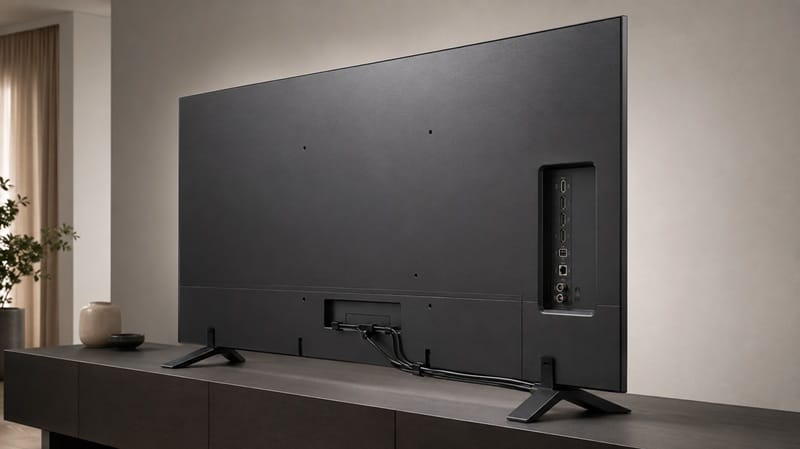
This isn’t a TV built to be a design centerpiece; it’s built to get a very large Mini-LED panel into a living room without an evo-tier price tag. At 85 inches, wall-mounting is the more practical setup for most rooms, since a stand deep enough to hold a panel this size takes up real floor space. Confirm the VESA mounting pattern and wall load rating before assuming a stand will fit in a smaller room.
Ports & Connectivity
The 85QNED73B includes HDMI connectivity with eARC support for soundbar setups, along with the Wi-Fi and Bluetooth connectivity standard across LG’s 2026 smart TV lineup. LG hasn’t published a per-port HDMI 2.1 breakdown for this specific Amazon-exclusive SKU, so buyers who need a guaranteed number of full-bandwidth HDMI 2.1 ports for next-gen consoles should confirm that detail directly with LG or Amazon before purchase.
Performance & Real-World Use
Everyday Streaming and Cable
For day-to-day cable news, sitcoms, and streaming, the difference between an edge-lit backlight and even a modest Mini-LED array tends to show up most in scenes that mix bright and dark content — subtitles over a dark background, for example, or a bright window in an otherwise dim room. This is where the 2026 upgrade to Mini-LED should matter most for casual viewers, even without lab-confirmed numbers to point to yet. LG’s own product materials confirm the Mini-LED backlight and local dimming on this SKU, but neither LG nor an independent lab has published a zone count or contrast figure specific to the 85-inch panel, so treat expectations here as directional rather than measured.
Movies and Dark Scenes
Dolby Vision and HDR10+ support means the 85QNED73B can process the metadata that higher-end TVs use to fine-tune dark and bright scenes, but metadata support and actual dimming precision are two different things. At 85 inches, an entry-tier Mini-LED backlight has more physical screen area to cover with the same general zone density LG uses lower in its lineup, which is typically where budget Mini-LED sets show the most compromise.
Gaming
The 60Hz native refresh rate is the single biggest limitation for gaming on this model. It’s fine for casual single-player games and turn-based titles, but it rules out the smooth motion that 120Hz+ panels offer for competitive or fast-paced multiplayer gaming. If gaming performance matters more to you than screen size, that’s worth weighing carefully before buying at this tier.
Key Features Breakdown
Mini-LED Backlighting at an Entry Price
LG’s prior entry-level QNED model, the QNED80, ran on standard edge-lit LED with no Mini-LED array behind it at all. The jump from that architecture to Mini-LED on the 73B series is the concrete change for 2026, not a marketing relabel of the same panel type.
AI Processing on a Budget Chip
The Alpha 7 AI Processor Gen9 handles upscaling and picture adjustment, and while it’s a step below the AI processors LG uses in its evo and OLED lines, it still gives the 85QNED73B AI-driven upscaling for lower-resolution cable and streaming content. That matters more at 85 inches, where upscaling flaws are easier to spot.
webOS and Smart Platform
The 85QNED73B runs LG’s webOS smart platform, the same operating system LG uses across its 2026 TV lineup regardless of price tier. That means access to the same app library, voice assistant compatibility, and interface layout as LG’s more expensive models. It’s one of the few places budget buyers aren’t asked to compromise.
The Good, the Bad, and the Ugly
Pros
- ✅ Mini-LED backlighting at an entry-tier price — a meaningful upgrade over LG’s older edge-lit budget QNED models.
- ✅ Dolby Vision and HDR10+ support — broader HDR compatibility than many budget-tier competitors offer.
- ✅ Massive screen size for the price — 85 inches without stepping into evo or OLED pricing.
Cons
- ❌ 60Hz native refresh rate — a real limitation for anyone prioritizing gaming smoothness.
- ❌ No confirmed local dimming zone count — LG hasn’t published this figure for the 73B series, making picture-quality claims harder to verify precisely.
The Ugly
The honest concern with any entry-tier Mini-LED panel stretched to 85 inches is that whatever zone count LG uses at smaller sizes has more physical screen area to cover at this one. LG hasn’t published a dimming zone count for the 73B series at all, which is unusual for a spec that’s often a headline number on competing Mini-LED sets. Buyers should treat that gap as an open question rather than assume it’s fine by default.
Who Should Buy This — and Who Shouldn’t
Buy This If
Think of the 85QNED73B like buying a bigger house in the same neighborhood rather than moving somewhere more expensive; you get considerably more space, but the fixtures inside are still the same budget-tier fixtures. If your priority is screen size for movie nights, sports, or a family room where everyone wants a bigger picture, this makes sense. Our OLED vs Mini LED compared guide breaks down how this backlight approach stacks up against LG’s OLED lineup if you’re still deciding between technologies.
Skip This If
If you game competitively, watch in a very bright room, or want the sharpest possible contrast this size can offer, LG’s evo QNED tier or a Samsung Mini-LED alternative are worth the extra cost. Readers comparing budget options more broadly may also want our Samsung Crystal UHD buying guide, which covers a similarly priced non-OLED path from a different brand.
Final Verdict
LG 85QNED73B Review 2026: Is It Worth Buying?
The LG 85QNED73B marks a real change in direction for LG’s entry QNED tier: Mini-LED backlighting at this price point simply didn’t exist a year or two ago. Whether it’s worth buying comes down to expectations: this is a budget-tier Mini-LED TV at a very large size, not a scaled-up flagship. If you’ve already looked at our LG 75QNED73B review and liked what the 73B family offers, the 85-inch step-up mostly changes the math on screen size, not the underlying performance tier. 🛒 Check Availability on Amazon
Frequently Asked Questions
LG 85QNED73B Review 2026: Is It a Good TV?
It’s a reasonable choice if your priority is screen size at a budget-friendly price and you don’t need high-refresh-rate gaming. The Mini-LED backlight is a real upgrade over LG’s older edge-lit entry models, based on manufacturer specifications.
LG 85QNED73B vs TCL or Hisense 85-inch models — how does it compare?
TCL and Hisense both offer competing 85-inch Mini-LED sets around this price range, often with higher refresh rates. LG’s advantage here is broader HDR format support and its webOS smart platform, while TCL/Hisense alternatives may edge it out on gaming specs.
Is the 85QNED73B good for gaming?
Only for casual, non-competitive gaming. The 60Hz native refresh rate is the main limitation — it won’t deliver the smooth motion that 120Hz+ gaming TVs provide for fast-paced titles.
Who should avoid the 85QNED73B?
Competitive gamers, buyers in very bright rooms who need maximum peak brightness, and anyone expecting evo-tier picture quality should look further up LG’s QNED lineup instead.
Where can I find lab-tested numbers for this TV?
None exist yet for the 85QNED73B specifically — everything above comes from LG’s published specifications, not independent lab measurements. RTINGS’ LG review hub is the best place to check before buying if you want lab-verified contrast and dimming numbers, since Amazon-exclusive SKUs are sometimes tested later in their sales cycle.

iYaiii
Editor, GearPulse360
iYaiii is the editor and founder of GearPulse360, specializing in TV reviews and consumer electronics. He researches every recommendation before publishing.
✅ Based on LG’s official specifications and manufacturer data — last verified July 2026