OLED TVs 2026 Improvements: Are They Actually Better Than Ever?
Last updated: June 2026 / 🕒 8 min read
Disclosure: As an Amazon Associate I earn from qualifying purchases. This article contains affiliate links — we may earn a small commission if you buy through them, at no extra cost to you.
If you bought an OLED two or three years ago and you’re wondering whether 2026 sets are worth the upgrade, the honest answer is: it depends on which model you’re looking at, not just the year on the box. A lot of OLED owners ask this exact question every January after CES headlines promise “the brightest OLED ever” — again. Based on editorial research into this year’s panel announcements and early independent reviews, 2026 is one of the more substantive years OLED has had in a while, but the improvements aren’t spread evenly across every TV wearing the OLED label.
This article covers what genuinely changed in OLED TVs 2026 improvements — brightness, reflection handling, and which models actually get the new panels — and where the gains are still marketing more than reality. If you’re newer to the format, our explainer on how OLED TV technology works is a good starting point before diving into this year’s changes.
Table of Contents
The Short Answer: Is OLED Actually Better in 2026?
Yes, but mostly at the top of the lineup. The headline gains — peak brightness near or above 2,500 nits in real measurements, sharply reduced screen reflections, and wider color coverage — are concentrated in flagship and upper-mid-tier models. Entry-level and mid-range OLEDs improved too, just more modestly, and a few size classes within the same model line didn’t get the new panel at all.
What Changed in OLED Panel Technology in 2026
The Brightness Jump Is Real, Not Just a Bigger Number on a Spec Sheet
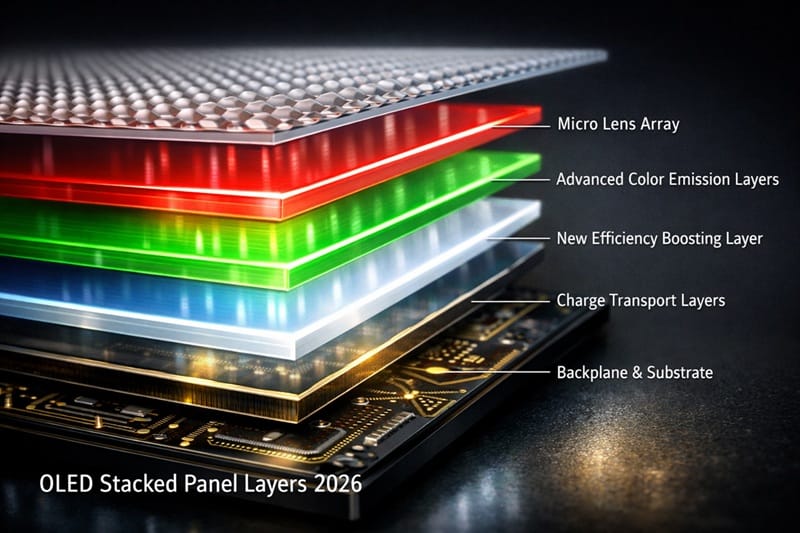
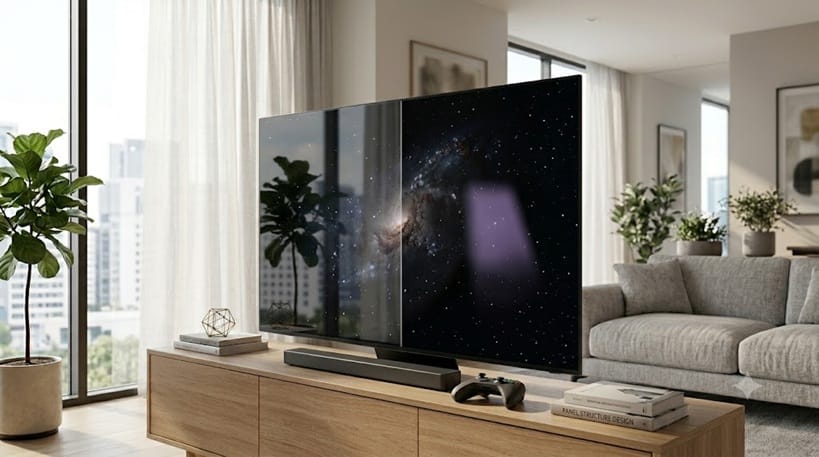
LG Display’s 2026 panel generation, marketed as Tandem WOLED, is rated for up to 4,500 nits peak brightness using a refined version of its stacked RGB layer design. According to LG Display, the panel also reaches a reflectance of just 0.3%, which the company describes as the lowest among current display technologies. Samsung’s 2026 QD-OLED flagship panel lands in a similar brightness territory, though Samsung hasn’t published a directly comparable peak-nit figure for its own panel generation the way LG Display has.
It’s worth being skeptical of panel-spec numbers in isolation, since manufacturer brightness ratings rarely match what a calibrated TV does in someone’s living room. Last year’s panel was specified at 4,000 nits, but independent lab measurements on the resulting flagship TV landed closer to 2,200 nits once calibrated for accurate color. That gap is normal — brightness specs describe the panel’s theoretical ceiling, not the tuned, color-accurate mode most people actually watch in.
Real-World Measurements Back Up Meaningful, Not Marginal, Gains
Early 2026 lab data supports a genuine step forward rather than a rounding error. RTINGS’ review of Samsung’s 2026 flagship QD-OLED shows a clear brightness gain over the prior generation’s flagship, with full DCI-P3 color coverage in real measurements. That’s the kind of independently verified testing that matters more than a panel-maker’s press release. If you’re curious how Samsung’s specific 2026 OLED models stack up against each other, our Samsung OLED lineup roundup breaks the S85H, S90H, and S95H down model by model.
Why It Matters in 2026: Not Every OLED Got the Upgrade
The New Panel Didn’t Reach the Whole Lineup
This is the part that trips people up: “2026 OLED” doesn’t mean one panel across every size and series. LG’s flagship series moved to a second-generation Tandem panel with meaningfully higher brightness than the prior year, while the mid-range series only gained the new panel in its largest screen sizes — smaller versions of that same model line continued using last year’s standard panel. If you’re comparing two TVs from the same series name, checking the specific size and panel generation matters more than checking the model year alone.
Budget Tiers Improved Too, Just Less Dramatically
One genuinely useful change for budget-conscious buyers: entry-level OLED panels finally crossed the 1,000-nit threshold this year, a number that used to be reserved for mid-range and above. It’s not a flagship-level leap, but it closes some of the gap that used to make cheaper OLEDs feel noticeably dimmer in daytime rooms.
Reflection handling and brightness aren’t the whole story when you’re deciding what to buy. Some buyers are also asking a bigger question — whether QD-OLED is the future of premium TV panels, or just one branch of where OLED is headed. We’ll cover that in more depth separately, but for now the practical takeaway is that the technology direction is real, even if the rollout is uneven.
Should You Upgrade From an Older OLED?
Whether this year’s changes matter to you depends heavily on what you’re using your current TV for and how old it is.
📍 Already weighing which 2026 OLED to buy? See how this year’s panel changes translate into actual picks in our best OLED TVs in 2026 roundup, ranked by use case and budget.
What This Means for You in Practice
Who Should Pay Attention to This
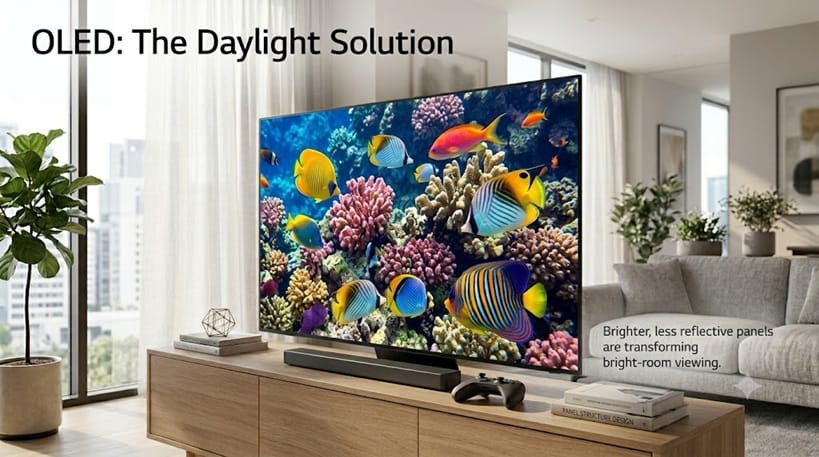
If your room gets a lot of daytime light, or your current OLED struggles with glare from windows, this year’s brightness and reflection improvements are the most relevant upgrade reason in years — not a cosmetic refresh. Gamers and movie-first buyers shopping at the flagship tier will also notice the difference most directly. If you’re set on a specific brand, our LG OLED lineup roundup breaks down exactly which 2026 models got the new panel and which didn’t.
Who Doesn’t Need to Worry About This
If you bought a flagship OLED within the last year or two and mostly watch in a dark or moderately lit room, the 2026 changes are unlikely to feel transformative day to day. Brightness gains matter most in bright environments — in a dim home theater setup, the difference is much harder to notice.
FAQs: OLED TVs 2026 Improvements
Are OLED TVs 2026 improvements worth upgrading for?
For most existing OLED owners, no — unless your room is unusually bright or your current TV is several generations old. RTINGS’ testing of this year’s flagship QD-OLED confirms the brightness gain is real, but it mainly benefits viewing in well-lit rooms rather than dark home theater setups.
Do all 2026 OLED TVs use the new brighter panel?
No. The new panel generation rolled out first to flagship models, with only the largest screen sizes in some mid-range series receiving it. Smaller sizes within the same series often kept the previous year’s panel, so checking the specific model number and size matters more than checking the release year.
Is QD-OLED or WOLED brighter in 2026?
Both panel makers announced similar peak brightness targets for 2026, and independent measurements so far put them close to each other at the flagship level. The bigger differences between QD-OLED and WOLED tend to show up in color volume and reflection handling rather than raw peak brightness alone.
Did burn-in risk change with the new OLED panels?
The stacked-layer design used in 2026 panels spreads the electrical load across multiple emission layers instead of one, which is generally associated with longer panel lifespan and lower stress per layer. That’s a structural advantage, not a guarantee — sensible usage habits still matter regardless of panel generation.
Should I wait for next year’s OLED instead of buying now?
If brightness and glare are your main concerns, 2026’s flagship panels already deliver a meaningful step up, so waiting mainly makes sense if you’re after a specific future feature rather than general performance. OLED panel improvements have arrived in fairly large jumps the last few years, and next-generation OLED panels are already in development, so there’s no guarantee any single future year’s gain will be dramatically larger than this one. If price is the bigger factor in your decision to wait, our breakdown of whether OLED TV prices will drop in 2026 covers the seasonal pattern worth knowing before you commit.

iYaiii
Editor, GearPulse360
iYaiii is the editor and founder of GearPulse360, specializing in TV reviews and consumer electronics. He researches every recommendation before publishing.
✅ Based on spec analysis and LG Display’s and Samsung’s official data plus RTINGS — last verified June 2026