Will OLED prices drop in 2026? What Buyers Should Know Now
Last updated: July 2026 | 🕒 8 min read
Disclosure: GearPulse360 is a participant in the Amazon Associates Program. Some pages on this site contain affiliate links, and we may earn a commission from qualifying purchases at no extra cost to you.
If you’ve been refreshing product pages for weeks waiting for a number to change, you’re not imagining a pattern — OLED TV prices really do move on a fairly predictable clock. The question isn’t really “will prices drop,” it’s “which prices, and when.”
That distinction matters because OLED TV prices in 2026 aren’t moving as one block. Entry and mid-tier models are still following the discount pattern shoppers expect, while flagship panels with the newest technology are holding their price far longer than in past years. Assuming the whole category will get cheaper on the same schedule is the most common mistake we see readers make.
This article breaks down why OLED pricing behaves the way it does, what’s actually different about the 2026 market, and when you can realistically expect to see movement. For background on what changed in this year’s panels, our piece on how OLED TVs improved in 2026 covers the technical side of what you’re paying for. And if pricing is just one piece of what you’re weighing, our roundup of OLED TV trends to watch in 2026 puts it alongside panels, gaming, and AI processing shifts.
Table of Contents
The Short Answer: Will OLED prices drop in 2026?
Yes, but unevenly. Entry-level and last-generation OLED models will keep getting cheaper as retailers clear space for new stock, while current-generation flagship models are holding their launch pricing longer than they did a few years ago. If you’re shopping the budget-to-mid tier, waiting for a sale window still pays off. If you want this year’s flagship panel, waiting won’t necessarily save you as much as it used to.
Why OLED TV Prices Move the Way They Do
The Release Cycle Drives the Discount Cycle
LG and Samsung both announce their new OLED lineups at CES in January, with new models reaching retail in spring. Once a new generation ships, the previous year’s TVs need to move off shelves, which is when discounting kicks in hardest. LG’s 2026 OLED lineup, for example, was unveiled at CES 2026 and began rolling out that spring, which is what pushed 2025 models into clearance pricing shortly after.
Not Every Tier Discounts at the Same Rate
Entry and mid-range models depreciate fastest because there’s less brand loyalty at that price point and more competing options. Flagship panels with a manufacturer’s newest technology tend to hold price longer, since there’s no direct substitute for a brand-new panel generation until the following year’s launch.
What’s Different About OLED Pricing in 2026
Flagship Tiers Are Holding Firmer
This year’s flagship OLED panels carry more differentiated technology than in past cycles — brighter coatings, glare reduction, and updated processors — which gives manufacturers more room to hold price. Samsung’s 2026 OLED lineup, spanning the S85H, S90H, and S95H series, launched with a wide spread across entry, mid, and flagship tiers. From what we’ve tracked since launch, that spread hasn’t compressed as quickly as older flagship generations tended to.
Entry-Level Models Are Still Following the Old Pattern
Below the flagship tier, the story looks much more familiar. Budget and mid-range OLEDs are still getting cheaper as the year goes on, especially once a size or model has been on the market for two to three months. If your priority is the lowest price rather than the newest features, our best OLED TVs under $900 roundup tracks which current models actually clear that price threshold.
Broader Cost Pressures Are a Factor Too
Component and shipping costs have been less predictable industry-wide over the past couple of years, which has made some manufacturers more cautious about discounting flagship inventory too aggressively. We can’t put a number on how much this affects any single model, but it’s part of why flagship pricing has felt sturdier than the historical pattern would suggest.
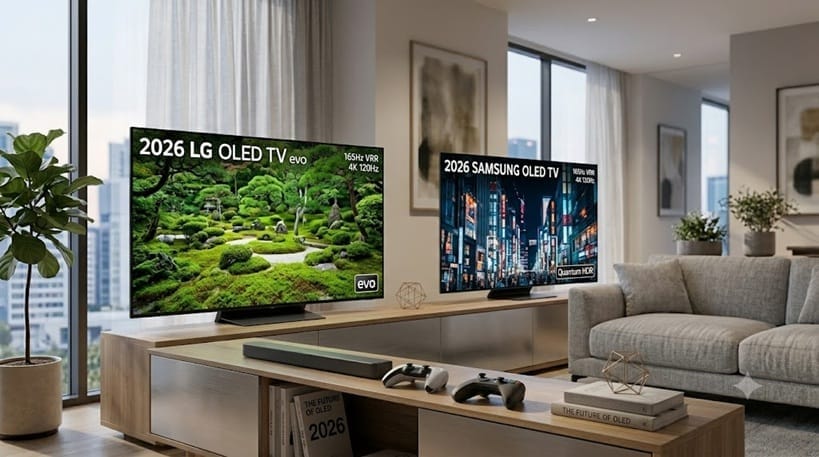
If pricing dynamics feel like just one piece of a much bigger decision, our best OLED TVs in 2026 roundup ranks every current top pick by use case and budget, so you can weigh price against everything else that matters.
When Prices Are Most Likely to Ease
The clearest windows are the same ones that have worked for years: spring, once new lineups start shipping and last year’s models need to move, and the big fall sales events, when retailers compete hardest for volume. Neither window guarantees a specific discount, and depth varies year to year, but both are consistently better than shopping in the months right after a flagship launch.
What This Means for You in Practice
Who Should Wait
If you’re eyeing an entry or mid-range OLED and don’t need this year’s exact model, waiting for a seasonal sale window is still the better financial move — that tier hasn’t stopped following the old discount pattern. Shoppers who are flexible on brand or size have the most room to benefit here, since a slightly older model at a steep discount often outperforms a brand-new budget set at full price. For a broader look at how OLED stacks up against the alternative, our is OLED worth it in 2026 breakdown is a useful next stop before you commit either way.
Who Shouldn’t Bank on a Big Drop
If you specifically want this year’s flagship panel, don’t plan your purchase timeline around a steep discount — the pricing pattern we’re seeing in 2026 makes that a less reliable bet than it was a few years ago. In that case, the more useful question is whether the newest features are worth paying full price for now, not when the price will fall.
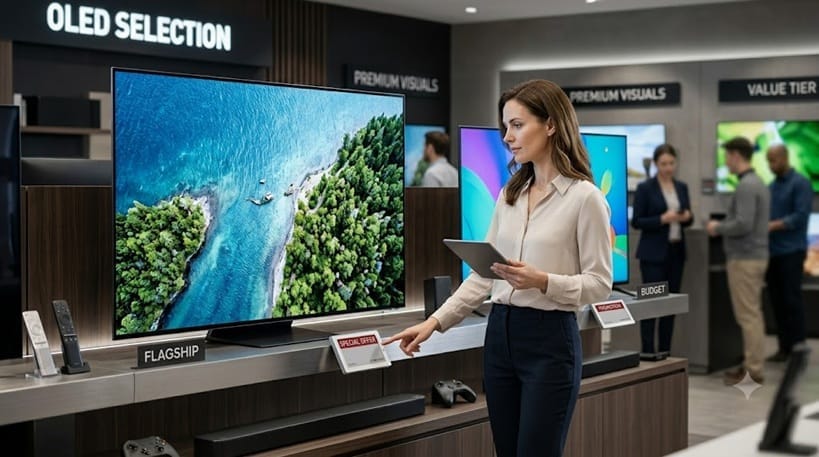
OLED TV Prices 2026 — Common Questions
Will OLED TV prices drop later in 2026?
Entry and mid-range OLED prices will very likely keep easing toward the usual fall sales window, following the same pattern they have for years. Flagship models are a less certain bet this year — timing and depth of any discount vary, and we can’t promise a specific number. RTINGS’ breakdown of when to buy a TV is a good reference for how that seasonal cycle typically plays out.
Why do some OLED TVs stay expensive while others drop fast?
It comes down to how differentiated the panel is. A flagship model with a manufacturer’s newest technology has no direct substitute until the next year’s launch, so there’s less pressure to discount it. A budget model competes with several similar options at once, which pushes its price down faster.
Is it worth buying an OLED TV before a price drop happens?
If you need a TV now and the price fits your budget, buying now is reasonable — there’s no guarantee a meaningful drop is coming on your specific model or timeline. The bigger risk of waiting indefinitely is missing the TV entirely once retailers cycle it out of stock ahead of the next launch.
Do new OLED model launches always mean lower prices on older models?
Usually, yes, for entry and mid-tier models — a new launch is exactly what pushes retailers to clear the previous generation. Flagship-tier pricing has been holding more firmly through 2026’s launch cycle than in past years, partly because of how much newer panel technology separates this year’s top models from last year’s. If that trend continues, it’s worth understanding whether QD-OLED is the future of where that premium is headed.
Which OLED brands tend to hold their price longest?
Based on what we’ve tracked since launch, flagship panels from both LG and Samsung have held price relatively firmly through 2026 so far. Samsung’s 2026 lineup, for instance, launched across a wide range from its entry S85H up through the flagship S95H, and that structure hasn’t compressed as quickly as past flagship tiers typically have. Budget shoppers still have the most room to save — see the pattern play out in real listings, not just theory.

iYaiii
Editor, GearPulse360
iYaiii is the editor and founder of GearPulse360, specializing in TV reviews and consumer electronics. He researches every recommendation before publishing.
✅ Based on spec analysis and LG’s and Samsung’s official data plus RTINGS — last verified July 2026