Samsung OLED Owners Switching Brands: Why It’s Happening and Whether the Reasons Actually Hold Up
Last updated: July 2026
🕒 8 min read
Disclosure: GearPulse360 participates in the Amazon Associates Program. This particular article contains no affiliate links; other content on our site may.
Somewhere in the middle of almost every long Samsung OLED troubleshooting thread, someone eventually posts a version of the same line: “I’m just going to switch to LG next time.” It shows up often enough across Samsung Community and AVS Forum threads that it’s worth taking seriously — without overreacting to it.
If you’re here, there’s a decent chance you’ve hit a specific issue — banding, a denied warranty claim, a firmware update that made things worse — and you’re trying to figure out whether that’s a reason to give up on the brand entirely. Based on that same forum research, cross-referenced against RTINGS’ own brand-by-brand comparison, the honest answer sits somewhere between “ignore the forums” and “believe every complaint.”
One thing worth correcting early: a visible cluster of frustrated posts isn’t the same thing as brand-wide reliability data. Below, we walk through what’s actually driving the samsung oled owners switching brands conversation, including how issues we’ve covered before — like a samsung oled warranty denied experience — factor into that decision, and where the switching logic holds up versus where it doesn’t.
Table of Contents
The Short Answer: Are Samsung OLED Owners Really Switching Brands?
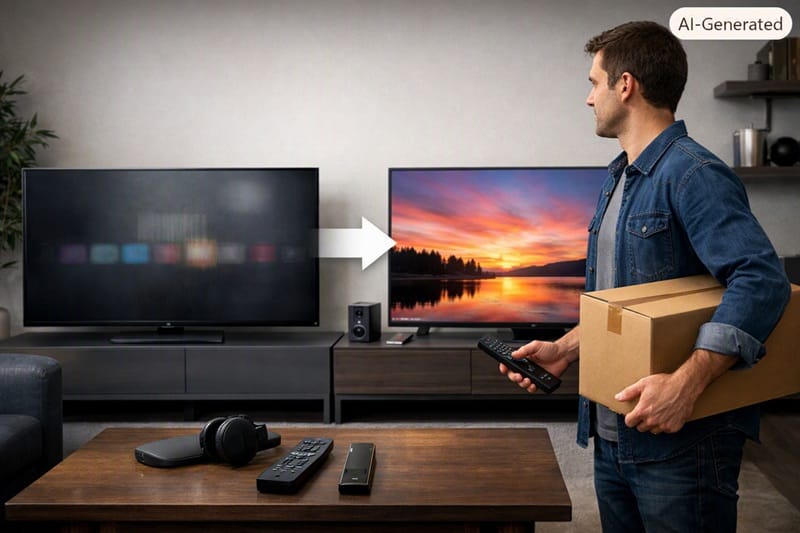
Some are, but not because Samsung OLEDs are broadly less reliable than the competition. The pattern traces back to a handful of recurring, documented pain points — uniformity complaints, warranty pushback, and firmware bugs — that cluster loudly in owner communities even though they don’t represent every unit sold.
What’s Actually Driving the Samsung OLED Owners Switching Brands Conversation
Panel Uniformity and Banding Complaints
Uniformity issues are the most-cited reason in the threads we’ve reviewed. Owners who’ve dealt with S90D banding or picture-quality inconsistency between two supposedly identical units are often the loudest voices pushing “just switch to LG” as advice to newer owners hitting the same wall.
Warranty and Service Friction
The second driver is service experience. When a claim gets denied over an excluded condition the owner didn’t know about going in, that frustration tends to generalize into “Samsung doesn’t stand behind its OLEDs” — even when the exclusion itself is standard across the industry. According to Samsung’s official warranty page, standard coverage terms and exclusions are published and consistent, which means a denial is more often a documentation gap than an arbitrary decision.
Firmware Update Anxiety
The third factor is firmware. An update that introduces a new bug feels like a betrayal on a TV you already paid full price for, and that’s a real, repeatable complaint pattern in Samsung’s owner base specifically. It’s worth noting upfront, though, that this isn’t unique to one manufacturer — a point we’ll come back to in the next section.
Think of it a bit like a single bad flight souring someone on an entire airline: the frustration is legitimate, but it doesn’t automatically mean every other plane in the fleet has the same problem.
Is This a Documented Pattern or Mostly Anecdote-Driven?
What RTINGS’ Brand Comparison Actually Shows
This is where the “Samsung is uniquely unreliable” narrative gets complicated. RTINGS’ own LG vs. Samsung TV comparison points out that firmware pushes from both manufacturers have occasionally created new problems rather than only fixing old ones — in other words, an update introducing a bug isn’t unique to Samsung’s release process.
A Counterintuitive Software-Support Detail
There’s also a detail from that same RTINGS comparison that cuts against the “switch to LG for better support” instinct: LG’s Re:New program guarantees five years of new webOS versions, while Samsung currently commits to seven years of OS updates on its TVs. If long-term software support specifically is the concern behind switching, Samsung’s own numbers are actually the stronger of the two on paper.
None of this means every firmware-related complaint about a Samsung OLED is unfounded — our own Samsung OLED firmware update problems coverage documents real, specific bugs tied to particular updates. It just means the underlying risk of “an update could introduce a new bug” applies broadly across the OLED market, not to Samsung alone.
This particular dynamic isn’t unique to Samsung, either. Our Sony OLED owners switching brands piece looks at the same forum pattern from the Sony side — loud, specific complaints clustering around a handful of models without much brand-wide data behind the broader claim — and lands in a similar place.
Where a Real Brand Difference Does Exist
Not every switching motivation is anecdote, though. Format support is a genuine, documented difference: LG’s OLED lineup supports Dolby Vision, while Samsung has standardized on HDR10+ instead. For someone with a large Dolby Vision-mastered movie collection, that’s a real, ongoing reason to prefer LG — not just a forum talking point.
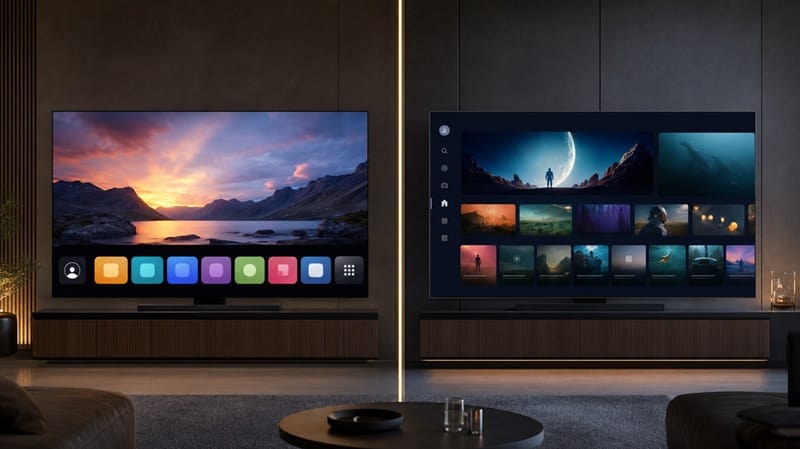
If you’ve read this far and you’re already leaning toward making the jump, our best OLED TVs of 2026 roundup ranks this year’s picks across both brands by picture quality, gaming performance, and price tier, so you’re comparing the field rather than one bad experience against everything else.
What Actually Determines Whether Switching Brands Makes Sense
Before deciding, it helps to separate what’s fixable from what’s structural. A firmware bug can resolve with a future update. A denied warranty claim can sometimes be appealed with the right documentation. A missing HDR format, on the other hand, isn’t going to change — that’s a company-wide platform decision, not a bug.
Who Should Pay Attention to This
If your frustration traces back to something structural — no Dolby Vision support, or a pattern of issues across more than one Samsung unit you’ve personally owned — switching brands is a reasonable, evidence-based decision rather than an emotional one. Our LG vs Samsung vs Sony OLED compared breakdown is a useful next stop for weighing the three main OLED makers side by side.
Who Doesn’t Need to Worry
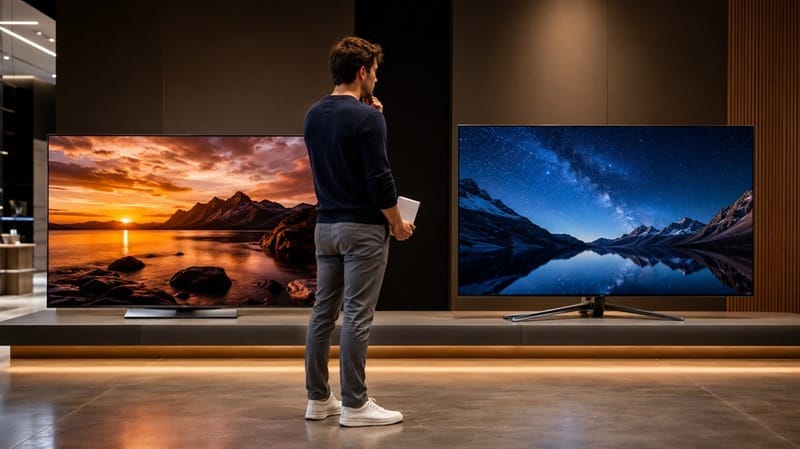
If this is your first real issue with a single Samsung OLED unit, and it’s the kind of thing covered by warranty or resolved through Samsung’s support process, there isn’t a strong case for treating brand-switching as the fix. A new-to-you LG or Sony set carries its own first-year risk of hitting a problem you’ve simply never dealt with before — switching trades a known issue for an unknown one, not a guarantee of a smoother ownership experience.
FAQs: Samsung OLED Owners Switching Brands
Why are Samsung OLED owners switching brands to LG or other manufacturers?
The most commonly cited reasons are panel uniformity complaints, warranty claim friction, and firmware bugs — with a smaller group switching specifically over Samsung’s lack of Dolby Vision support. RTINGS’ brand-level comparison frames most of these as close calls rather than a clear reliability gap between brands.
Is Samsung OLED actually less reliable than LG OLED?
There’s no independent brand-wide data showing Samsung OLEDs fail more often than LG’s. What’s different is visibility — certain Samsung models have generated unusually active complaint threads, which can look like a reliability gap even when it’s really a concentration of reports around a few specific models and issues.
Do I have to switch brands to fix a Samsung OLED problem?
Not necessarily. Firmware bugs are sometimes resolved in later updates, and warranty denials can occasionally be appealed with better documentation of the original purchase and installation. Switching brands makes the most sense when the issue is structural — like format support — rather than something a service ticket or software patch could still resolve.
What’s actually different about LG’s OLED lineup if I do decide to switch?
Beyond Dolby Vision support, LG’s WOLED panel technology and webOS platform are the two biggest day-to-day differences to weigh — keep in mind Samsung’s own OLED lineup isn’t one single panel type, either, since it runs WOLED on the S90H and S85H tiers and reserves QD-OLED for the S95H flagship, all on Tizen. Our LG OLED55C6 review covers what that experience actually looks like on a current mid-range model.
Is one bad experience with a Samsung OLED enough reason to switch brands entirely?
On its own, usually not — a single unit’s issue doesn’t tell you much about the broader lineup or a different model year. It’s worth weighing alongside how the issue was handled, whether it’s a documented pattern for that specific model, and whether the underlying cause is fixable or permanent before making a brand-wide decision.

iYaiii
Editor, GearPulse360
iYaiii is the editor and founder of GearPulse360, specializing in TV reviews and consumer electronics. He researches every recommendation before publishing.
✅ Based on spec analysis and Samsung’s and LG’s official data plus RTINGS — last verified July 2026