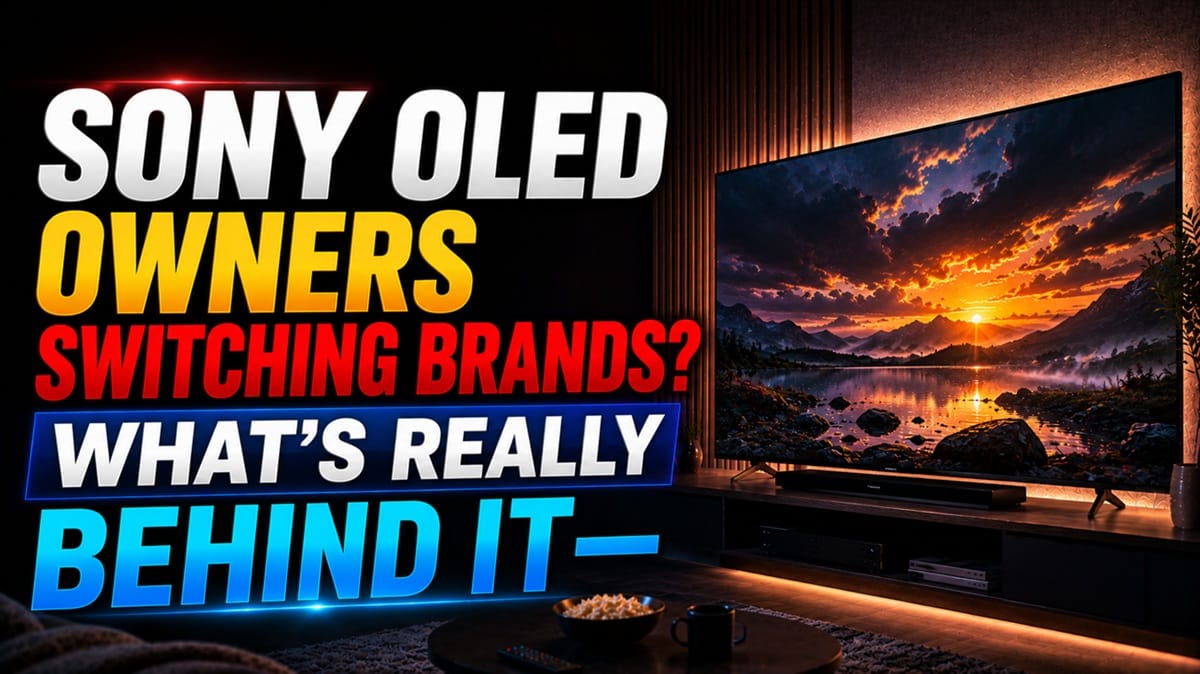
Sony OLED Owners Switching Brands: Why It’s Happening and Whether the Reasons Hold Up
Last updated: July 2026
🕒 8 min read
Disclosure: GearPulse360 participates in the Amazon Associates Program. This particular article contains no affiliate links; other content on our site may.
Best Buy and other major retailers don’t publish a breakdown of which TV brand people trade in most often when they upgrade — so there’s no dataset that actually ranks Sony against LG or Samsung on this specific question. What exists instead is a visible pattern across Sony OLED ownership threads and review comment sections: the same handful of complaints (warranty length, software behavior, picture consistency) keep resurfacing often enough to be worth examining on their own merits, rather than dismissed as noise or accepted as proof of a systemic flaw.
That’s not the same as saying Sony’s OLED lineup is unreliable. It’s a search pattern, not a lab result, and it deserves the same scrutiny before it becomes a buying decision. Anyone typing “sony oled owners switching brands” into Google right now is probably somewhere between frustrated and honestly unsure whether the problem is Sony-specific or just OLED ownership in general.
This guide separates that conversation into what’s actually driven by real gaps against LG and Samsung — the kind we’ve laid out directly in our Samsung OLED owners switching brands piece for the Samsung side of the same question — and what’s simply louder in comment sections than it turns out to be once you check it against independent testing.
Table of Contents
The Short Answer: Is Switching Away From Sony OLED Actually Justified?
Sometimes, but usually for narrower reasons than people assume. A handful of specific issues — a shorter standard warranty, occasional software friction, and picture consistency complaints on certain models — show up often enough to be real. Most of what drives the switching conversation, though, is fixable through settings or model choice rather than a structural flaw in Sony as a brand.
Why Sony OLED Owners Are Switching Brands: What’s Actually Driving It
Warranty Length Is the Most Common Trigger
Sony’s standard OLED warranty runs one year in the US, matching what many budget LED sets carry — a gap we break down in more detail in our Sony OLED warranty denied guide. When a claim gets denied on top of that short window, the frustration compounds fast — of the complaints that turn into “I’m switching brands” comments, this is the one that shows up with the least ambiguity, since the coverage terms are public and easy to compare across brands.
Software and Firmware Complaints Add Up Over Time
Google TV performance issues, firmware updates that change behavior without warning, and remote pairing problems don’t individually push someone to switch brands. Stacked across a year or two of ownership, though, they create a general sense that the ecosystem is less polished than what LG’s webOS or Samsung’s Tizen platform offers.
Picture Consistency Gets Blamed More Than the Data Supports
Comparative testing in RTINGS’ current OLED rankings shows real differences between brands in specific categories, but not the uniform gap that some switching posts imply. Based on that independent testing data, Sony’s WOLED-based models perform close to LG’s in most picture-quality categories, with the real separation showing up in brightness and processing rather than a blanket quality drop.
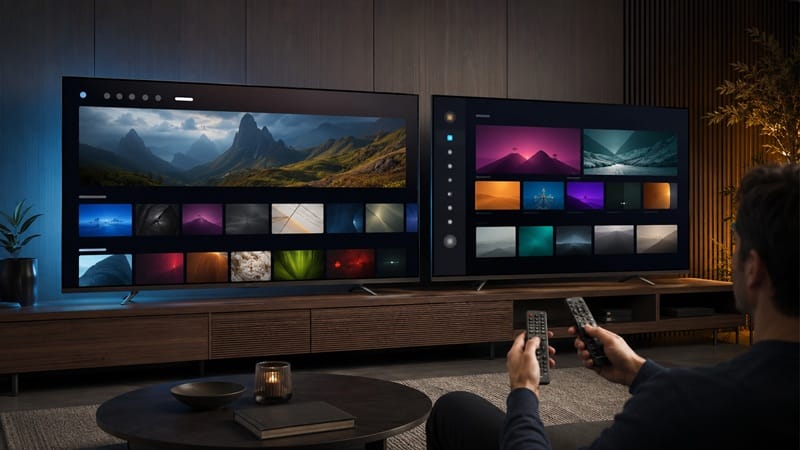
How Sony Actually Compares to LG and Samsung Right Now
It’s a little like blaming a car brand for one bad experience at a single dealership — the frustration is real, but the diagnosis can end up aimed at the wrong target. A denied warranty claim or a laggy firmware update says something about that specific interaction, not necessarily about every Sony OLED on the market.
Where Sony Actually Falls Behind
The warranty gap is easy to verify: Sony’s standard one-year coverage is shorter than what some competitors bundle in through retailer partnerships, and it’s the one complaint in this whole conversation that doesn’t require any interpretation — the number is printed on the coverage card. Software polish is the second recurring gap. Across GearPulse360’s own coverage of Sony firmware updates, Google TV lag, and remote pairing issues, the volume of distinct problems reported is noticeably higher than what shows up in our LG webOS coverage over the same period.
Where Sony Holds Its Own
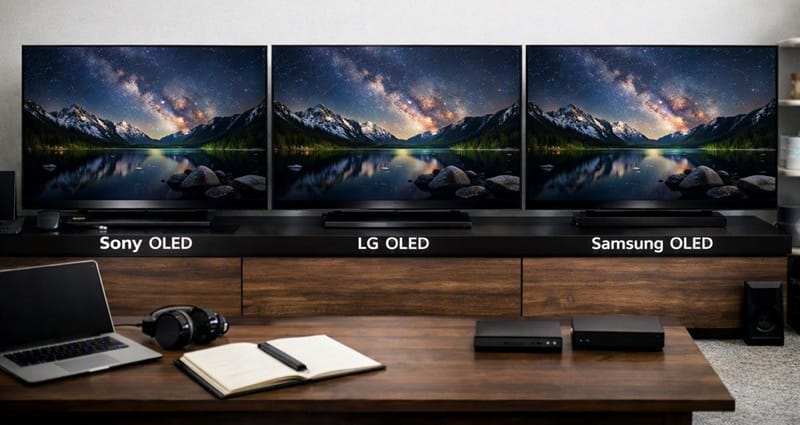
On core picture quality, the gap narrows considerably. Sony’s image processing, particularly on higher-tier QD-OLED models, remains competitive with both LG and Samsung in independent testing, and gaming feature sets on recent models have closed much of the distance that existed a few generations back. The broader dissatisfaction narrative tends to flatten these model-by-model differences into something more sweeping than the evidence supports.
Our full LG vs Samsung vs Sony OLED compared breakdown puts the three brands side by side on the categories that actually separate them — panel source, processing, gaming features, and software — rather than treating “Sony” as one uniform experience.
Whatever conclusion you land on by the end of that comparison, it’s worth weighing against the current field rather than against the one unit that’s currently frustrating you. Our best OLED TVs in 2026 roundup exists for exactly that kind of gut-check before a brand-wide decision.
What’s Fixable vs. What’s Actually Structural
Firmware quirks, remote pairing issues, and most software lag are fixable through updates, resets, or in some cases a factory reset that clears accumulated cache problems. They’re annoying, but they’re not evidence that the next Sony OLED will behave the same way.
The one-year standard warranty is structural — it’s a policy decision, not a bug, and it won’t change model to model. Buying a longer protection plan at checkout closes that specific gap, but it doesn’t change what’s printed on Sony’s own coverage card.
Picture consistency complaints sit somewhere in between. Unit-to-unit variation exists across every OLED brand, and a single panel with visible banding or uneven brightness isn’t proof of a lineup-wide flaw. If that specific gap is the real issue behind your frustration, our full Sony BRAVIA 8 II review shows how the current flagship handles picture consistency, which is where a lot of the switching conversation actually starts.
What This Means for You in Practice
Who Should Pay Attention to This
If your specific complaint is the warranty length, or you’ve had a claim denied already, that’s a legitimate reason to compare Sony against brands with different coverage terms before your next purchase — our warranty denial guide linked above walks through what recourse looks like if you’re already past that point.
Who Doesn’t Need to Worry
If your issue is a one-time software glitch, a single frustrating support call, or a picture-quality complaint you haven’t checked against another unit, that’s not strong evidence of a brand-wide pattern on its own. The distinction that matters is whether the same specific complaint keeps showing up across firmware versions or model years — a single occurrence usually doesn’t clear that bar.
FAQs: Sony OLED Owners Switching Brands
Should I switch away from Sony after one bad OLED experience?
Try this test first: did a firmware update, factory reset, or a straightforward warranty fix actually resolve it? If so, that’s a single rough experience, not a verdict on the brand. If the same issue comes back after those steps, or Sony support couldn’t close it out, that’s a stronger signal — at that point it’s worth checking RTINGS’ ongoing Sony coverage to see whether other owners are reporting the same thing on the same model.
Is Sony’s OLED picture quality actually worse than LG or Samsung?
Not by a wide margin in most cases. Sony’s WOLED models use the same panel source as LG in many sizes, with the real differences showing up in processing style and peak brightness rather than a fundamental quality gap.
Does switching brands actually fix warranty problems?
Not automatically. Warranty length and claim policies vary by brand and sometimes by retailer bundle, so switching only helps if you specifically choose a brand or protection plan with better terms than what you had before.
What’s the most common reason Sony OLED owners consider switching?
Warranty friction is the complaint that comes up with the least room for interpretation, since coverage terms are public and easy to compare brand to brand. Software and firmware frustration is a close second; picture-quality complaints get cited often in comment threads but hold up less consistently once checked against independent testing.
How does Sony’s warranty actually compare to LG and Samsung’s right now?
On paper, the standard terms are closer than the switching conversation implies — most major OLED brands, including LG and Samsung, ship with the same one-year baseline in the US. The real difference shows up in retailer bundles and extended-coverage promotions, which vary by season and by store rather than by brand policy alone, so it’s worth checking what’s currently on offer before assuming Sony is the outlier.

iYaiii
Editor, GearPulse360
iYaiii is the editor and founder of GearPulse360, specializing in TV reviews and consumer electronics. He researches every recommendation before publishing.
✅ Based on spec analysis and Sony’s official and RTINGS data — last verified July 2026