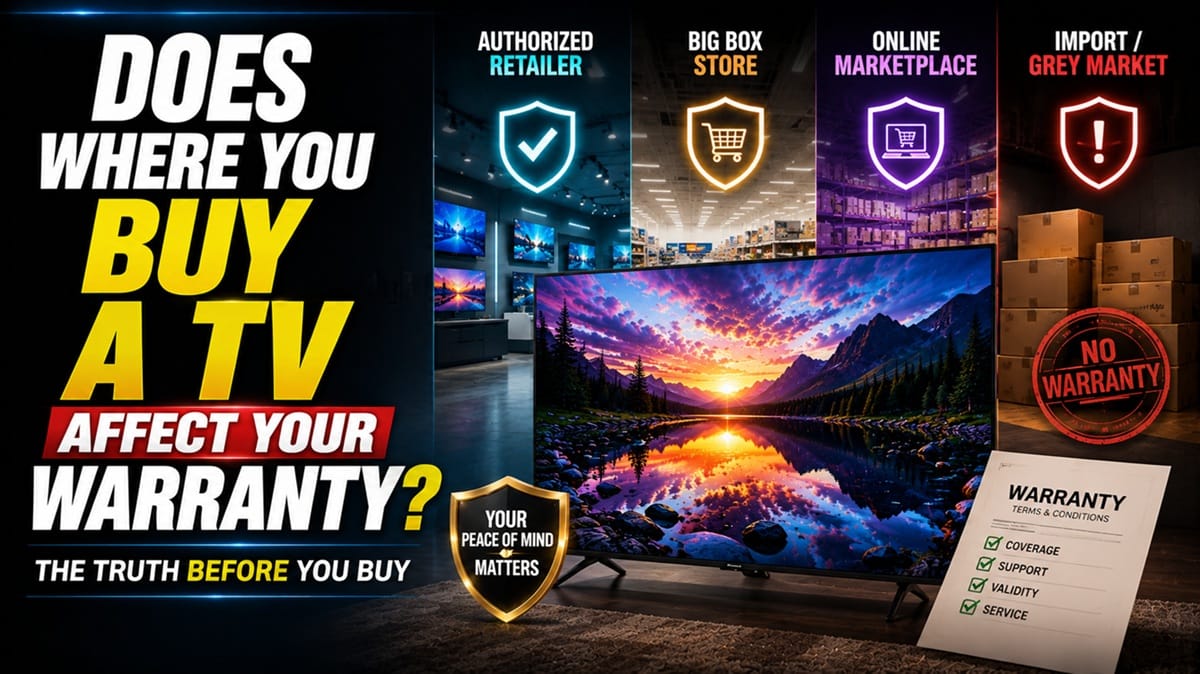
Does Where You Buy a TV Affect Warranty? What Actually Determines Whether Your Coverage Holds Up
Last updated: August 2026
🕒 7 min read
Disclosure: This article does not contain affiliate links. GearPulse360 participates in the Amazon Associates Program and earns commissions on other pages of this site; this piece is independent, ownership-focused information.
You find the same TV model listed twice: one from a familiar big-box retailer, one from a marketplace seller you’ve never heard of, priced noticeably lower. Same box, same model number, same brand printed on the front. If that second unit needs a warranty repair in year two, the outcome may not be.
Buyers tend to assume a manufacturer’s warranty travels with the brand name rather than the seller. It doesn’t. Coverage is tied to how a unit entered the retail chain, not to which brand made it or what you paid for it. So does where you buy a TV affect warranty coverage? Yes, and the mechanism behind that answer is worth understanding before checkout, not after a repair gets denied.
What counts as “authorized” at the manufacturer level, why the region a TV was sold for matters, and how to check a seller before you buy — that’s what the rest of this piece works through.
That question sits upstream of a related one: once a purchase is confirmed covered, whether filing a warranty claim resets your return window becomes relevant, and that’s worth reading next if a repair is already underway.
Table of Contents
The Short Answer: Does Where You Buy a TV Affect Warranty Support?
Yes, though not because of the retailer’s name or reputation. What decides coverage is whether that seller sits inside the manufacturer’s authorized distribution network.
A TV bought through an unauthorized reseller, a gray-market import, or a third-party marketplace listing outside a brand’s approved channel can end up with a claim denied, despite hardware that’s physically identical to a unit bought down the street.
Where You Buy a TV and Its Effect on Warranty Coverage
Authorized Dealer vs. Marketplace Seller
Manufacturer warranties attach to units that moved through the brand’s approved distribution chain: a retailer or distributor the manufacturer has a direct relationship with. Buying from a store’s own first-party inventory, online or in person, almost always satisfies this.
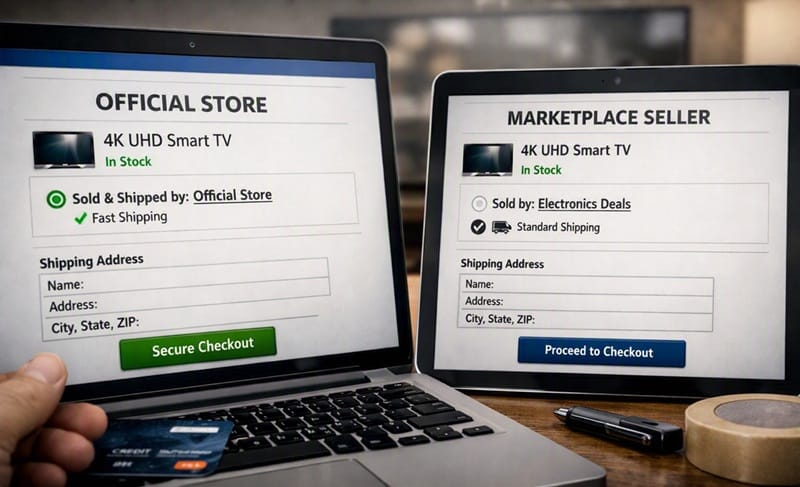
Marketplace platforms complicate that picture. On a site like Amazon, a listing can come from the retailer’s own warehouse, or from one of thousands of independent third-party sellers using that same storefront. The two can look nearly identical at checkout, but only one is necessarily part of the manufacturer’s authorized network.
Open-box and “renewed” listings sit in a gray area of their own. Some are processed and resold by the original retailer, keeping the remaining manufacturer coverage intact. Others pass through a third-party refurbisher whose own limited warranty replaces the manufacturer’s — usually with a shorter term and narrower coverage.
Why the Region of Sale Matters
Manufacturer warranty terms typically apply only to units purchased and used in the country they were sold for. According to Samsung’s published U.S. warranty terms, coverage begins on the date of delivery to the original purchaser and applies only to products purchased and used within the United States, with service performed exclusively through Samsung-authorized centers.
A unit imported from another region can fall outside that scope entirely, and that holds true even when the hardware itself is unmodified.
This is the mechanism behind gray-market warranty denials — the TV isn’t counterfeit or defective by design. It simply wasn’t intended for the market it’s being serviced in, and the manufacturer’s paperwork reflects that.
Why This Question Matters More in 2026
Authorized and Unauthorized Listings Sit Side by Side
First-party and third-party sellers now share the same product pages on most major shopping platforms, distinguished only by a small “sold by” line most buyers skip past. That’s a real shift from when TVs were bought almost exclusively in a physical store or a retailer’s own site, where the seller was never in question.
Default sort settings on shopping platforms typically surface price first, seller status second, if at all. A buyer scanning for the lowest number on the page can end up on an unauthorized listing without ever seeing a prompt to check who’s actually fulfilling the order.
Gray-Market Imports Are Easier to Stumble Into
Cross-border shopping has made it simple to land on a listing shipped from outside your own country, particularly when a search turns up a lower price on what looks like the identical product page. That gap connects to a broader pattern: TV warranty vs lifespan already runs shorter than most owners expect, and an unauthorized purchase can shrink that window to nothing.
If gray-market risk has you second-guessing a specific listing altogether, our best OLED TVs in 2026 roundup sticks to picks available through manufacturer-recognized retail channels, so the seller question is already settled before you start comparing models.
How to Tell If a Seller Is Authorized Before You Buy
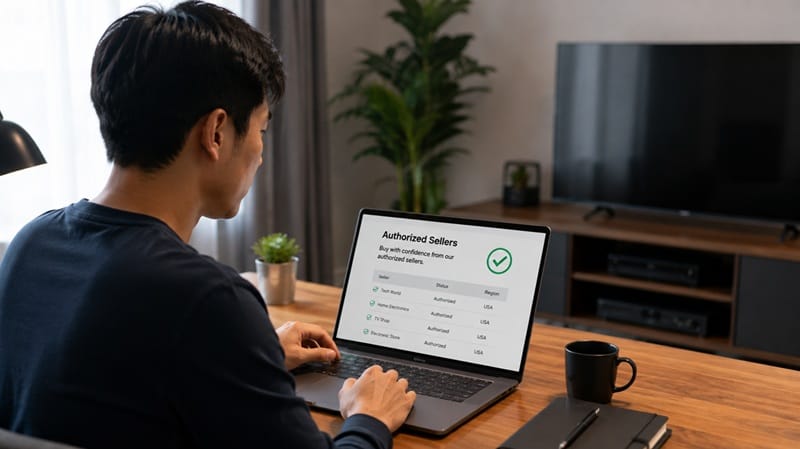
A few checks catch most of the risk before checkout. Start with the manufacturer’s own website: most brands publish a list of authorized retailers, and it takes under a minute to confirm a seller is on it.
On marketplace listings, check exactly who the item ships from and is sold by. A listing showing the retailer’s own name in that field is a different situation than one showing an unfamiliar third-party storefront.
A price sitting well below every other listing for the same model deserves a second look, not an automatic red flag. If the listing’s warranty language mentions a “seller warranty” rather than naming the manufacturer directly, that’s the clearer signal the coverage isn’t the manufacturer’s.
Registering the TV with the manufacturer shortly after purchase is a useful confirmation step. If registration rejects the serial number or flags the unit as sold outside your region, that tells you something about the purchase channel before a repair claim forces the issue years later.
What This Means for You in Practice
Who Should Pay Attention to This
Anyone eyeing a listing from an unfamiliar seller, a price well below the rest of the market, or a cross-border deal should confirm authorization before buying, not after a panel issue shows up.
If the decision has already narrowed to two named, well-known retailers, the calculus shifts toward value and return policy instead — the ground our Costco vs Best Buy LG OLED comparison covers.
Who Doesn’t Need to Worry
Buyers purchasing directly from a major retailer’s own first-party inventory, a brand’s official site, or a physical store location are rarely at risk here. The authorization question applies mainly to marketplace third-party listings, deeply discounted resellers, and imports from outside your home region.
FAQs: Does Where You Buy a TV Affect Warranty
Does where you buy a TV affect the warranty even if it’s the exact same model?
Yes. An identical model number doesn’t guarantee the unit went through an authorized channel. According to LG’s published limited warranty for its TVs, coverage is good only to the original purchaser and effective only when the unit is used in the United States, which excludes units bought or intended for other regions regardless of how closely they match a domestic model.
How can I tell if an online seller is an authorized retailer?
Check the manufacturer’s own website for its authorized-retailer list, then compare that against exactly who the marketplace listing ships from and is sold by. A storefront name that doesn’t match anything on the manufacturer’s list is worth verifying before you buy.
Does buying a TV from a marketplace seller always void the warranty?
No. Many marketplace listings are fulfilled by the retailer’s own first-party inventory and carry full manufacturer coverage. The risk is specific to independent third-party sellers operating outside the manufacturer’s approved network, not to marketplace shopping as a category.
What happens if I unknowingly buy a gray-market import?
A manufacturer can decline the warranty claim on the grounds that the unit wasn’t sold for use in your region, regardless of whether the defect itself is genuine. Some sellers offer their own limited coverage in place of the manufacturer’s, but that protection is only as reliable as the seller providing it.
Does a manufacturer’s official site actually list which retailers are authorized?
Yes, most major TV brands publish a “where to buy” or authorized-dealer page listing the retailers and marketplaces they’ve approved. It’s a direct, first-party way to confirm a seller before purchase, rather than guessing from a listing’s price or presentation alone.

iYaiii
Editor, GearPulse360
iYaiii is the editor and founder of GearPulse360, specializing in TV reviews and consumer electronics. He researches every recommendation before publishing.
✅ Based on spec analysis and LG’s and Samsung’s official warranty data — last verified August 2026