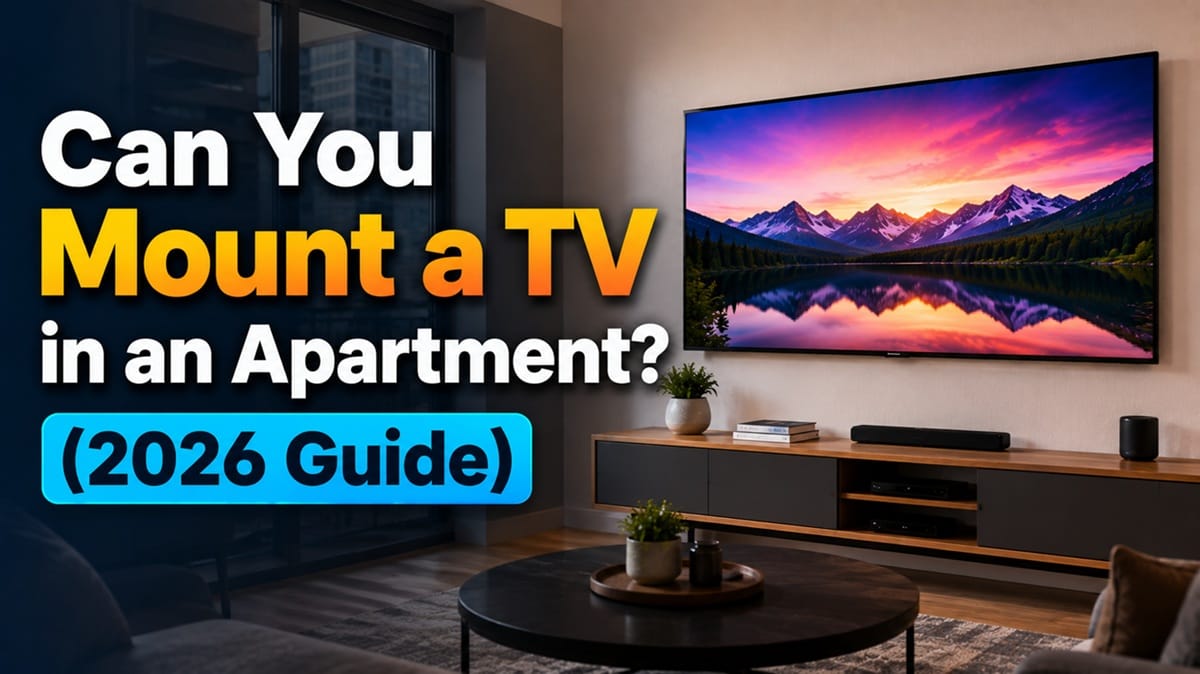
Can You Mount a TV in an Apartment? What Renters Need to Know First
Last updated: August 2026
🕒 7 min read
Disclosure: GearPulse360 is a participant in the Amazon Associates Program. Some pages on this site contain affiliate links, and we may earn a commission from qualifying purchases at no extra cost to you.
The TV’s picked out, the wall space is perfect, and that’s usually the exact moment the lease clause you skimmed on move-in day comes back to mind — something about “alterations to the premises.” Your name isn’t on the deed here; it’s on a 12-month agreement, and that changes the math before a single screw goes in.
So, can you mount a TV in an apartment without picking a fight over your security deposit? Most renters assume the answer defaults to no. That assumption usually doesn’t hold up. What actually matters is what your specific lease says, what kind of wall you’re dealing with, and whether the mount you choose leaves something a landlord would even notice.
Landlords generally care less about the drilling itself and more about whether it’s reversible, which is the lens the rest of this piece takes: lease language first, then the real damage question, then the alternatives if you’d rather skip drilling altogether. If you’re already past that decision and just need placement height, our guide on how high a TV should be mounted picks up from here.
Table of Contents
Quick Answer
Yes, you can usually mount a TV in an apartment — most leases allow small, reversible wall penetrations. The details depend on your lease terms, your wall type, and whether you use a drilled or no-drill mount.
- Best for: Renters with a lease that allows minor wall modifications
- Not ideal for: Short-term or month-to-month leases with strict no-alteration clauses
- Key advantage: A studless or no-drill mount avoids the deposit question almost entirely
- Biggest risk: Drilling into drywall without hitting a stud, which can crack or crumble around the hole
Can You Mount a TV in an Apartment? The Short Answer
Yes, in most cases. Standard wall-mount hardware leaves two to four small screw holes, which fall well within what most leases consider “normal wear and tear” once they’re patched. The exceptions are leases with an explicit no-drilling clause, historic or specialty walls (plaster, tile, brick), and situations where you skip asking first and the landlord finds out after the fact.
What Your Lease Actually Says About Wall Mounting
Most standard residential leases don’t ban wall mounting outright — they ban “material alterations” or damage beyond normal wear and tear. A few small screw holes from a TV bracket almost always fall under wear and tear once patched, the same way picture-hanging holes do.
What to Check Before You Drill
Look for language like “alterations,” “modifications,” or “attachments to walls” in your lease. If it’s vague, a quick email to your landlord or property manager creates a paper trail — worth the five minutes even if the answer is an easy yes. Keep that email even after you get a yes; it’s the thing you’d point to if a new property manager takes over before you move out.
When You Need Written Permission
Some buildings, especially older ones or those under a co-op or HOA, require written sign-off for anything involving drilling. If your lease references a separate building rules document, check that too — it sometimes has stricter language than the lease itself.
Drilled vs. No-Drill Mounts: How Much Damage Are We Really Talking About
The type of mount you choose changes the damage conversation more than almost anything else. A traditional bracket screwed into a wall stud leaves small, easily patched holes. A no-drill or adhesive mount can avoid new holes entirely, at the cost of a lower weight limit.
Stud-Mounted Brackets
Screwing into a stud is the sturdiest option and the one most manufacturers recommend for anything over roughly 40 pounds. LG’s own installation guidance notes that wall-mounting is affected by wall type and installation environment, and recommends professional installation to avoid damage — worth taking seriously if your wall isn’t standard drywall over wood studs.[1] Our step-by-step guide on how to install a TV wall mount covers the installation process across drywall, brick, studs, and concrete, including what changes when your wall isn’t standard drywall over wood studs.
No-Drill and Adhesive Mounts
For smaller TVs, drywall-only mounts distribute weight across dozens of small nails or an adhesive plate instead of a single bolted bracket. They’re rated lower — usually under 100 pounds — but leave almost nothing behind beyond pinholes. This is the same physical principle behind why some OLED sets sit flush against a wall with a slim mount in the first place; a lighter, thinner mounting hardware footprint means less structural attachment is needed. Our look at why some OLED TVs sit so flush against the wall covers the mount-side half of that equation.
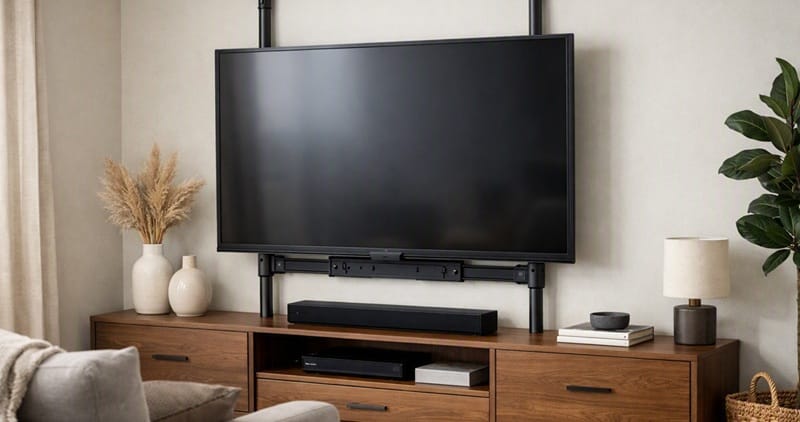
If you’re weighing this alongside which TV to buy in the first place, our best OLED TVs of 2026 roundup flags which picks come in lighter, slimmer chassis — a real factor if you’re leaning toward a no-drill mount with a lower weight ceiling.
Deposit-Safe Ways to Mount a TV in a Rental
If you want the wall-mounted look without any drilling risk, a few approaches keep things fully reversible:
- Furniture-mounted stands — a floor stand with a mounting arm gets the wall-mounted angle with zero wall contact.
- Command-strip or adhesive mounts — rated for lighter TVs (typically 32–43 inches), removable without residue on painted drywall; check what are the dimensions of a TV to confirm your model’s actual width and weight before choosing one.
- Drywall-only studless brackets — nail-based, not adhesive, and rated higher than most strip mounts, but still leave small holes to patch.
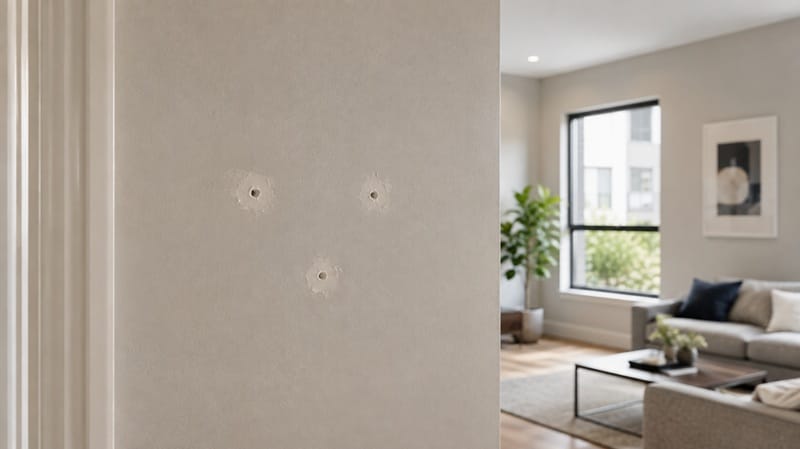
Whichever route you pick, keep the original screws and a small tube of spackle on hand for move-out — patching two to four pinholes takes about ten minutes and typically costs nothing toward your deposit.
What This Means for You in Practice
Who Should Pay Attention to This
This matters most if you’re on a fixed-term lease with more than a few months left, in a building with older or non-standard walls, or mounting a larger TV where a stud-anchored bracket is the safer option regardless of lease terms. If you’re also shopping for a TV that fits a smaller apartment layout, our best OLED TVs for small spaces and apartments guide covers sizing alongside the mounting question.
Who Doesn’t Need to Worry
If your lease already permits standard wall hanging (most do), and you’re mounting a TV under roughly 50 inches on ordinary drywall, this is a non-issue in practice — millions of renters do exactly this without any deposit consequences.
FAQs: Mounting a TV in an Apartment
Do TV wall mounts damage walls?
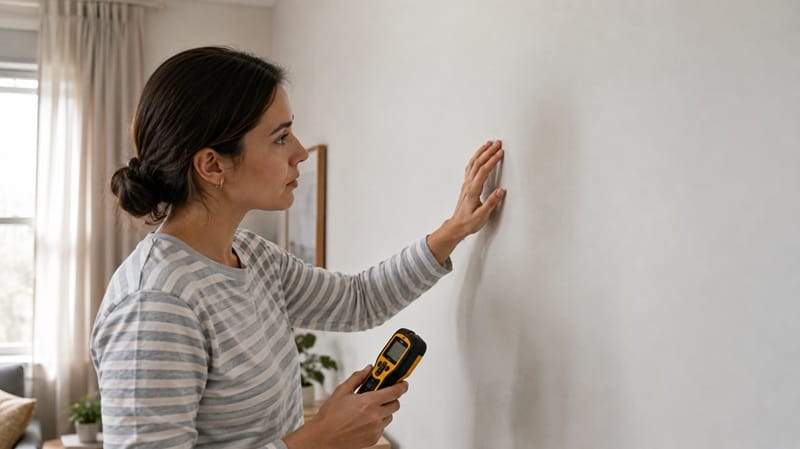
Not meaningfully, in most cases. A properly installed bracket leaves small screw holes that patch in minutes, and manufacturer guidance like Samsung’s own wall-mounting checklist focuses on anchoring into a stud or using drywall anchors rated for the TV’s weight — not on avoiding holes altogether.[2] The real damage risk comes from skipping a stud finder on a heavy TV, not from drilling itself.
Can you mount a TV in an apartment without losing your deposit?
Yes, as long as the holes are patched before move-out and your lease doesn’t have an explicit no-alteration clause. Landlords generally can’t withhold a deposit for damage that qualifies as normal wear and tear, and a few patched pinholes almost always fall into that category.
Does my landlord need to approve a TV mount?
Not usually for a standard bracket on drywall, but check your lease’s alterations clause first. If it explicitly mentions drilling, hanging heavy items, or wall attachments, a quick written request protects you either way.
What’s the safest option if my lease bans drilling entirely?
A no-drill studless mount or a furniture-mounted TV stand with a mounting arm. Both get you a wall-mounted or near-wall-mounted look without touching the drywall’s structure, though weight limits are lower than a stud-anchored bracket.
Will apartment buildings ever standardize TV-mount-friendly walls?
Not in a way renters can plan around yet. Building codes and lease templates move slowly, and pre-installed mounting points aren’t part of that conversation the way structured wiring or smart-home prep sometimes is. Checking your specific lease and wall type before drilling stays the practical move for the foreseeable future.

iYaiii
Editor, GearPulse360
iYaiii is the editor and founder of GearPulse360, specializing in TV reviews and consumer electronics. He researches every recommendation before publishing.
✅ Based on Samsung and LG official installation guidance — last verified August 2026