Hisense TV Warranty Claim Denied: What Hisense Actually Cites and What You Can Do About It
Last updated: July 2026
🕒 8 min read
Disclosure: GearPulse360 participates in the Amazon Associates Program. This particular article contains no affiliate links; other content on our site may.
Every Hisense TV warranty card carries the same handful of exclusion phrases — “physical damage,” “improper installation,” “product sold as-is” — sitting quietly in the fine print until the day a claim actually needs them. That’s usually the moment an owner reads those words for the first time, right after a rejection notice lands.
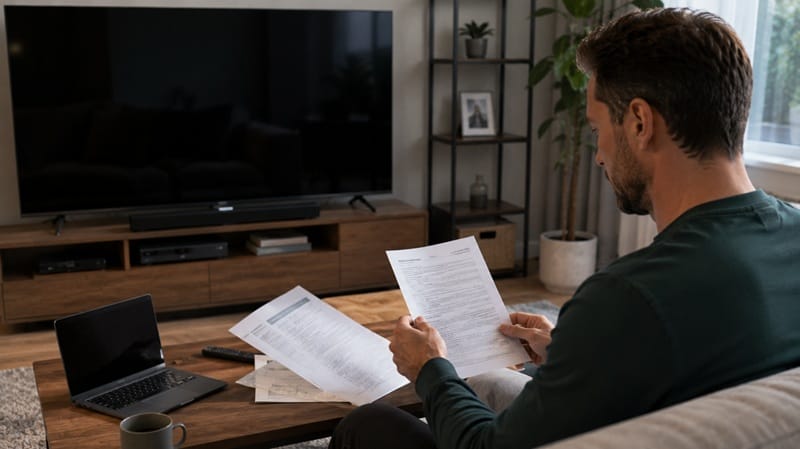
If a Hisense TV warranty claim denied notice just showed up in your inbox, the natural question is whether Hisense is applying the rules fairly or just avoiding a repair bill. Most denials aren’t arbitrary — they cite one specific clause — and that clause is usually where the real argument for or against the decision lives, not a dead end.
The rest of this piece works backward from an actual denial: what Hisense’s exclusion clauses are built to catch, and where a documented case can still push back. It sits alongside our breakdown of why a Hisense TV keeps freezing and restarting, since hardware symptoms and warranty outcomes often get tangled together in owner complaints.
Table of Contents
The Short Answer: What Gets a Hisense TV Warranty Claim Denied
Most denials trace back to one of four exclusions written directly into Hisense’s own warranty terms: physical or accidental damage, a missing or unverifiable proof of purchase, unauthorized repair work, or damage attributed to an environmental cause such as a power surge or humidity. Cosmetic issues that don’t affect function are excluded the same way. None of these categories are specific to Hisense — the same four show up across most consumer-electronics warranty language — but the documentation Hisense asks for before honoring parts and labor coverage is what usually decides which side of that line a claim lands on.
What Hisense’s Warranty Actually Covers (and Where the Exclusions Start)
What’s Covered Under Normal Use
Hisense’s official Limited Warranty terms promise that a covered set will be free from defects in materials and workmanship for the stated period, provided it was purchased new from an authorized dealer and used under normal household conditions. Coverage length isn’t uniform across the lineup: labor and parts terms typically run longer on larger screen sizes than on smaller, budget-tier models, so the first thing worth confirming is which coverage window actually applies to your specific set.
The Exclusion Categories Behind a Hisense TV Warranty Claim Denied Notice
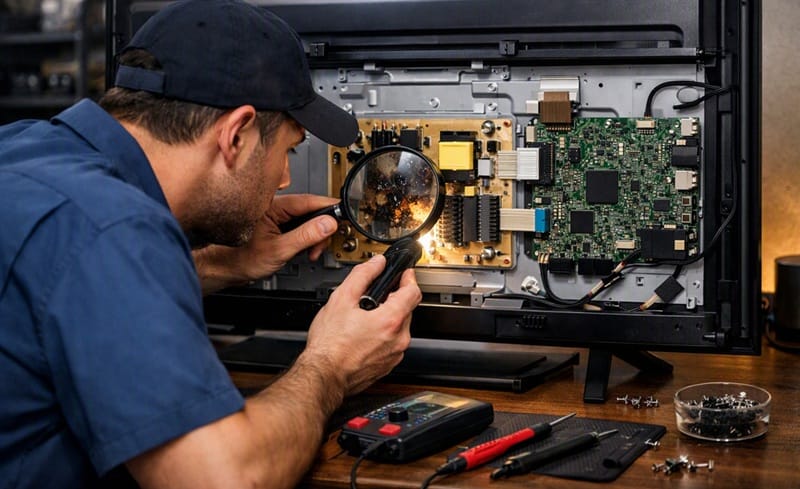
Four categories account for most rejections: physical or accidental damage — cracked panels, drops, spills — a missing or altered proof of purchase, repair work performed by anyone other than an authorized technician, and a serial number that’s been removed or is no longer legible. A set sold “as-is,” “with all faults,” or marked final sale at the time of purchase also falls outside coverage entirely, regardless of what actually failed.
Why These Denials Aren’t Unique to Hisense in 2026
The Same Pattern Shows Up Across the Mid-Range Market
This isn’t specific to one brand. Sony’s OLED lineup uses a nearly identical exclusion structure, and the pattern holds across the mid-range TV market broadly: manufacturers write warranty language around verifiable purchase history and unmodified hardware, then lean on those same clauses when a claim looks disputable. What differs brand to brand is mostly how strictly each one interprets “physical damage” versus giving the owner the benefit of the doubt.
Environmental Causes Sit in a Gray Area
Environmental damage claims — power surges, humidity, or moisture exposure — tend to be harder to resolve than the other categories, since the line between a documented environmental event and ordinary wear isn’t always obvious from a technician’s inspection alone. Humidity-specific denials involve enough Hisense detail on their own that we’ve given that scenario its own breakdown in our guide to why a Hisense TV warranty gets denied for humidity.
None of this changes what actually matters when comparing TVs before you buy — picture quality and real-world reliability, not how a warranty department is likely to respond months later. If you’re shopping rather than filing a claim, our best 4K TVs of 2026 roundup ranks this year’s picks on exactly those terms.
Denial Reason → Cause → What Actually Helps
| DENIAL REASON | WHAT HISENSE CITES | WHAT ACTUALLY HELPS | DIFFICULTY TO DISPUTE |
|---|---|---|---|
| Physical or accidental damage | Cracked panel, drop, or spill noted in the inspection report | Photos from before the failure and no signs of mishandling in the technician’s own report | Medium |
| No proof of purchase | Original receipt missing or illegible | Product registration plus retailer order history or an email confirmation | Easy |
| Unauthorized repair | Prior repair wasn’t performed by an authorized Hisense service provider | Confirm authorized service status before any repair attempt — this one is preventable, not disputable after the fact | Hard |
| Altered or missing serial number | Label removed, painted over, or no longer legible | Little room to dispute — this exclusion is rarely reversible | Hard |
| Environmental or humidity damage | Moisture or power-surge damage cited in the inspection | Documentation of home conditions and surge-protector use; often the hardest category to contest | Hard |
Difficulty reflects how much documentation typically shifts the outcome, not a guarantee of any specific result.
Is the Denial Actually Legitimate, or Worth Disputing?
Whether a denial is worth challenging comes down to three checks: does the technician’s report actually describe something consistent with normal use, does your own documentation contradict the stated reason, and does the cited exclusion apply to what actually failed? A denial citing “physical damage” on a panel showing a manufacturing-pattern defect — banding in the same spot every time, for example — is a different case from a denial on a set that was visibly dropped. The first is worth escalating with photos and a written request for re-inspection; the second usually isn’t, regardless of how the appeal is worded.
What This Means for You in Practice
Who Should Pay Attention to This
Anyone currently mid-claim, or whose set is nearing the edge of its labor/parts coverage window, benefits from knowing which exclusion categories are strict versus negotiable before calling support. If you’re shopping rather than troubleshooting and want a sense of what current Hisense hardware actually delivers, our Hisense 65U7SG review covers where the mini-LED lineup stands today.
Who Doesn’t Need to Worry
Owners still well inside a registered warranty window, with an unaltered receipt and no signs of physical damage, are in the strongest possible position going into a claim. The exclusion clauses exist to catch the disputable cases — a documented, in-window defect claim rarely has much to argue about in the first place.
FAQs: Hisense TV Warranty Claim Denied
Why was my Hisense TV warranty claim denied?
The notice almost always cites one of four categories: physical damage, a missing proof of purchase, unauthorized repair, or an environmental cause like a power surge. How often TVs fail at all is a separate question from why a specific claim gets denied — RTINGS’ longevity testing across more than 100 TVs is a useful independent reference for the first question, though it doesn’t speak to Hisense’s claims process specifically.
Is a warranty denial from Hisense final?
No — a denial cites a specific exclusion clause, and that clause can be challenged with documentation or a request for re-inspection. It isn’t a blanket rejection of the entire claim process, even though the initial notice can read that way.
Does registering my Hisense TV affect whether a claim gets approved?
Registration itself doesn’t create coverage that wasn’t already there, but in practice it gives Hisense a purchase date and model record on file, which removes one common reason claims get held up: an owner’s inability to produce a readable receipt months or years later.
Does filing a warranty claim affect my retailer’s return window?
The manufacturer’s warranty and a retailer’s return window are separate systems, and filing one doesn’t automatically extend or restart the other. We cover how that overlap actually works — and where LG owners specifically have run into confusion — in our guide on whether a warranty claim expires your TV’s return window.
If Hisense denies a claim, do I have any recourse beyond their decision?
Hisense’s own appeal path — requesting a supervisor review or a re-inspection — is the first step, but it isn’t the only one. Many states have consumer-protection statutes covering defective electronics that exist independently of a manufacturer’s warranty terms, so a denial from Hisense isn’t automatically the last word; it’s worth checking what your state specifically allows before treating a denial as final.

iYaiii
Editor, GearPulse360
iYaiii is the editor and founder of GearPulse360, specializing in TV reviews and consumer electronics. He researches every recommendation before publishing.
✅ Based on Hisense’s official Limited Warranty terms and RTINGS data — last verified July 2026
✅ Based on Hisense’s official Limited Warranty terms and RTINGS data — last verified July 2026