Hisense TV Warranty Denied Humidity: What the Exclusion Actually Covers
Last updated: July 2026
🕒 8 min read
Disclosure: GearPulse360 participates in the Amazon Associates Program. This particular article contains no affiliate links; other content on our site may.
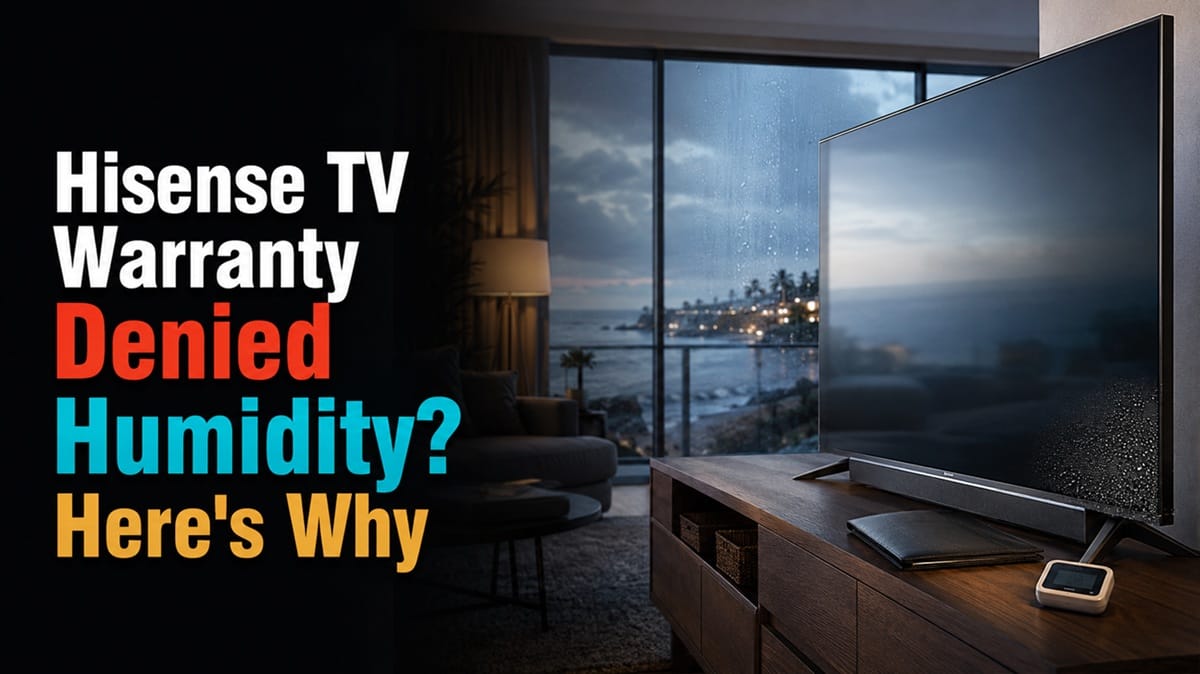
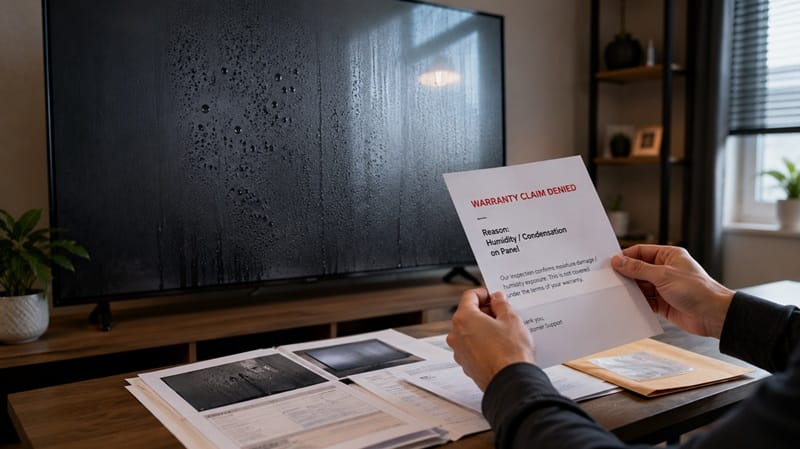
You didn’t do anything unusual. The TV sat in a normal living room, in a normal climate, and one day the picture developed faint discoloration near the bottom edge. A technician opened a claim, took photos, and a few weeks later the response came back citing “external or environmental conditions” as the reason for denial. No storm, no flood, nothing you can point to as an obvious mistake. Just a phrase standing between you and a covered repair.
That reaction is common, and it comes from a real gap between what the warranty card says and what most owners assume it means. Based on editorial research into Hisense’s published limited warranty terms, the environmental exclusion isn’t reserved for extreme events. It’s written broadly enough to cover ordinary humidity, which is a large part of why it gets cited so often.
Hisense TV warranty denied humidity? This piece works through what that clause actually says, why humidity claims are so difficult to win once it’s invoked, and where a documented case still has room to push back. For the broader picture of how Hisense handles warranty denials in general, not just humidity-specific ones, our hisense tv warranty claim denied guide breaks down the other exclusion categories owners run into most often.
Table of Contents
The Short Answer: What a Hisense TV Warranty Denied Humidity Claim Actually Means
Hisense’s limited warranty excludes damage caused by “external or environmental conditions,” a category broad enough to include humidity, condensation, and moisture exposure alongside voltage surges and weather events. Once a service technician attributes a defect to that category, the claim moves from a covered repair to a denial. That holds regardless of how ordinary the room’s humidity actually was.
What Hisense’s Environmental Exclusion Clause Actually Says
The Exact Language in the Warranty Card
Hisense’s published limited warranty for TVs lists a set of exclusions under a single clause covering damage from external or environmental conditions. Named examples include incorrect voltage, power line fluctuations, liquid spillage, and occurrences described as acts of nature. Humidity and condensation aren’t spelled out by name, but they fall under the same umbrella as “environmental conditions” in practice.
That phrasing matters because it leaves room for interpretation. A panel showing moisture-related discoloration doesn’t need a documented flood or storm to get filed under this clause; ambient humidity in the room can be enough for an initial denial to be written up.
Why “Acts of Nature” Language Covers More Than Storms
Most owners read “acts of nature” and picture lightning strikes or hurricanes. In warranty language, the phrase functions more like a catch-all for anything traced back to the surrounding environment rather than a manufacturing defect — including gradual moisture exposure that built up over months rather than a single dramatic event.
Why Humidity Claims Are Hard to Win in 2026
No Universal Humidity Ceiling — Just “Non-Condensing”
TV manufacturers commonly define an operating humidity range in terms of “non-condensing” conditions rather than a hard percentage limit, and Hisense’s environmental exclusion reads consistently with that industry norm. The practical trigger isn’t a specific humidity number; it’s whether moisture actually condensed inside the set. A single humid afternoon that causes visible condensation can qualify as exceeding spec, even in a room that never reads as unusually damp.
That distinction is also why a related question comes up so often after a denial: whether filing the claim at all affects your options elsewhere, including whether a warranty claim expires your TV’s return window if you’re still within it.
How Service Technicians Document Environmental Cause
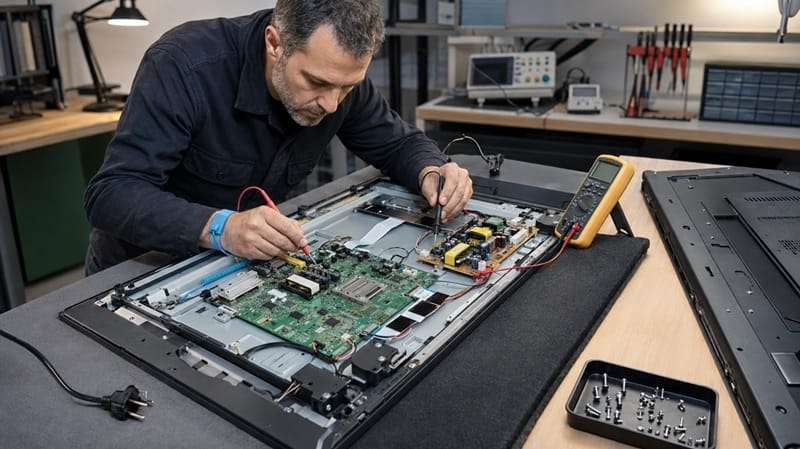
Service technicians typically build the case for an environmental denial around physical evidence, things like corrosion on internal connectors or discoloration patterns consistent with condensation rather than a manufacturing fault. Once that evidence goes into the service report, it becomes the basis for the denial, and reversing it usually means presenting your own competing documentation rather than simply disputing the finding.
Useful documentation includes dated photos of the room’s setup, any smart-home humidity logs if you happen to have them, and a written timeline of when the symptom first appeared relative to installation. None of this guarantees a reversal, but it gives a reviewer a reason to look past the original technician’s read of the evidence. Asking to escalate a disputed finding, requesting a supervisor review or a second inspection, is a reasonable next step whenever your documentation contradicts what the original service report concluded.
None of this changes what’s worth prioritizing before a problem like this ever comes up: picture quality, reliability track record, and how a set handles the room it’s actually going into. If you’re weighing a replacement or a second set for a different room, our best 4K TVs of 2026 roundup ranks the current top picks by use case and budget.
Is This Actually a Manufacturing Defect, Not Humidity?
The hardest part of a humidity denial is that some of its symptoms overlap with legitimate manufacturing defects. Panel discoloration, banding, or intermittent failures can stem from a faulty component just as easily as from moisture exposure, and the two can look similar without a teardown.
If the issue appeared shortly after purchase, before the TV had time to be exposed to seasonal humidity swings, that timeline is worth raising directly with Hisense support. A defect present from day one is a materially different claim than gradual environmental wear, even if the visible symptom looks the same — our guide to Hisense TV dead on arrival screen defects covers exactly how to test for and document that kind of issue while you’re still inside a return window, rather than months into ownership when this humidity exclusion becomes the more likely outcome.
Timing and Failure Pattern Signals to Check
Failure patterns also help make the case either way. A defect that’s isolated to one small, consistent area of the panel and stayed unchanged over time reads differently than discoloration that spread gradually or worsened during a specific season. Bringing that pattern up explicitly, rather than just describing the symptom, is what actually gets a reviewer to revisit the environmental read.
What This Means for You in Practice
Who Should Pay Attention to This
Owners in humid or coastal climates, anyone running a TV in a bathroom-adjacent space, sunroom, or unconditioned garage, and households that go through large seasonal humidity swings face the highest real-world risk of this exclusion getting cited. If you’re in that category and weighing whether to pay for extra coverage, our piece on whether extended warranty coverage is worth it walks through when the math actually works in your favor.
Who Doesn’t Need to Worry
If your TV lives in a standard climate-controlled living room with normal indoor humidity, this exclusion is unlikely to come up at all. Environmental denials cluster heavily around specific installation contexts, not typical living rooms with central heating and air conditioning.
FAQs: Hisense TV Warranty Denied Humidity
Why did Hisense deny my warranty claim for humidity if I don’t live somewhere humid?
Hisense’s exclusion is based on whether condensation is found inside the set, not on your region’s overall climate. A single humid stretch or a poorly ventilated install spot can trigger it even in a generally dry area. According to RTINGS’ overview of TV warranties, most manufacturer coverage is limited to defects in materials or workmanship, which puts the burden on you to show the damage wasn’t environmental.
Isn’t “acts of nature” only supposed to cover disasters like floods?
That’s the most common misreading of this clause. In practice, warranty departments apply it to any damage traced to the surrounding environment, including gradual moisture exposure, not just single catastrophic events.
Can I get a second opinion if Hisense’s technician blames humidity?
Yes. Requesting a re-inspection or escalating to a supervisor is a legitimate next step, and bringing your own documentation (photos, purchase-date timeline, room conditions) gives the reviewer something to weigh against the original service report.
Should I just replace the TV instead of fighting the denial?
It depends on the repair cost quoted versus the price of a comparable current model. For owners specifically considering a Hisense replacement, our Hisense 75U7SG review covers what a similarly-sized current-generation set looks like on paper before you commit to either path.
Does using a dehumidifier or better ventilation prevent this from happening again?
Improving airflow around the set and keeping the room within a more stable humidity range reduces the odds of condensation forming, though it isn’t a guarantee — the goal is avoiding the specific non-condensing threshold the warranty is built around, not just lowering humidity in general.

iYaiii
Editor, GearPulse360
iYaiii is the editor and founder of GearPulse360, specializing in TV reviews and consumer electronics. He researches every recommendation before publishing.
✅ Based on Hisense’s published warranty terms and RTINGS data — last verified July 2026