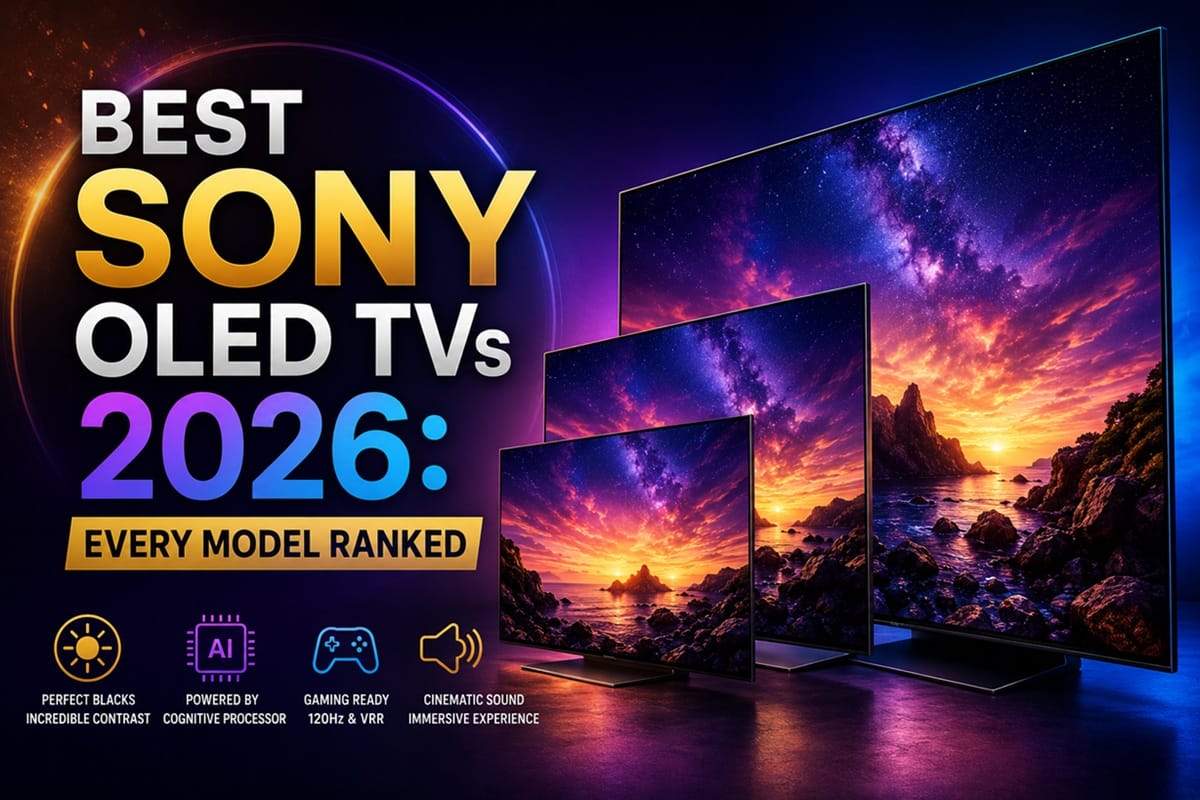
Best Sony OLED TVs in 2026: BRAVIA XR8B, BRAVIA 8 and BRAVIA 8 II — Which One Is Right for You?
Last updated: June 2026
Disclosure: As an Amazon Associate I earn from qualifying purchases. This article contains affiliate links — we may earn a small commission if you buy through them, at no extra cost to you.
Sony has always played a different game with OLED TVs. While LG competes on panel variety and Samsung leans hard into gaming specs, Sony’s pitch is picture processing — specifically, the Cognitive Processor XR and its ability to reproduce color, motion, and shadow detail the way a filmmaker intended. That philosophy runs through every OLED in the current BRAVIA lineup, from the entry-level XR8B all the way up to the BRAVIA 8 II. But the differences between those models matter, and they’re not always obvious from the spec sheets.
For most people, the BRAVIA 8 II is the right answer. It’s Sony’s first QD-OLED and a genuine step up from everything that came before it. That said, the standard BRAVIA 8 is still an excellent WOLED at a lower price — and the XR8B makes a strong case if you’re coming from a mid-range LCD and want OLED contrast without the flagship premium.
📍 This guide covers all three current Sony OLED models. For a broader look at how they stack up against LG and Samsung, our best OLED TVs of 2026 roundup has the full cross-brand picture. Here, we’re focused specifically on helping you navigate the Sony lineup and pick the right tier for your room and use case.
Table of Contents
Best Sony OLED TVs 2026: Quick Picks
| Pick | Model | Best for | Price |
|---|---|---|---|
| ⭐ Best overall | BRAVIA 8 II QD-OLED · 55" & 65" · 2025 | HDR, movies, PS5 | Amazon → |
| ✦ Best value | BRAVIA 8 WOLED · 55" 65" 77" · 2024 | Large rooms, movies | Amazon → |
| ↗ Entry OLED | BRAVIA XR8B WOLED · 55" 65" 77" · budget | First OLED upgrade | Amazon → |
Prices change frequently — click through for current pricing. Ratings reflect independent editorial assessment, not Amazon reviews.
Sony BRAVIA OLED Lineup Explained: XR8B, BRAVIA 8 and BRAVIA 8 II
Sony’s current OLED lineup sits under the BRAVIA umbrella and breaks into three distinct tiers. Unlike LG — which offers five or six OLED series covering everything from budget B-series panels to the flagship Z-series — Sony keeps things tighter. That’s not necessarily a disadvantage. Fewer choices means the differentiation between tiers is cleaner and easier to understand.
All three models share the same Cognitive Processor XR at their core, and all three support Dolby Vision, HDR10, and Sony’s Studio Calibrated picture modes for Netflix, Prime Video, and Sony Pictures Core. Where they diverge is in panel technology, peak brightness, and the Sony Pictures Core content bundle — we go deeper on the panel side in our explainer on QD-OLED vs WOLED compared.
| Feature | BRAVIA 8 II QD-OLED · Flagship | BRAVIA 8 WOLED · Mid tier | BRAVIA XR8B WOLED · Entry |
|---|---|---|---|
| Panel type | QD-OLED | WOLED | WOLED |
| Available sizes | 55″ · 65″ | 55″ · 65″ · 77″ | 55″ · 65″ · 77″ |
| Contrast engine | Booster 25 · Triluminos Max | Booster 15 · Triluminos Pro | OLED Contrast (standard) |
| HDR brightness | Highest | Good | Standard |
| Refresh rate | 120 Hz | 120 Hz | 120 Hz |
| HDMI 2.1 ports | 2 | 2 | 2 |
| Acoustic Surface Audio+ | ✓ | ✓ | ✓ |
| Studio calibrated modes | ✓ Netflix · Prime · Core | ✓ Netflix · Prime · Core | ✓ Netflix · Prime · Core |
| Sony Pictures Core | 10 credits + 24 mo | 5 credits + 12 mo | — |
| PS5 exclusive features | ✓ | ✓ | ✓ |
| Best for | HDR · color accuracy · PS5 | Large rooms · movies | Entry-level OLED |
All three share Sony’s Cognitive Processor XR and Acoustic Surface Audio+. Key differences are panel type, brightness ceiling, and the Sony Pictures Core bundle.
One thing worth noting: Sony hasn’t announced any new OLED models for 2026. The company’s headline launches this year are the BRAVIA 7 II and BRAVIA 9 II, which use Sony’s new True RGB Mini LED technology rather than OLED panels. For OLED buyers, the lineup above is what’s available — and it’s still a strong one. You can browse the full Sony BRAVIA TV buying guide on Sony’s site if you want the official overview.
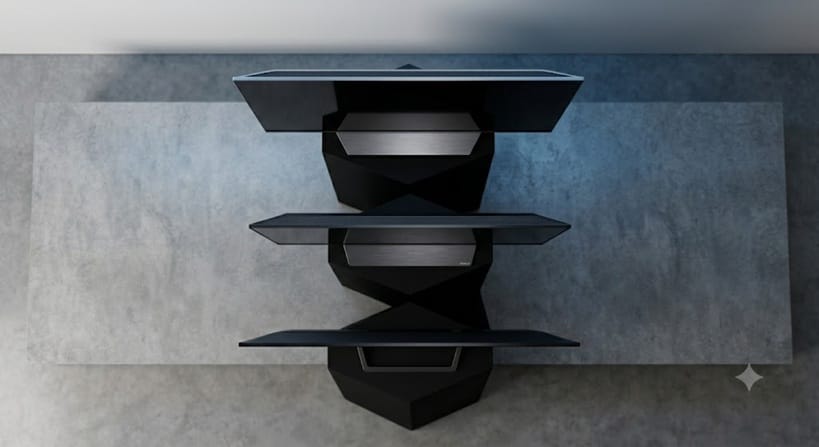
Best Overall: Sony BRAVIA 8 II
The BRAVIA 8 II is the first Sony OLED to use a QD-OLED panel, and the difference from the WOLED panels in its siblings is immediately apparent in HDR content. Where the standard BRAVIA 8 handles highlights competently, the 8 II’s XR Contrast Booster 25 and Triluminos Max push color volume significantly higher. Put Dune: Part Two on in Dolby Vision and the desert sand has a warmth and texture you don’t get from a WOLED panel — highlights bite harder, shadows hold more detail simultaneously. It’s the kind of image that makes you stop adjusting settings and just watch.
Sony’s Cognitive Processor XR has always been good at film-accurate color reproduction, but pairing it with a QD-OLED panel gives it more raw material to work with. The Netflix Calibrated mode ships tuned to match Sony’s own mastering monitors — the same reference displays used in post-production. It’s not perfect for every room, but it’s closer to correct than most TVs manage straight out of the box.
Who Should Buy the BRAVIA 8 II
If movies and streaming are your primary use case, this is the Sony OLED to buy. It’s also the stronger PS5 companion of the three — Sony’s exclusive PlayStation features (including Auto HDR Tone Mapping and Auto Genre Picture Mode) are present on all three models, but the 8 II’s brighter panel makes a more noticeable difference in HDR game environments. The one limitation to flag upfront: the 8 II tops out at 65 inches. If you need 77 inches, you’ll have to step down to the BRAVIA 8.
For a deeper look at how it performs across specific test scenarios, the RTINGS Sony BRAVIA 8 II review is the most thorough independent data source available. Also see our own full Sony BRAVIA 8 II review for real-world impressions.
Best Value Sony OLED: Sony BRAVIA 8
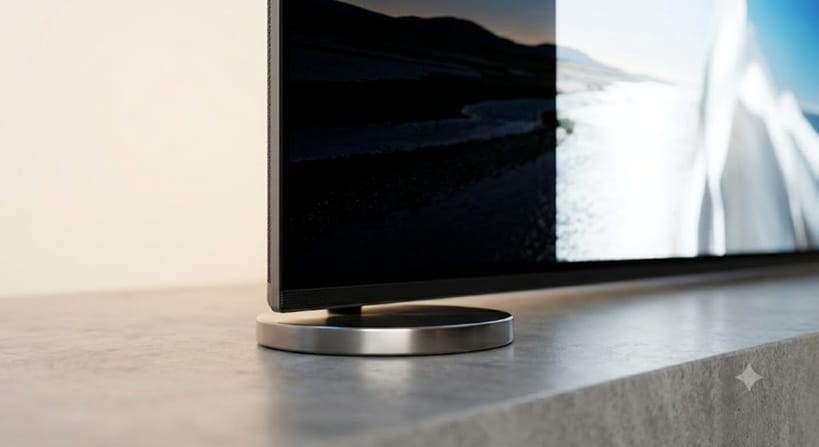
The BRAVIA 8 uses a WOLED panel rather than QD-OLED, which means it can’t match the BRAVIA 8 II’s color saturation or peak brightness in HDR. What it does offer is the same Cognitive Processor XR, the same Acoustic Surface Audio+ system (where actuators turn the screen itself into a speaker), and — critically — the 77-inch size option that the 8 II doesn’t have.
For buyers who want a large Sony OLED and aren’t necessarily chasing peak HDR brightness, the BRAVIA 8 is the right call. Dark-room movie watching is where OLED excels regardless of whether it’s QD-OLED or WOLED, and the XR Contrast Booster 15 combined with XR Triluminos Pro still delivers noticeably better picture quality than a comparably priced Mini LED. You also get five Sony Pictures Core credits and 12 months of classics streaming — less generous than the 8 II bundle, but five credits still covers a couple of new releases, enough to test whether the service is worth keeping.
Who Should Buy the BRAVIA 8
This is the pick for anyone who needs 77 inches, anyone upgrading from a mid-range LCD who wants the Sony OLED experience without the flagship price, and anyone who watches mostly in a dim or controlled-light room where the QD-OLED brightness advantage is less pronounced. Check the independent RTINGS BRAVIA 8 OLED review for detailed brightness and color measurements if you want the data before deciding.
Best Budget Sony OLED: Sony BRAVIA XR8B
The XR8B sits at the bottom of Sony’s OLED tier, and it makes that position pretty clear. You lose the XR Contrast Booster and Triluminos Pro processing, and there’s no Sony Pictures Core bundle. But you keep the Cognitive Processor XR — which matters more than most people realize. Sony’s scene-by-scene processing does a meaningful job of cleaning up lower-quality streaming content, improving motion on 24fps film material, and preserving shadow detail in a way that most competitors in this price range don’t.
If you’re coming from a mid-range 4K LED TV, the XR8B is a reasonable entry point — and the visual shift is more dramatic than most people expect. Switch to it during a night scene and the letterbox bars disappear into the panel; shadow detail that was crushed to gray on your old TV suddenly has shape and depth. That’s OLED doing what only OLED can do, regardless of tier. Just don’t expect the same HDR punch you’d get from the BRAVIA 8 or 8 II — this is a TV that excels in dim rooms, not in bright living rooms where you need a panel that can push back against ambient light.
Who Should Buy the BRAVIA XR8B
Buyers who want Sony’s processing and build quality at the lowest possible OLED price point. Also a solid choice for dedicated bedroom or cinema room setups where the room is consistently dark and you won’t be asking the panel to overcome much ambient light. It’s also worth noting that at 77 inches, the XR8B represents a lower cost of entry to large-screen Sony OLED than the BRAVIA 8 — something worth checking current pricing on before assuming one is always cheaper than the other.
BRAVIA 8 vs BRAVIA 8 II: Which Should You Buy?
These two are the models most buyers will find themselves choosing between, and the decision isn’t purely about budget. The BRAVIA 8 is a WOLED panel; the BRAVIA 8 II is QD-OLED. In everyday SDR content — normal TV, casual streaming — you probably won’t notice a dramatic difference. Both look excellent. Where the 8 II pulls ahead is in HDR: brighter highlights, more saturated colors, and better performance in rooms with ambient light. If you watch a lot of HDR content or you’re in a brighter room, the 8 II earns its premium.
The BRAVIA 8 wins on size. The 77-inch option is only available on the BRAVIA 8 (and XR8B), so if screen size is the priority, the comparison ends there. The BRAVIA 8 also tends to offer better value per inch when you factor in price-to-performance at the 65-inch tier once discounts normalize. Step up to the 8 II when you want the best HDR picture Sony currently makes in OLED and 65 inches is large enough for your room.
Our Verdict
Get the BRAVIA 8 II if HDR picture quality is your priority and 65 inches is enough screen. Go with the BRAVIA 8 if you need 77 inches or want to spend less without giving up Sony’s processing edge.
Prices change frequently — click for current price.
Sony OLED vs LG OLED: Which Brand Is Better?
Sony and LG are the two names that define the OLED TV market, and the comparison between them is genuinely close. Sony’s edge is picture processing. The Cognitive Processor XR consistently produces more film-accurate color and cleaner motion on 24fps content than LG’s equivalent processing. If you’re a cinephile and care about how a movie actually looks versus how it looked in the original grade, Sony tends to feel more intentional. We compared both brands directly in our Sony OLED vs LG OLED piece if you want the full picture.
LG’s advantage is variety and gaming specs. The C5 and G5 offer higher peak brightness than Sony’s WOLED options, and LG’s gaming mode with G-SYNC support and higher refresh rates gives it an edge for PC gaming in particular. LG also covers more size options and price points across its lineup, which makes it easier to find the exact spec you need at the budget you have. Neither brand is definitively better — it genuinely depends on whether picture processing or raw specs matter more to you. For a full breakdown of LG’s lineup, see our LG OLED roundup.
For a head-to-head breakdown, see our full LG C6H vs Sony BRAVIA 8 II comparison.
How to Choose the Right Sony OLED for Your Room
Room size should drive the size decision more than anything else. Sony’s OLED lineup is compact — three models, capped at 77 inches — so you won’t get lost in options. The XR8B and BRAVIA 8 cover 55 to 77 inches; the BRAVIA 8 II stops at 65. For a living room at typical viewing distances (eight to twelve feet), 65 to 77 inches is the sweet spot for most people. Smaller bedrooms or secondary spaces are often better served by 55 inches. For cross-brand size-specific picks, see our best 65-inch OLED TVs roundup.
Ambient light matters more than most buyers expect. All three Sony OLEDs use Acoustic Surface Audio+ and handle dark rooms beautifully. But if your living room has large windows or you frequently watch with lights on, the BRAVIA 8 II’s QD-OLED panel will hold up better than the WOLED options. It simply has more brightness headroom to fight back against ambient light without washing out blacks.
Movies and streaming work well on all three — Sony’s Studio Calibrated modes are consistent across the lineup. Where the 8 II separates itself is PS5: Auto HDR Tone Mapping on a brighter QD-OLED panel makes game environments look noticeably more vivid than the same feature running on a WOLED. For broader use-case guidance, check our picks for the best OLED TVs for movies and the best OLED TVs for gaming — both pull in cross-brand options. If you want a step-by-step walkthrough of which tier fits your room, see our Sony OLED buying guide.
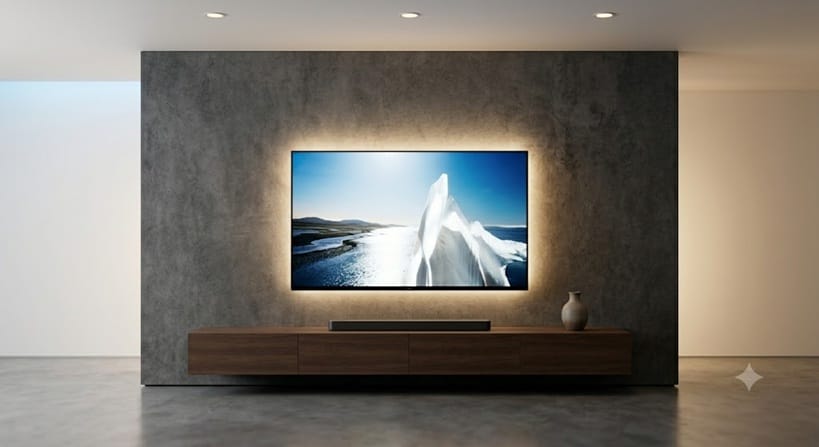
Also worth browsing: all Sony OLED TVs on Amazon — useful if you want to compare sizes and current pricing across the full lineup in one place.
Sony OLED TV FAQs
Which Sony OLED TV should I buy in 2026?
For most buyers, the Sony BRAVIA 8 II is the best Sony OLED TV 2026 has available — it’s Sony’s brightest and most color-accurate OLED, using a QD-OLED panel with XR Contrast Booster 25. If you need a 77-inch screen or want to spend less, the BRAVIA 8 is the next best option. The BRAVIA XR8B makes sense only if budget is the primary constraint.
What’s the difference between the Sony BRAVIA 8 and BRAVIA 8 II?
The key difference is panel technology: the BRAVIA 8 uses a WOLED panel, while the BRAVIA 8 II uses a QD-OLED panel. In practice, this means the 8 II is significantly brighter in HDR, has more saturated colors, and performs better in ambient light. The BRAVIA 8, however, is available in 77 inches — a size the 8 II doesn’t offer. The 8 II also comes with a more generous Sony Pictures Core content bundle (10 credits vs. 5).
Do Sony OLED TVs have burn-in issues?
Burn-in risk on modern Sony OLEDs is low for typical mixed-use viewing — Sony includes automatic pixel refresh cycles and logo detection to minimize static image retention. The risk increases with prolonged static content (news tickers, sports HUDs on screen for many hours daily), but for movies, streaming, and gaming, it’s not a practical concern for the vast majority of users. For the full data picture, the RTINGS Sony TV reviews include burn-in test results across the lineup.
Is Sony OLED better than LG OLED?
It depends on the use case. Sony’s picture processing is generally considered more film-accurate, and Studio Calibrated modes produce excellent out-of-box results for movie watching. LG tends to offer higher peak brightness in its flagship models (G5, G6) and better gaming specs including G-SYNC support. Neither is universally better — Sony wins on color processing, LG wins on brightness headroom and gaming features.
Are Sony OLED TVs worth the price?
Usually yes, but it depends on what you’re comparing them to. Against LG’s C-series at the same price, Sony often costs more for similar panel performance — you’re paying for the XR processing and Sony’s out-of-box tuning. If that matters to you, the premium makes sense. If raw specs per dollar is the goal, LG or Samsung will frequently beat Sony on paper. Sony’s sweet spot is buyers who want the most accurate picture possible without spending time in calibration menus. If you’re still on the fence, we break down the full value case — including the scenarios where it isn’t worth it — in are Sony OLED TVs worth it.

iYaiii
Editor, GearPulse360
iYaiii is the editor and founder of GearPulse360, specializing in TV reviews and consumer electronics. He tests and researches every recommendation before publishing.
✅ Based on spec analysis, Sony’s Official and RTINGS data — last verified June 2026