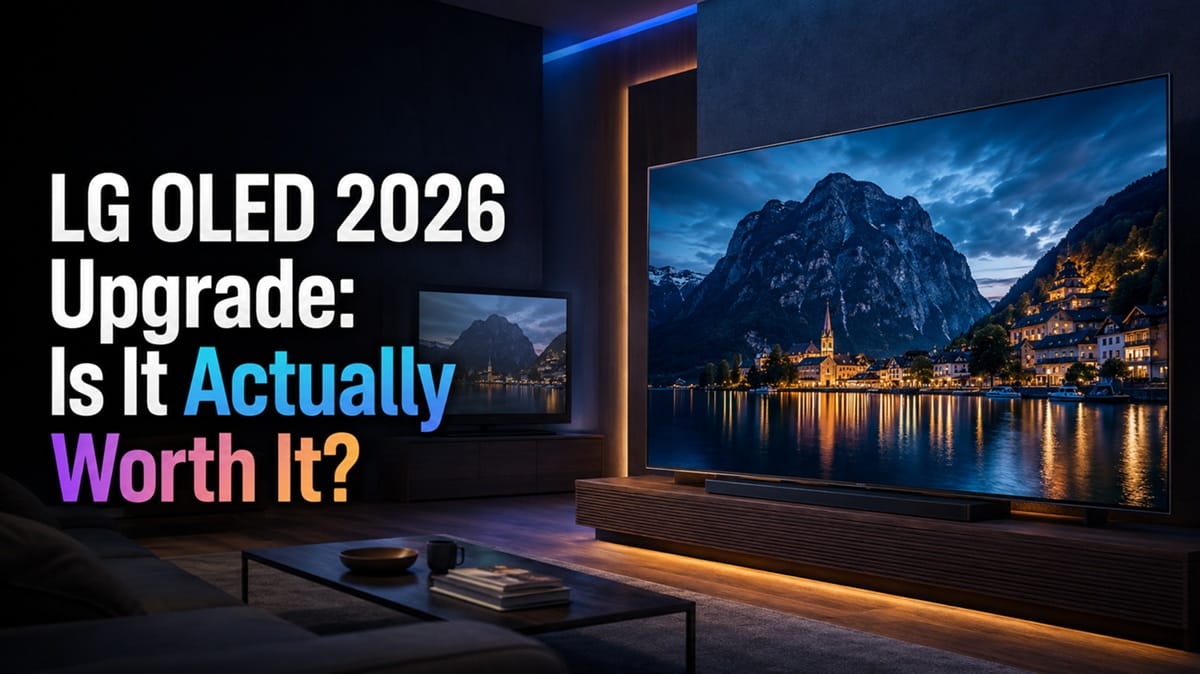
Is It Worth Upgrading to LG OLED 2026? A Clear-Eyed Answer
Last updated: August 2026
🕒 9 min read
Disclosure: GearPulse360 participates in the Amazon Associates Program. This particular article contains no affiliate links; other content on our site may.
Upgrading is worth it if your current LG OLED is several years old or already falls short in daily use, not because a newer model exists.
The 2026 G6 and C6 lineup brings real gains in peak brightness and gaming responsiveness over sets from three-plus years ago. If your current panel is from the last one to two years, though, those same gains shrink to the point where most viewers won’t notice them in daily use.
Is it worth upgrading to LG OLED 2026, or is that money better spent elsewhere? LG’s new G6 and C6 lineup launched at a real premium over both last year’s models and whatever you’re currently watching on, and that gap is easy to justify on a spec sheet but much harder to justify once the new set is sitting in your living room next to a TV that, by most accounts, still looks fine.
The decision comes down to two paths: replace a panel that’s still doing its job in exchange for brightness and processing gains you might barely notice, or keep what you have and spend that money elsewhere. Which path fits depends far more on your current TV’s age and viewing habits than on how convincing LG’s marketing reads.
If you’ve already decided a 2026 model is the move, we’ve ranked every current LG OLED in our LG OLED roundup. The sections below focus on whether that move makes sense in the first place.
Table of Contents
The Short Answer: Is It Worth Upgrading to LG OLED 2026?
Upgrading to LG OLED 2026 is worth it if you’re on a set from 2022 or earlier, want the latest gaming features, or watch in a bright room where your current panel struggles. It is not worth it if your existing LG OLED is barely a year or two old, or lives mostly in a dedicated dark room. The rest of this article explains exactly why.
What You’re Actually Paying Extra For
Higher Peak Brightness
LG’s 2026 flagship models pair a redesigned tandem panel structure with new brightness-booster technology, and based on the company’s own published specifications, the result is a noticeably brighter picture than the outgoing generation. That shows up most in daytime or lamp-lit rooms, where an older OLED’s lower brightness ceiling can leave HDR highlights looking flatter than they should.
Faster Gaming Response and the Latest HDMI 2.1 Features
Every 2026 LG OLED carries HDMI 2.1 bandwidth across all four ports along with support for higher refresh rates than most 2021–2022 LG panels offered at launch. If you’ve picked up a newer console or gaming PC since your current TV arrived, this is one of the few upgrade reasons that’s actually hardware-limited rather than a marginal preference.
Updated AI Processing for Upscaling and Motion
The newer Alpha processor generation handles upscaling and motion interpolation more cleanly, based on editorial research into LG’s processor changes year over year. The improvement shows most on lower-quality sources like cable broadcasts or older DVDs, where the extra processing has more compression noise to clean up. With native 4K streaming, most viewers won’t spot a difference within a few minutes of watching.
If long-term panel wear is part of what’s holding you back from upgrading, that concern applies to every OLED generation, not just older ones. We cover whether OLED burn-in still matters in 2026 in more detail if that’s your main hesitation.
Scenarios Where LG OLED 2026 Is Absolutely Worth the Money
You’re still running a pre-OLED or early-generation OLED — anything without HDMI 2.1, with visibly dim HDR highlights, or approaching the end of its expected panel life. The generational gap between that set and a 2026 model is large enough to notice in every viewing session, not just side-by-side comparisons.
You’re a serious or competitive gamer chasing the lowest possible input lag and the highest refresh rate your console or PC can output. The newest HDMI 2.1 implementation and processor generation move the needle here in a way casual viewing never will.
Your living room gets real daytime light, and your current panel has always looked a little washed out by early afternoon. Brightness is the single area where LG’s 2026 panels make the clearest real-world case for upgrading.
If you’re mapping out exactly which 2026 model fits your room and budget, our LG OLED buying guide walks through the tier differences in detail.
Where LG OLED 2026 Doesn’t Justify the Extra Cost
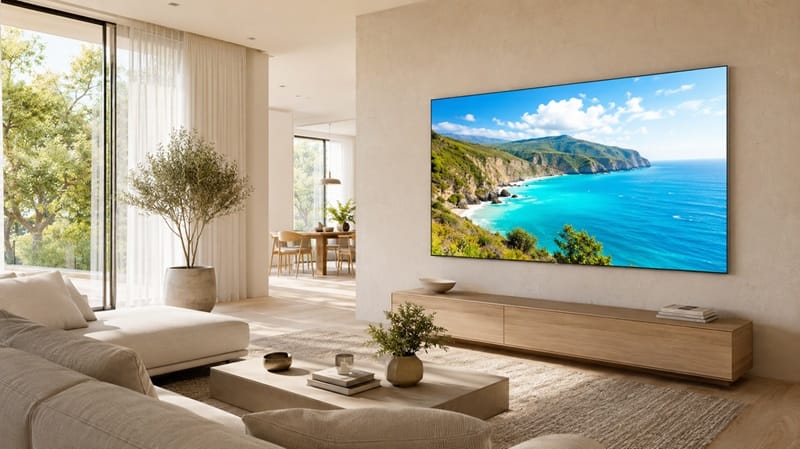
If your current LG OLED is from the last one to two years, the generational jump is incremental, not transformative. You already own a panel with HDMI 2.1, strong contrast, and reasonably modern processing, so the 2026 gains layer on top of that instead of fixing anything broken.
Dedicated dark-room and home-theater viewers should think twice as well. Black levels and contrast were already close to a practical ceiling on OLED panels several generations back, so a newer set won’t change much of what you actually see once the lights go down.
Budget-conscious buyers are usually better served by a discounted prior-generation model. It carries over most of the same core panel technology at a smaller premium over non-OLED alternatives, without paying for brightness headroom you may rarely use.
LG OLED 2026 vs Your Current OLED: The Real-World Difference
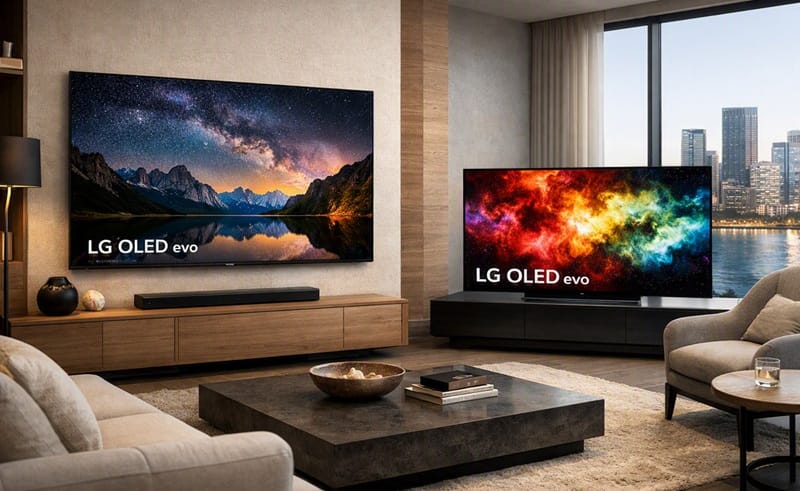
Set an LG G6 next to a 2021- or 2022-era LG OLED and the difference is most obvious in a bright room, not a dark one. LG states its Perfect Black and Perfect Color performance on the 2026 lineup has been independently verified by UL Solutions, with brightness boosted well beyond what earlier tandem-panel and single-stack designs could reach — a gap that shows up specifically when ambient light is fighting the screen for attention.
In a controlled dark room, the difference narrows considerably. Both generations deliver deep, uniform blacks and strong contrast, so the older panel’s core home-theater performance holds up better than its brightness specs alone would suggest.
Where the 2026 models pull further ahead is gaming responsiveness and the smart platform. webOS has moved forward several versions since 2021–2022, and the newer processor handles higher frame rates more consistently than older Alpha chip generations managed at launch.
Who Should Buy LG OLED 2026
Anyone whose current set predates 2022, whether it’s an older LG OLED or a competing brand’s early OLED. That’s roughly the cutoff where the brightness and processing gap starts to outweigh the cost of switching.
Serious gamers who’ll actually push the newest HDMI 2.1 implementation, the highest supported refresh rates, and the latest processor’s lower input lag, rather than buying the spec and rarely using it.
Households with real daytime glare in the room, where an older panel’s peak brightness has always been the limiting factor no matter how good everything else about the picture looks.
Anyone planning to keep the next TV for five-plus years. Paying for extra headroom now costs less over that stretch than upgrading twice.
Who Should Consider Keeping Your Current LG OLED Instead
If your existing LG OLED is barely a year or two old and hasn’t given you any real problems, there’s little reason to replace it purely because a newer model exists. The gains you’d be paying for are the kind most people only notice with two TVs sitting side by side.
Buyers who mainly watch in a dark or dim room get less practical benefit from the 2026 lineup’s headline improvement, brightness, than gamers or bright-room viewers do.
If price is the deciding factor, last year’s LG C5 and G5 already deliver nearly all of the same real-world experience at a smaller premium than the newest models. See our LG C5 vs G5 compared breakdown to see how those two stack up against each other.
Our Verdict: Is It Worth Upgrading to LG OLED 2026?
A useful test: if you’re already unsure whether your current TV still counts as “good,” that hesitation is usually the answer. A set you’re already questioning is one you’re ready to replace. If your TV still gets compliments and you hadn’t thought about upgrading until you started reading this, it’s probably good for at least one more cycle.
The right pick depends on your situation. See our LG OLED roundup to find the model that actually fits your room and budget before you commit.
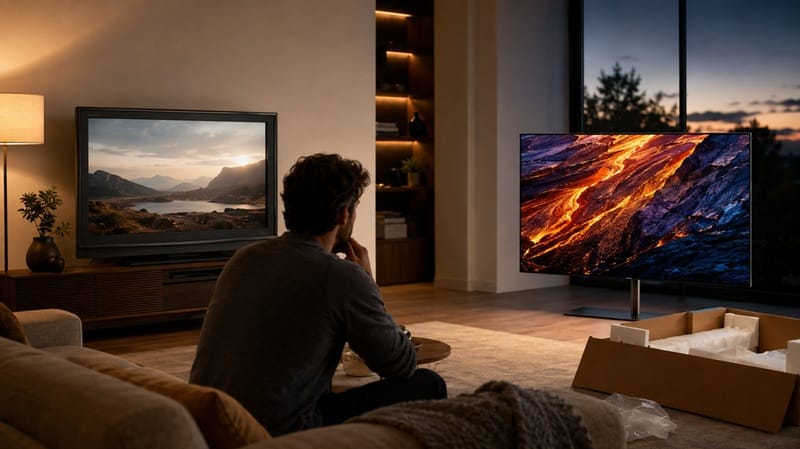
📍 Still weighing LG against other brands entirely? Our best OLED TVs of 2026 roundup ranks every top contender, not just LG, so you can see how the G6 and C6 stack up against the competition before committing to an upgrade: best OLED TVs of 2026.
LG OLED 2026 Upgrade — Common Questions
Is it worth upgrading to LG OLED 2026 over keeping my current LG OLED?
Only if your current set is a few generations old or you have a specific complaint like a dim daytime picture or noticeable input lag. If neither applies, most owners are better off waiting another cycle before spending on a new panel.
What’s the real-world difference between the 2026 LG OLED lineup and an older LG OLED?
The clearest gap shows up in peak brightness and reflection handling in bright rooms, an area where earlier LG OLED panels have historically been weaker. According to RTINGS’ review of the LG G6, the panel supports full HDMI 2.1 bandwidth on every port with up to 4K at 165Hz for PC gaming, a step beyond what most 2021–2022 LG panels offered at launch — though dark-room contrast and black levels were already close to a practical ceiling on older sets.
Will burn-in be a bigger risk on a newer LG OLED panel?
No, not inherently. Burn-in risk comes down to panel chemistry and viewing habits, like static logos, extreme brightness settings, or long uninterrupted sessions on the same content, rather than how recently the panel was made. Those risk factors haven’t changed from one LG OLED generation to the next, so a 2026 panel isn’t starting from a worse position than the one it’s replacing.
Which LG OLED gives the best value for the money right now?
For most buyers, that’s rarely the newest flagship. A previous generation’s mid-tier model typically carries over most of the same core panel technology once it’s had a full year to settle in price, making it the stronger value pick for anyone not chasing the latest brightness or gaming specs.
Will LG OLED prices change later in 2026?
Prices on LG’s OLED lineup typically ease as the year goes on, though exact timing and depth vary from year to year — we can’t promise a specific number or month. If brightness and gaming features matter to you now, waiting on a specific date isn’t a reliable strategy either way.

iYaiii
Editor, GearPulse360
iYaiii is the editor and founder of GearPulse360, specializing in TV reviews and consumer electronics. He researches every recommendation before publishing.
✅ Based on manufacturer specifications and RTINGS data — last verified August 2026