Next Generation OLED Panels Explained: What’s Actually Coming After Tandem WOLED and QD-OLED
Last updated: July 2026 | 🕒 8 min read
Disclosure: As an Amazon Associate I earn from qualifying purchases. This article contains affiliate links — we may earn a small commission if you buy through them, at no extra cost to you.
Every CES cycle brings a fresh round of nit counts and rebranded panel names, and 2026 delivered one of the bigger shake-ups OLED has seen in years. LG Display retired the “WOLED” name in favor of “Tandem WOLED,” Samsung Display rolled out a new 2026 QD-OLED panel, and both companies started talking about numbers that sounded closer to Mini LED than OLED.
If you’re trying to figure out whether that’s marketing noise or a real shift before you buy your next TV, you’re not alone. Based on editorial research into manufacturer announcements and independent lab data, the honest answer sits somewhere in the middle: some of what’s labeled “next generation” is already shipping in 2026 sets, and some of it is still a rumor pointed at 2027.
This guide breaks down what’s confirmed, what’s still speculative, and what it means for your buying timeline. If you haven’t already, our OLED panel types explained guide is a useful primer on how WOLED and QD-OLED differ before we get into what’s changing about them.
Table of Contents
The Short Answer
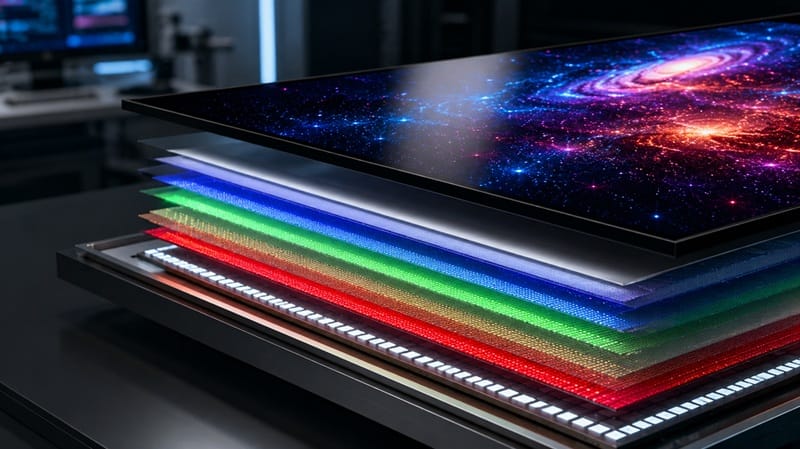
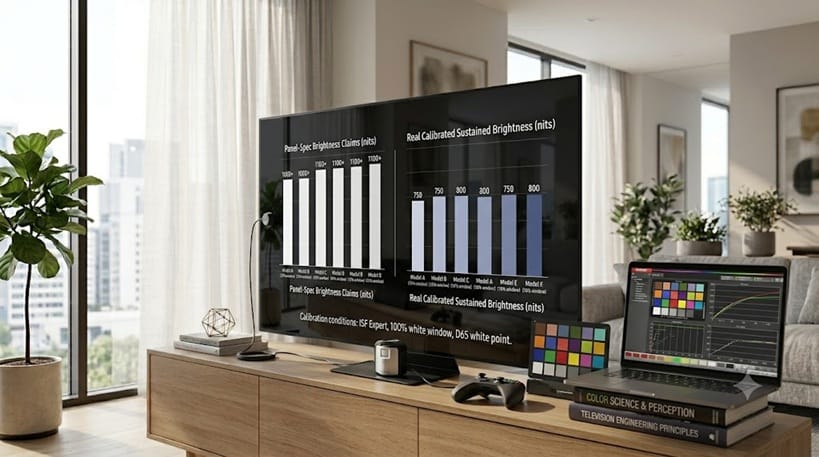
Next generation OLED panels for 2026 are mostly refinements of the stacked “Tandem” structure introduced in 2023–2025, not a new emissive technology. LG Display’s Primary RGB Tandem 2.0 and Samsung Display’s 2026 QD-OLED panel both push panel-spec peak brightness toward 4,500 nits, but real, calibrated brightness on the TVs themselves lands well below that figure. A more fundamental materials shift, tied to Samsung Display’s GEN4 emitter roadmap, is currently unconfirmed rumor pointed at 2027 rather than a locked-in 2026 feature.
What Counts as a Next Generation OLED Panel Right Now
LG Display’s Primary RGB Tandem 2.0
LG Display rebranded its large-panel OLED lineup as “Tandem WOLED” at CES 2026, with the flagship version carrying “Primary RGB Tandem 2.0.” According to LG Display’s own technology briefings, the panel stacks red, green, and blue emitters in independent layers and pairs that structure with a refined pixel design and processing algorithms to push panel-level peak brightness to roughly 4,500 nits, alongside a 0.3% reflectance rating.
That panel is what powers the LG G6, and it’s the same manufacturing platform Sony and Panasonic license for their own flagship OLED lineups.
Samsung Display’s 2026 QD-OLED Refresh
Samsung Display showed a similar story at CES 2026: a new QD-OLED TV panel built on newly optimized organic materials, also targeting roughly 4,500 nits at the panel-spec level. That panel feeds Samsung’s S95H and, through Samsung Display’s supply relationship with Sony, some 2026 Sony OLED models as well. The core quantum-dot approach hasn’t changed — this is an efficiency and materials refinement layered onto the existing QD-OLED platform, not a replacement for it.
Why the Real Jump Is Likely Coming in 2027, Not 2026
Panel-Spec Numbers vs. What Ships on the TV
Here’s the part worth slowing down for. A panel-spec claim describes ideal lab conditions, not the calibrated picture mode you’ll actually watch movies in. Independent lab measurements on 2026 flagship Tandem panels, including RTINGS’s LG G6 test data, have shown real, calibrated HDR peak brightness in the roughly 2,400–3,100 nit range depending on highlight window size, with full-screen brightness closer to 450–470 nits. That’s a meaningful jump over 2025 sets, but nowhere near the 4,500 nit panel-spec figure being quoted at trade shows.
Think of it the way you’d think of a car’s advertised top speed: technically achievable under ideal conditions, but not what you’ll see on your actual commute.
The 2027 Materials Question
Separately, unconfirmed supply-chain reports have suggested Samsung Display may shift to a new “GEN4” emitter material and updated internal panel structure sometime around 2027 — a change that would be more fundamental than a brightness or algorithm tweak. Samsung Display has not confirmed this timeline directly, so treat it as an early industry rumor rather than a locked roadmap, but it’s the kind of shift that would matter more to picture quality than another round of nit-count increases.
Whether it’s worth whether QD-OLED is the future of the category is a separate question from panel generation timing — that piece digs into the color and adoption side in more detail.
If you’re already close to a purchase and just want the current picture, our best OLED TVs in 2026 roundup ranks every top pick by use case and budget.
The Numbers You See vs. What You’ll Actually Get
It’s easy to read “4,500 nits” and assume that’s a fixed brightness ceiling your new TV will hit in every scene. In practice, OLED panels use automatic brightness limiting to protect the display, so the brightest numbers only show up on small highlight areas — a sunlit window, a muzzle flash, a lightbulb in frame — not across the full screen.
That’s true of every OLED generation, not just the 2026 refresh, but the gap between the marketing number and the living-room number has grown as brands lean harder on peak-brightness claims to differentiate near-identical panels.
What This Means for You in Practice
Who Should Pay Attention to This
If you’re shopping for a flagship-tier OLED this year and brightness in a sunlit room is your top priority, the 2026 refresh is worth having on your shortlist — it’s a real, if modest, step up from 2025. Our QD-OLED vs WOLED compared guide walks through how the two 2026 platforms actually differ in day-to-day use, beyond the spec sheet.
Who Doesn’t Need to Worry
If you’re buying a mid-range or budget OLED, none of this changes your decision much — those panels aren’t first in line for the newest tandem structures anyway, and the picture-quality gap between a well-reviewed 2025 set and a brand-new 2026 flagship is smaller than the nit numbers suggest. For how panel brightness fits alongside pricing, gaming, and AI processing shifts this year, our roundup of OLED TV trends to watch in 2026 covers the full picture.
FAQs: Next Generation OLED Panels
What is next generation OLED panel technology?
It refers to the newest stacked panel structures from LG Display and Samsung Display, currently branded Primary RGB Tandem 2.0 and the 2026 QD-OLED panel. Both aim for higher panel-spec brightness on the same core manufacturing platforms rather than an entirely new display technology. See the section above for how those panel-spec numbers compare to real, calibrated measurements.
Are next-generation OLED panels a totally different technology from today’s OLED?
No. Both the 2026 LG and Samsung panels are refinements of the existing tandem and quantum-dot platforms, not a new emissive material or manufacturing process. The bigger materials shift some reports point to is still unconfirmed and, if it happens, is more likely to land around 2027.
Should I wait for next-generation OLED panels before buying a TV?
For most buyers, no. The measured, real-world difference between a 2025 flagship and a 2026 refresh is smaller than the spec-sheet gap implies, and a genuinely bigger shift isn’t confirmed for 2026 or even a firm 2027 date yet. If your current TV is aging out or you need a set now, buying into the current generation is a reasonable call.
How is next-generation OLED different from MicroLED?
They’re unrelated technologies solving similar problems in different ways. OLED panels, tandem or otherwise, are self-emissive organic displays; MicroLED uses inorganic LED chips and is still mostly limited to large, expensive installations. Our MicroLED vs OLED comparison covers where each one currently makes sense.
When will 2027’s rumored OLED panel changes reach actual TVs?
There’s no confirmed date. Based on editorial research into supply-chain reporting, any GEN4 materials shift would likely appear first in smaller panel formats before reaching TV-sized panels, and Samsung Display has not publicly committed to a 2027 TV timeline. Treat any specific date you see elsewhere as speculation until a manufacturer confirms it directly.

iYaiii
Editor, GearPulse360
iYaiii is the editor and founder of GearPulse360, specializing in TV reviews and consumer electronics. He researches every recommendation before publishing.
✅ Based on spec analysis and LG’s and Samsung’s official data plus RTINGS — last verified July 2026