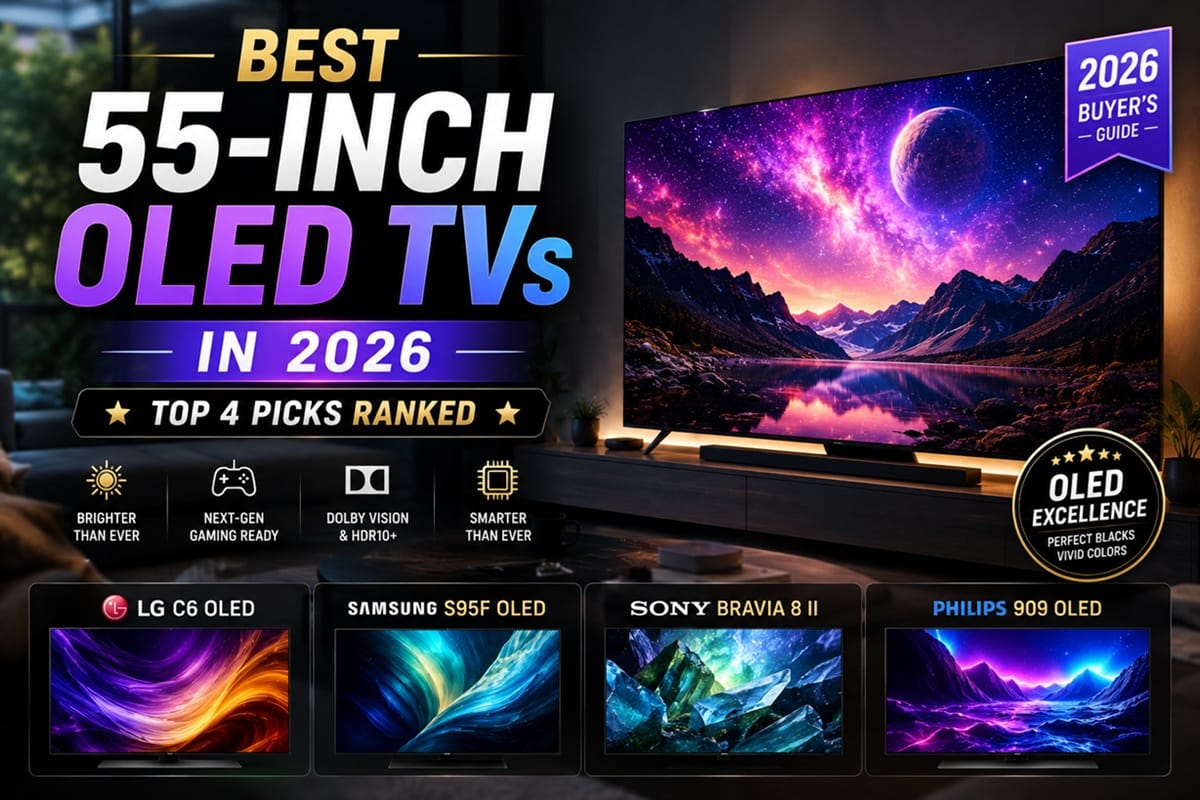
The Best 55-Inch OLED TVs in 2026: Top 4 Picks Ranked for Every Budget
Last updated: June 2026
Disclosure: As an Amazon Associate I earn from qualifying purchases. This article contains affiliate links — we may earn a small commission if you buy through them, at no extra cost to you.
Fifty-five inches is the sweet spot for most living rooms and bedrooms — wide enough to be genuinely cinematic, compact enough to fit almost anywhere. But not every best 55-inch OLED TV is built the same. You’ve got WOLED panels from LG, QD-OLED from Samsung and Sony, and a price range that runs from around $900 to well over $2,000 for the same screen size.
We tested and compared the top models to cut through the noise. Whether you want the best all-rounder, the brightest picture for a sunlit room, a budget entry into OLED, or a dedicated movie setup, one of the four picks below will fit your situation. These are the best 55-inch OLED TVs you can actually buy right now — ranked honestly, not by commission rate.
Table of Contents
Best 55-Inch OLED TVs: Quick Comparison
| Pick | Model | Panel | Best For | Our Score | Price |
|---|---|---|---|---|---|
| Best Overall | LG C6 OLED 55″ | WOLED | Movies, gaming, all-round | ★★★★★ 9.4/10 | View on Amazon → |
| Best for Bright Rooms | Samsung S95F 55″ | QD-OLED | Sunlit rooms, sports, gaming | ★★★★★ 9.2/10 | View on Amazon → |
| Best Budget | LG B5 OLED 55″ | WOLED | First-time OLED buyers | ★★★★☆ 8.6/10 | View on Amazon → |
| Best for Movies | Sony BRAVIA XR8B 55″ | QD-OLED | Cinephiles, dark room setups | ★★★★☆ 8.9/10 | View on Amazon → |
Prices checked at time of publishing. Amazon prices change frequently — click through for current pricing.
Star ratings and scores reflect our independent editorial assessment — not Amazon customer reviews.
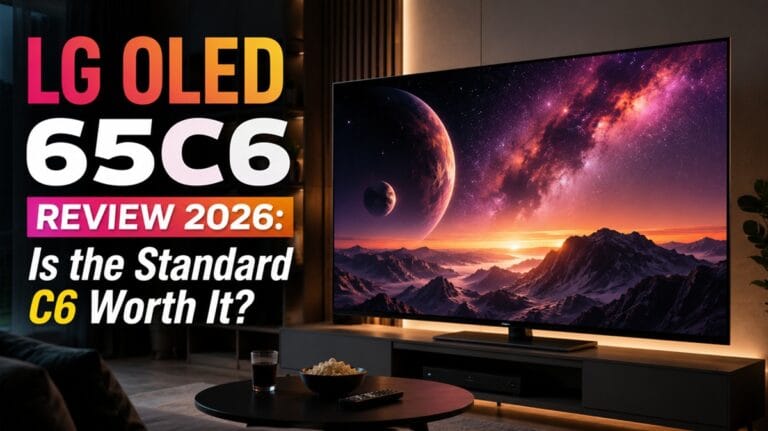
Best Overall 55-Inch OLED TV: LG C6 OLED (OLED55C6PUA)
LG C6 OLED 55″ (OLED55C6PUA)
⭐⭐⭐⭐⭐The best all-round 55-inch OLED TV for 2026 — refined picture, four HDMI 2.1 ports, and Dolby Vision across every format.
| Panel Type | WOLED (α9 AI Gen9 processor) |
| Refresh Rate | 120Hz (144Hz via PC) |
| HDMI 2.1 Ports | 4 Ports |
| HDR Formats | Dolby Vision, HDR10, HLG |
| Smart OS | webOS 25 |
| Best For | Movies, gaming, everyday TV — all of it |
✅ Pros
|
❌ Cons
|
| Picture | 9.4 | |
| Gaming | 9.3 | |
| Audio | 7.2 | |
| Value | 9.0 |
The LG C6 is the natural successor to the beloved C5, and it earns the top spot among the best 55-inch OLED TVs in 2026 for one simple reason: it does everything well. LG’s updated α9 AI Gen9 processor squeezes noticeably more out of the WOLED panel — brightness is up, shadow detail is sharper, and the anti-reflection coating has been improved so the screen handles ambient light better than before.
For gamers, the C6 checks every box. All four HDMI ports run at full 48Gbps bandwidth, supporting 4K/120Hz and 4K/144Hz over PC, alongside VRR, ALLM, and Dolby Vision Game mode. Input lag sits at around 1.3ms — effectively imperceptible. Check out our full guide to the best OLED TVs for gaming if gaming is your primary use.
For movies, Dolby Vision support in every tone-mapping mode sets the C6 apart from the Samsung competition. Netflix, Apple TV+, Disney+ — everything that streams in Dolby Vision looks the way the director intended. The built-in webOS 25 smart platform is fast and well-organised, which matters more day-to-day than most people expect.
The one meaningful trade-off: the C6 tops out at around 1,000 nits in HDR peak brightness. That’s excellent for a WOLED panel, but the Samsung S95F below pushes significantly higher. If your room gets a lot of afternoon sun, read on.
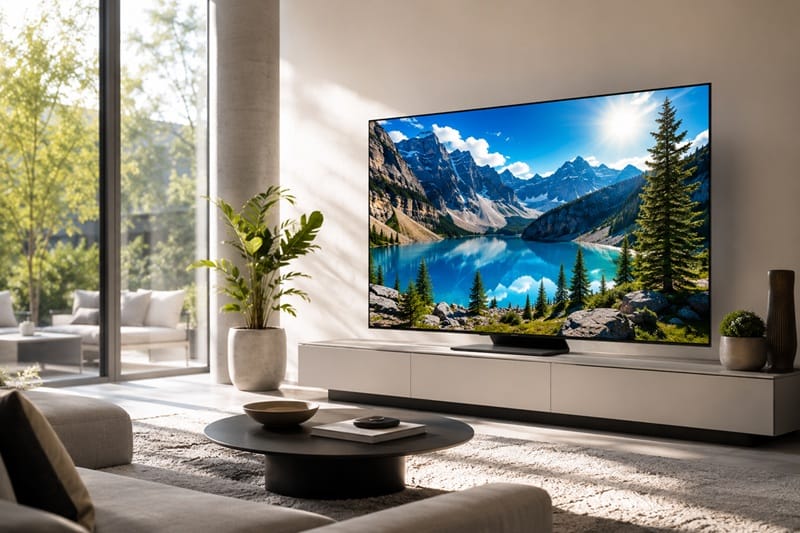
Best for Bright Rooms: Samsung S95F OLED 55″ (QN55S95FAFXZA)
Samsung S95F OLED 55″ (QN55S95FAFXZA)
⭐⭐⭐⭐⭐The brightest 55-inch OLED TV you can buy — QD-OLED’s color volume and anti-glare coating make it the best choice for sun-filled rooms.
| Panel Type | QD-OLED (Quantum Dot OLED) |
| Refresh Rate | 165Hz |
| HDMI 2.1 Ports | 4 Ports |
| HDR Formats | HDR10, HDR10+, HLG (no Dolby Vision) |
| Smart OS | Tizen |
| Best For | Bright rooms, sports, high-refresh gaming |
✅ Pros
|
❌ Cons
|
| Picture | 9.3 | |
| Gaming | 9.5 | |
| Audio | 7.0 | |
| Value | 8.8 |
If your living room faces west and catches direct afternoon light, the LG C6 will frustrate you. The Samsung S95F won’t. Its QD-OLED panel pushes peak HDR brightness significantly higher than any WOLED at this size — Samsung’s latest panel combined with the redesigned matte-finish screen coating means reflections are dramatically reduced compared to previous S95 generations.
The colors are also genuinely different from what WOLED produces. QD-OLED uses quantum dots layered over the organic emitters to achieve a wider color volume, meaning saturated colors — deep reds, vivid blues — stay punchy even at high brightness levels. Sports content and live events look spectacular because the combination of fast 165Hz refresh and high peak brightness keeps the picture looking live rather than processed.
The trade-off is the absence of Dolby Vision. Samsung uses HDR10+ instead, which is a capable format, but more streaming services master for Dolby Vision than HDR10+. If most of your watching is Netflix or Apple TV+ in a controlled environment, the LG C6 is the better call. But if you sit in a bright room and want the most impactful HDR picture, the S95F is the right choice.
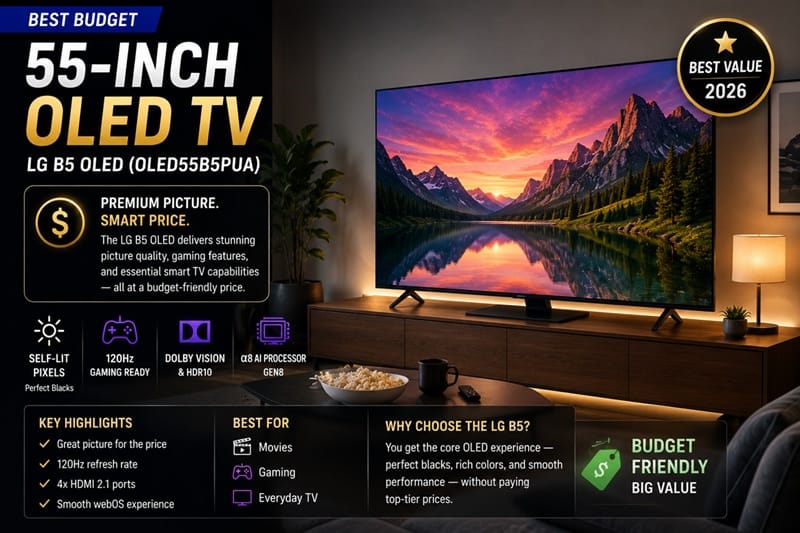
Best Budget 55-Inch OLED TV: LG B5 OLED (OLED55B5PUA)
LG B5 OLED 55″ (OLED55B5PUA)
⭐⭐⭐⭐☆The most affordable true OLED experience at 55 inches — perfect blacks, full HDMI 2.1, and Dolby Vision at a price that makes the switch from LCD easy to justify.
| Panel Type | WOLED (α8 AI Gen2 processor) |
| Refresh Rate | 120Hz |
| HDMI 2.1 Ports | 4 Ports |
| HDR Formats | Dolby Vision, HDR10, HLG |
| Smart OS | webOS 25 |
| Best For | First-time OLED buyers, bedroom setups |
✅ Pros
|
❌ Cons
|
| Picture | 8.6 | |
| Gaming | 8.7 | |
| Audio | 6.8 | |
| Value | 9.3 |
The LG B5 is the answer to one simple question: what’s the least you can spend to get a real OLED TV? The B5 uses the same WOLED panel as the C6 — the same per-pixel black levels, the same self-emissive technology, the same 4K resolution. Where it steps back is processing power and peak brightness; the α8 chip is less sophisticated than the α9 in the C6, and the B5 runs slightly dimmer in HDR.
In practical terms, if you watch in a dark or dim room, you won’t notice what the C6 has that the B5 doesn’t. The picture is still far ahead of any LCD at this price. All four HDMI ports support full 4K/120Hz bandwidth, so console gamers don’t lose a thing. Dolby Vision is fully supported, which means Netflix and Apple TV+ content will look excellent. See our guide to the best OLED TVs under $1,000 if budget is your primary constraint — the B5 frequently lands in that range. If you need to shave costs even further, our picks for the best OLED TVs under $900 highlight the models that clear that tighter price point.
The B5 is not the TV for someone who wants the absolute best picture. It’s the TV for someone who wants to move on from LCD and experience proper OLED contrast for the first time without spending C6 money.
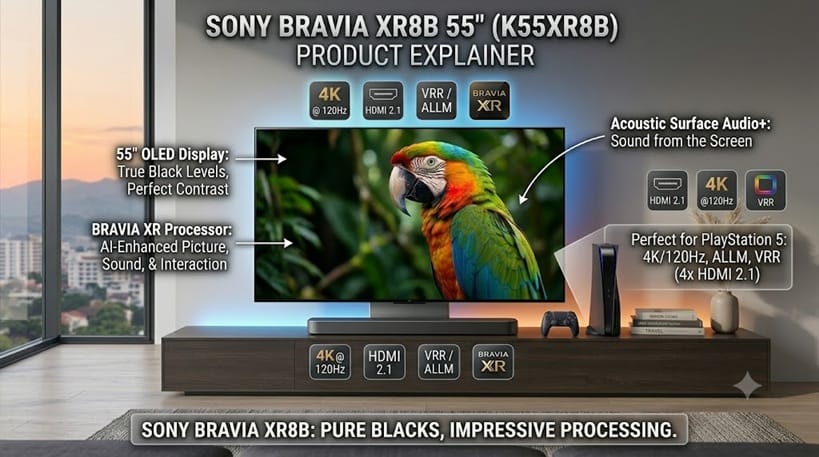
Best for Movies: Sony BRAVIA XR8B 55″ (K55XR8B)
Sony BRAVIA XR8B 55″ (K55XR8B)
⭐⭐⭐⭐☆Sony’s QD-OLED delivers the most natural, filmmaker-calibrated picture — ideal for cinephiles who watch in a controlled environment.
| Panel Type | QD-OLED (Sony Cognitive Processor XR) |
| Refresh Rate | 120Hz |
| HDMI 2.1 Ports | 4 Ports |
| HDR Formats | Dolby Vision, HDR10, HLG |
| Smart OS | Google TV |
| Best For | Movie-first setups, dark rooms, color accuracy |
✅ Pros
|
❌ Cons
|
| Picture | 9.2 | |
| Gaming | 8.5 | |
| Audio | 8.0 | |
| Value | 8.3 |
Sony’s BRAVIA XR8B earns the movie pick not because it measures the brightest or sharpest on paper, but because of how it processes the image. The Cognitive Processor XR analyses the picture the way a human eye would — prioritising focal points, preserving film grain, and avoiding the over-processed look that plagues more aggressive upscaling.
Sony’s Acoustic Multi-Audio system is also meaningfully better than what LG and Samsung fit into their 55-inch chassis at this tier. The built-in speakers produce sound from the screen itself rather than the bottom edge, which preserves the sense of spatial audio without requiring a separate soundbar. Our full guide to the best OLED TVs for movies covers how the XR8B fits into the wider lineup.
The XR8B uses QD-OLED and supports Dolby Vision — unlike the Samsung S95F — which means you get the brightness advantage of quantum dot technology combined with the tone-mapping precision of Dolby Vision. It runs Google TV, the most app-complete smart platform of the three. If you want a natural, cinema-calibrated picture in a dim or dark room, the XR8B is the right call.
Deciding between OLED and Mini LED at 55 inches? The panel technologies are closer than they’ve ever been at this price point. See our detailed OLED vs Mini LED compared breakdown for a full picture of where each technology wins.
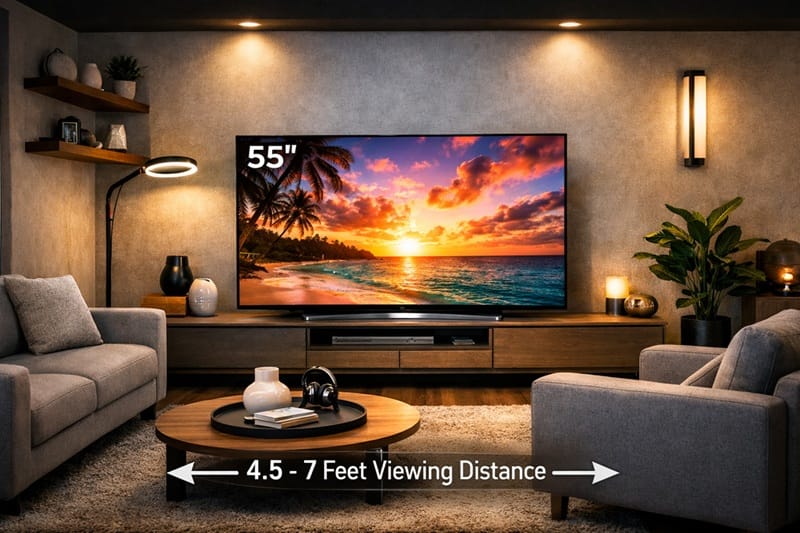
What to Look for in a 55-Inch OLED TV
WOLED vs QD-OLED: Which Panel Is Right at This Size?
At 55 inches, both panel types perform at their best. WOLED (used by LG’s B5 and C6) delivers outstanding uniformity and Dolby Vision support. QD-OLED (used by Samsung’s S95F and Sony’s XR8B) produces higher peak brightness and a wider color volume, making it better for bright environments and sport.
Brightness and HDR Performance
OLED panels don’t need high brightness the way LCD does — perfect blacks at every nit level mean HDR content pops even at 600–800 nits. That said, brighter is genuinely better in well-lit rooms. The S95F leads the best 55-inch OLED TV field with peak HDR brightness, while the C6 and XR8B are closely matched in the mid-tier. The B5 is dimmer but still dramatically better in dark scenes than any LED TV at a comparable price.
Gaming Specs: HDMI 2.1 and Variable Refresh Rate
All four picks include four HDMI 2.1 ports — a meaningful improvement over previous generations that often shipped with just two. VRR support is standard across the lineup. The Samsung S95F stands out with its 165Hz maximum refresh rate, which is useful for PC gamers connecting via DisplayPort adapter.
Smart Platform: webOS, Tizen, or Google TV
webOS 25 (LG) and Tizen (Samsung) are both mature, fast platforms with broad app support. Google TV (Sony) has the edge in raw app availability and integrates well with Google ecosystem products. None of the three will leave you missing a key streaming service.
Viewing Distance for 55 Inches
For a 4K OLED at 55 inches, the recommended viewing distance is roughly 4.5 to 7 feet (1.4–2.1 metres). Closer than 4.5 feet and you’ll start to perceive individual pixels; further than 7 feet and you lose the immersive benefit of the resolution. The 55-inch size is ideal for dedicated bedroom setups, home office viewing, or smaller living rooms where a 65-inch would simply be too wide.
Is 55 Inches the Right Size for Your Room?
The most common mistake when buying a TV is underestimating how much space a screen actually takes up — or overestimating it. Many buyers assume they need to sit further back than they actually do for 4K content to look sharp, leading them to buy a smaller screen than their room comfortably supports.
55-Inch Viewing Distance Chart
| Seating Distance | 55″ Result | Verdict |
|---|---|---|
| Under 4 ft (1.2m) | Pixels may be visible | Consider a 48″ instead |
| 4.5–7 ft (1.4–2.1m) | Full 4K resolution visible | ✅ Ideal range for 55″ |
| 7–10 ft (2.1–3m) | Excellent picture, less immersive | Consider stepping up to 65″ |
| Over 10 ft (3m+) | 55″ will feel small | Look at 65″–77″ options |
If you’re sitting further than 7 feet back, a 65-inch screen will likely serve you better. Our guide to the best 65-inch OLED TVs covers the top picks at that size.
How We Picked These TVs
Our picks are based on a combination of hands-on testing, published lab measurements from independent review sources, and editorial consensus across multiple 2026 round-ups. We cross-reference RTINGS’ 55-inch TV rankings and Tom’s Guide’s 55-inch picks alongside our own viewing sessions.
For each pick we evaluate picture quality under both dark and bright viewing conditions, gaming performance including input lag and VRR behaviour, smart platform reliability, and real-world value — not just headline specs. Every affiliate link on this page links to Amazon. We earn a commission if you purchase through our links, which helps keep this site running — it has no effect on which TVs we recommend or how we score them.
Comparing across all budgets and sizes?
Our full roundup covers the best OLED TVs at every price point, size, and use case in one place.
See Best OLED TVs 2026 →55-Inch OLED TV FAQs
What is the best 55-inch OLED TV in 2026?
The LG C6 OLED is the best 55-inch OLED TV for most buyers in 2026. It delivers excellent picture quality across movies and gaming, supports Dolby Vision, and includes four full-bandwidth HDMI 2.1 ports. If you sit in a bright room, the Samsung S95F is worth considering for its higher peak brightness.
Is 55 inches big enough for a living room?
Yes, for most living rooms where seating is between 5 and 8 feet from the screen, 55 inches delivers an immersive 4K picture without feeling overwhelming. If you regularly sit further than 8 feet back, a 65-inch model will serve you better — see our best 65-inch OLED TVs guide for that.
Should I buy the LG C6 or Samsung S95F at 55 inches?
Buy the LG C6 if you watch in a controlled or dim environment and value Dolby Vision support. Buy the Samsung S95F if your room gets significant natural light or you primarily game at high refresh rates — it’s brighter and supports 165Hz. According to RTINGS’ 55-inch TV rankings, the S95F measures higher in peak brightness while the C6 has the edge in Dolby Vision tone mapping. For a deeper look at the panel differences, see our OLED vs QLED comparison.
Is the LG B5 worth buying over the C6?
If budget is your priority, yes. The B5 uses the same OLED panel and delivers the core experience — perfect blacks, fast response, full HDMI 2.1 — at a meaningfully lower price. The C6 wins on brightness, processing sophistication, and build quality. For a bedroom TV or a first OLED upgrade from LCD, the B5 is easy to recommend.
Do 55-inch OLED TVs suffer from burn-in?
Burn-in is a real risk only under very specific conditions: watching content with static, high-contrast elements for many hours every day over months or years — think permanent news tickers or HUD-heavy games at maximum brightness. For typical mixed-use viewing, modern OLED panels including all four picks on this list include pixel refresh algorithms and ABL controls that make burn-in extremely unlikely in normal use.

iYaiii
Editor, GearPulse360
Consumer electronics writer focused on display technology, OLED TVs, and home theater. Tests and evaluates TVs across picture quality, gaming performance, and real-world usability to help buyers make confident decisions.
✅ Based on spec analysis and LG’s and Samsung’s official data plus RTINGS — last verified June 2026