Samsung OLED Picture Quality Consistency: Why Two Units of the Same TV Can Look Different
Last updated: July 2026
🕒 8 min read
Disclosure: As an Amazon Associate I earn from qualifying purchases. This particular article contains no affiliate links; other content on our site may.
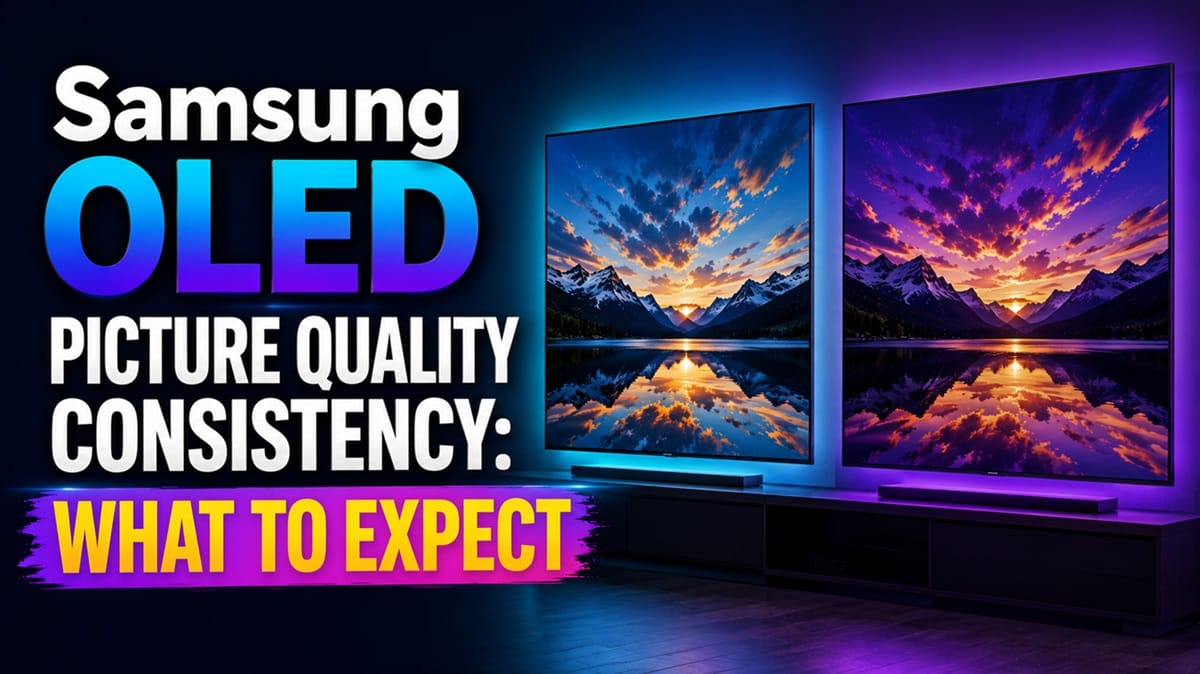
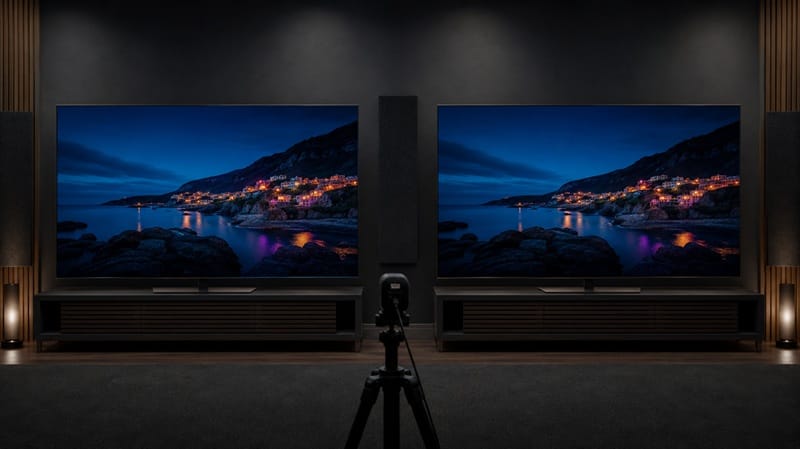
Two people can buy the exact same Samsung OLED model, unbox it the same week, and still end up with slightly different pictures — one panel running a touch warmer, one sitting a notch brighter, one with a faint line near the bezel that the other doesn’t have. None of that is imagined, and none of it automatically means a bad unit.
We hear some version of “did I get a bad panel?” often enough that it’s worth separating what’s normal manufacturing variation from what’s an actual problem. Based on RTINGS’ own panel testing notes and Samsung Display’s published manufacturing data, the honest answer is: it depends heavily on which model and which generation you’re looking at.
This guide covers Samsung OLED picture quality consistency specifically — not the individual defect patterns we’ve already broken down in our Samsung S90D banding piece, but the broader question of why two units of the same model can look different in the first place, and how much of that is expected.
Table of Contents
The Short Answer: How Consistent Is Samsung OLED Picture Quality?
Some unit-to-unit variation is normal for any OLED panel, Samsung included, and usually shows up as tiny differences in white balance or brightness that most people never notice. What RTINGS specifically calls “panel lottery” is a different, more pronounced pattern — where individual units of the same model measure noticeably differently from their review sample — and it hasn’t affected every Samsung OLED generation equally. Whether the model you’re looking at carries that risk depends on its tier and production year, not the Samsung OLED lineup as a whole.
What “Panel Lottery” Actually Means for Samsung OLED Picture Quality Consistency
The term, and where it comes from
“Panel lottery” describes a situation where the specific unit you receive performs meaningfully differently from the review unit a publication tested, even though both carry the same model number. It’s a manufacturing tolerance issue, not a design flaw — every OLED panel comes off the line with small variances in subpixel brightness and color, and most fall within a range tight enough that nobody notices. Panel lottery is what happens when that range widens enough to matter.
Why some tiers show more variation than others
RTINGS’ own testing notes are useful here because they name the pattern directly rather than leaving it implied. In their Samsung S95F OLED review, RTINGS draws a direct contrast: unlike the Samsung S90F and Samsung S85F, they don’t note panel lottery affecting the S95F. That contrast suggests the variation Samsung buyers have reported wasn’t spread evenly across the 2025 lineup, but concentrated more in the S90 and S85 tiers sitting below the flagship S95 series.
There’s also a subtler consistency issue worth knowing about before you assume “same model, same panel.” RTINGS notes that while the 55, 65, and 77-inch Samsung S95F all use Samsung’s QD-OLED panel, the 83-inch version actually ships with a different WOLED panel instead — similar peak brightness, but weaker color luminance. If you’re comparing size options within one Samsung OLED series, don’t assume every size shares the same panel — the spec sheet for each size will confirm it.
If you’re specifically considering a budget-tier Samsung OLED where this kind of variation has been reported before, our Samsung 77S85H review covers what to expect from that tier’s current generation in more detail.
Why Consistency Is a Bigger Talking Point in 2026
Samsung Display’s own verification numbers
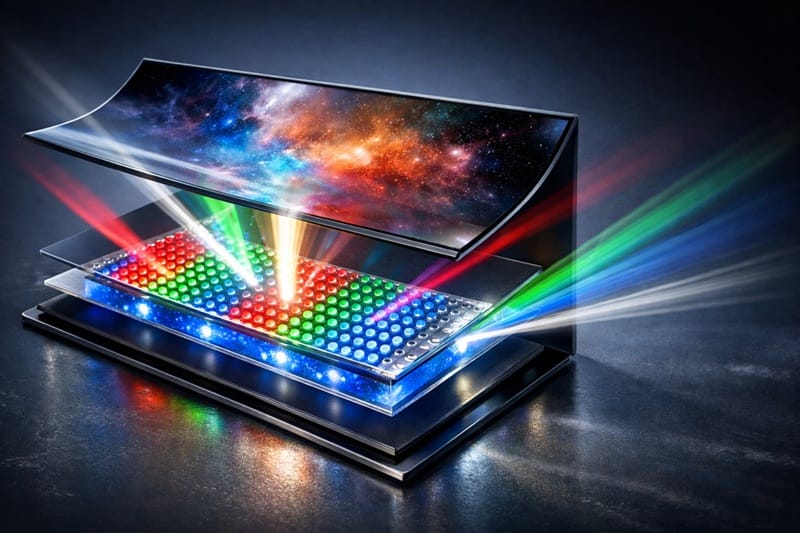
There’s a second, less-discussed meaning of “picture quality consistency” — how steady the image stays as you move off-center within a single unit, rather than how one unit compares to another. Samsung Display had its QD-OLED panels independently verified by UL Solutions under the QuantumView program, and the results are specific: the panels retained over 60% of their front-facing luminance at a 60-degree viewing angle, with color shift staying below 0.012 Δu’v’. For comparison, Samsung Display’s own data cites typical LCD panels dropping below 20% luminance and shifting as much as 0.025 at the same angle. That gap is the practical reason QD-OLED TVs look the same whether you’re dead-center on the couch or off to the side.
Tighter manufacturing tolerance industry-wide
Third-party verification like the UL Solutions assessment doesn’t erase panel lottery on its own, since that program measures angle performance rather than unit-to-unit variance. What it does confirm is that Samsung Display backed its viewing-angle consistency claim with an outside audit rather than leaving it as an unverified marketing number — a distinction worth knowing if you’re comparing the same kind of claim across brands.
Picture quality consistency is one piece of a bigger decision, not the whole of it — our best OLED TVs of 2026 roundup lines up this year’s models on brightness, gaming performance, and price tier too, so you can see where each one actually trades off before you commit to a size or tier. If gaming performance specifically is part of that decision, Samsung OLED gaming judder is a related picture-behavior quirk worth reading up on before you buy.
Where Normal Variance Ends and a Real Defect Begins
This is the part most buyers actually want answered: how do you know if what you’re seeing is ordinary variation or something worth acting on? RTINGS’ gray uniformity testing on the S95F is a useful reference point — their unit showed some very faint vertical lines, but nothing noticeable at a normal viewing distance, and no pink or green tint across the panel. That’s roughly the ceiling of what counts as normal: minor, hard-to-spot irregularities that most viewers will never look closely enough to catch.
A real defect looks different. A single pixel that never changes color regardless of content, a visible band that’s obvious from a normal seating distance in regular programming (not just a 5% gray test pattern), or a tint that shifts noticeably across the screen — these cross from “panel lottery” into something our Samsung OLED dead pixels guide covers in more depth, including what typically qualifies for a replacement.
What This Means for You in Practice
Buy This If…
You’re comfortable with the idea that any mass-produced OLED, Samsung included, carries some small chance of landing outside the norm — and you know to check for it within the return window rather than assuming every quirk is permanent. Reviewing our Samsung OLED buying guide before you order can help you pick a model and size where consistency has historically been less of a talking point.
Skip This If…
You’ve already had a bad experience with a specific Samsung OLED generation and would rather avoid that tier entirely. In that case, running the same gray-uniformity check on a different brand’s panel before you commit is a more useful next step than assuming any one brand is inherently more consistent.
FAQs: Samsung OLED Picture Quality Consistency
Is Samsung OLED panel lottery still a real risk in 2026?
It depends on the model. In its Samsung S95F OLED review, RTINGS draws a direct contrast with this model’s siblings — noting no panel lottery on the S95F, unlike the S90F and S85F — so the risk isn’t evenly spread across Samsung’s OLED lineup. It’s concentrated in certain tiers and generations, which is why the specific model matters more than the brand as a whole.
What’s the difference between panel lottery and a dead pixel?
Panel lottery describes measurable differences between individual units of the same model — things like brightness or color temperature reading slightly off from a reviewer’s sample. A dead pixel is a specific, visible defect on your exact unit: one point on the screen that stays a fixed color no matter what’s on screen. One is a statistical tendency across many units; the other is a concrete flaw on the unit you own.
How do I check my Samsung OLED for uniformity issues at home?
Play a plain gray or dark-gray full-screen image in a dimmed room and look for banding, blotches, or a tint that isn’t uniform edge to edge. Minor, faint irregularities that disappear at normal viewing distance are common and not worth pursuing. Anything clearly visible during regular content, not just a test pattern, is worth documenting and raising with Samsung support while you’re still inside the return window.
Should picture quality consistency change which Samsung OLED I buy?
It’s one factor among several, not the deciding one. If you’re weighing two models in the same family, our Samsung S90H vs S95H comparison breaks down where each currently stands on brightness, gaming features, and reported consistency, so you can factor it in alongside everything else rather than treating it as a single dealbreaker.
Will future Samsung QD-OLED panels have less unit-to-unit variation?
Samsung Display has published independent verification of its panel performance — the UL Solutions QuantumView results — but that program measures how luminance and color hold up off-angle within a single panel, not how much individual units vary from each other. Nothing in that verification speaks to panel lottery specifically, and Samsung doesn’t publish unit-to-unit defect-rate figures, so there isn’t yet an evidence base for predicting whether future generations will be more consistent.

iYaiii
Editor, GearPulse360
iYaiii is the editor and founder of GearPulse360, specializing in TV reviews and consumer electronics. He researches every recommendation before publishing.
✅ Based on spec analysis and Samsung’s official and RTINGS data — last verified July 2026