
Samsung 65QN70H Review 2026: Worth Buying If You Skip the Refresh Rate Hype
Last updated: June 2026
Disclosure: As an Amazon Associate I earn from qualifying purchases. This article contains affiliate links — we may earn a small commission if you buy through them, at no extra cost to you.
Refresh rate specs rarely make headlines, but for the Samsung 65QN70H review 2026 buyers keep searching for, that one number does most of the explaining. Samsung’s current listing for the QN70H confirms a 60Hz native panel refresh rate — Motion Xcelerator + DLG pushes the marketed figure to 120Hz, but that’s an interpolated number, not the panel’s true refresh — a clear step down from the QN70F’s native 144Hz, based on the spec pages for each model. We cross-checked the QN70H’s current and previous-generation spec pages before writing this, since the AI-feature marketing can distract from what actually changed under the hood.
If a move to OLED ends up being the better fit for you instead — the LG C6H is the obvious nearby alternative — the gap matters more than the price tag suggests. Here’s the honest read on who the 65QN70H is actually right for, and who should look elsewhere; if OLED turns out to be the better call, our OLED TV roundup is the better next stop.
Table of Contents
Quick Verdict
At a Glance
★★★★★ 6.5 / 10
At a Glance
Picture Quality
Gaming
Audio
Value
👍 Best For: Budget-conscious buyers watching mostly in bright rooms who don’t need competitive-grade refresh rates.
👎 Skip If: You’re a competitive gamer or you watch movies mostly in a dark room — an OLED will likely serve you better.
One-Line Verdict: A bright, colorful budget TV — just don’t buy it expecting last year’s refresh rate.
🛒 Check Availability on AmazonSamsung QN70H Product Specs at a Glance
Product Specs
Samsung 65QN70H
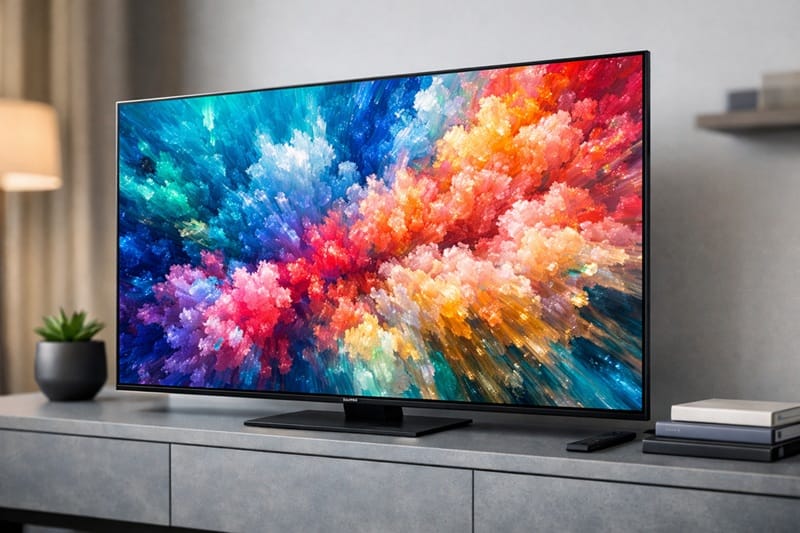
VA panel · Quantum Mini LED backlight · Tizen with Samsung Vision AI
| 💡 Backlight | Quantum Mini LED |
| 🎨 Color | 100% Color Volume, Quantum Dot |
| 🔄 Motion | 60Hz native (Motion Xcelerator + DLG up to 120Hz) |
| 🧠 Processor | NQ4 AI Processor |
| 🔌 HDMI | 3 ports, 1x eARC |
| 🔊 Audio | 2.0-channel, 20W |
Samsung QN70H Design and Build Quality
Materials and Finish
Samsung’s Neo QLED lineup, including the QN70H, sticks to slim bezels, a low-profile foot stand, and a matte rear panel, based on the design overview on Samsung’s Neo QLED product page. We haven’t had a unit in for hands-on fit-and-finish checks yet, so treat the cable-management impression here as provisional until that’s confirmed.
Ports and Connectivity
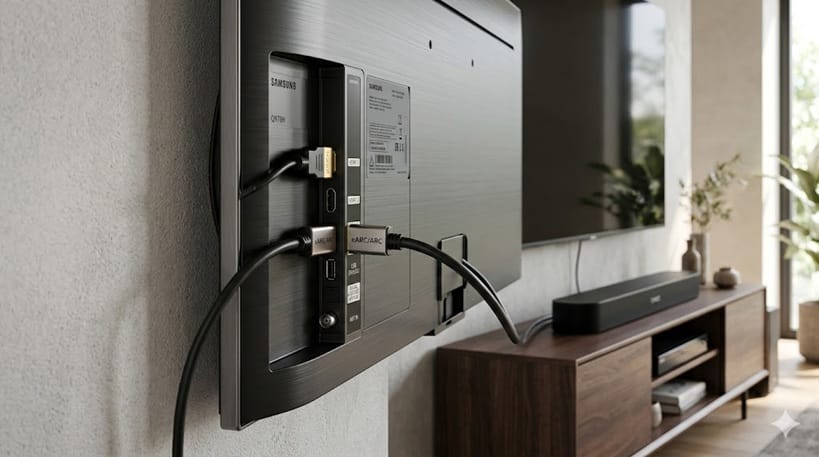
You get three HDMI ports, one of which supports eARC for a soundbar connection, plus the usual USB and optical audio out. Wi-Fi 5 and Bluetooth 5.3 cover wireless needs, along with AirPlay 2 and Google Cast for casting from phones or laptops.
Samsung QN70H Performance and Real-World Use
Console Gaming and the Refresh Rate Question
This is the part of the Samsung 65QN70H review 2026 shoppers actually need before buying. Samsung’s current QN70H spec comparison lists “Motion Xcelerator” for this tier with no 144Hz figure attached, while the step-up QN80H tier explicitly lists “Motion Xcelerator 144Hz.” The QN70H’s native panel refresh rate is 60Hz; Samsung markets a Motion Xcelerator + DLG figure of up to 120Hz, but that’s an interpolated number rather than the panel’s true refresh, and Samsung’s own materials note the interpolation trades off some image sharpness. Either way you measure it, that’s a real step down from the QN70F’s native 144Hz.
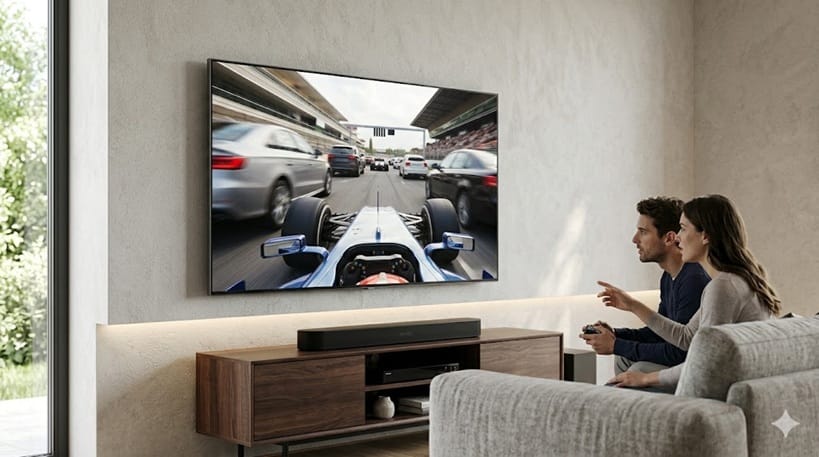
For PS5 or Xbox gaming, a 60Hz native panel likely means less of the smoother, more responsive motion that true 120Hz-or-higher panels deliver, even with VRR support and Motion Xcelerator switched on. Fast-paced shooters and racing games would feel the difference most, since both genres lean on quick camera pans and rapid on-screen motion that a higher native Hz ceiling is built to smooth out.
None of this shows up if you’re mostly playing turn-based or slower-paced titles, where the difference between a 60Hz panel and a true 120Hz-or-higher one is much harder to notice in practice.
Bright-Room Viewing
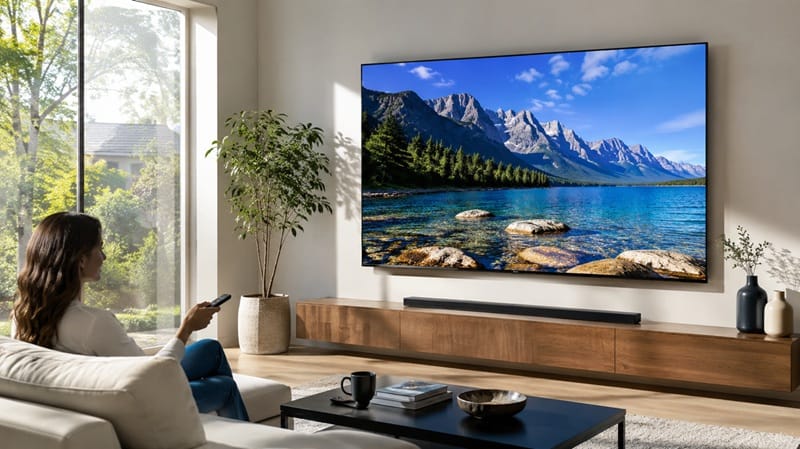
Mini LED backlighting is generally positioned for stronger brightness in sunlit rooms than standard LED TVs. Based on how Samsung describes Quantum Mini LED across the Neo QLED range, that should carry over to the QN70H, though we don’t have independent brightness measurements for this specific model yet. The Quantum Dot color layer is built to keep daytime sports and news looking vivid rather than washed out, which matters more than peak HDR brightness for most living-room setups that get direct sun for part of the day.
If your room is mostly dark in the evenings and bright during the day, this is the kind of TV that’s designed to handle both conditions reasonably — the trade-off shows up more in motion and contrast than in raw brightness.
Everyday Streaming
For regular streaming, the NQ4 AI Processor handles upscaling of lower-resolution content, and Samsung’s Vision AI features are designed to adjust picture settings automatically based on what’s on screen — useful if you don’t want to dig into picture menus, based on Samsung’s published feature descriptions. Cable news, older streaming catalog titles, and lower-bitrate content are where upscaling processors like this one tend to make the most visible difference; native 4K HDR content from a service like a 4K Blu-ray app needs the processor to do far less work.
Key Features Breakdown
Quantum Mini LED Backlight
Mini LED backlighting packs far more, smaller LEDs behind the panel than older LED TVs, giving Samsung finer control over brightness in different parts of the screen. Combined with Quantum Dot color, it’s the main reason this TV is positioned to look sharper and punchier than its price tag suggests. The practical benefit is mostly about local dimming precision — bright highlights next to dark areas of the screen show less of the “halo” glow that cheaper LED backlights are prone to.
NQ4 AI Processor and Vision AI
The processor handles upscaling and Samsung’s AI picture and sound adjustments, including Color Booster Pro and Adaptive Sound Pro. These run in the background rather than as features you’d consciously toggle, and are described by Samsung as making the most visible difference with older or lower-bitrate content. Adaptive Sound Pro in particular is aimed at the kind of basic 2.0-channel speaker setup this TV ships with, trying to add some perceived width to dialogue and effects without needing a soundbar.
The Good, the Bad, and the Ugly
Pros
- ✅ Mini LED brightness — built for bright rooms and daytime viewing better than standard LED TVs at this price.
- ✅ 100% Color Volume with Quantum Dot — richer, more accurate color than most TVs in this tier, per Samsung’s spec sheet.
- ✅ Wide size range — Samsung offers this series from 43 to 85 inches, so it scales to most rooms.
Cons
- ❌ Only 3 HDMI ports — fewer than Samsung’s higher-tier Neo QLED models, with just one supporting eARC.
- ❌ Basic 20W stereo speakers — fine for casual viewing, but you’ll likely want a soundbar for movies or sports.
The Ugly
The refresh rate is the real story here, and it’s worth being blunt about it. A native panel refresh rate that drops to 60Hz from the 144Hz the outgoing QN70F carried, on a 2026 TV, reads as a genuine downgrade rather than a rounding error — and the “Motion Xcelerator + DLG 120Hz” figure on the spec sheet is closer to marketing math than an apples-to-apples comparison. If gaming responsiveness matters to you at all, this is the spec that should make you pause — it’s worth weighing against an OLED like the LG C6H before deciding either way.
It’s also worth asking why this happened: dropping the refresh-rate ceiling on an entry tier is a common way manufacturers create separation between budget and mid-range models in the same year’s lineup, rather than a one-off oversight specific to this TV.
Who Should Buy This — and Who Shouldn’t
Buy This If
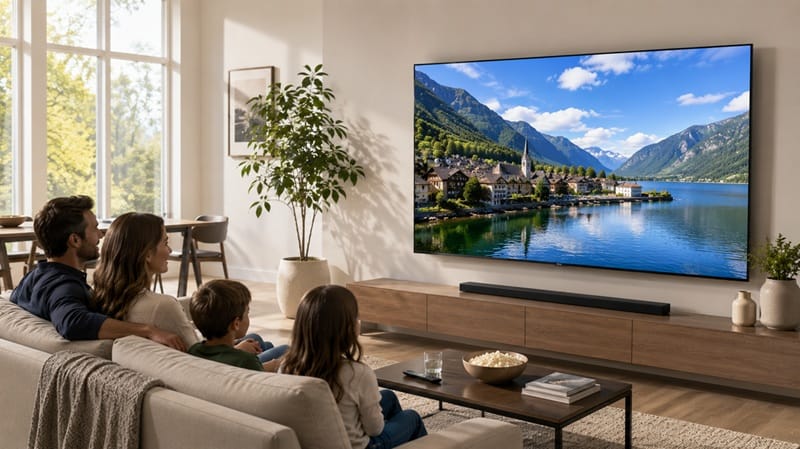
The Samsung 65QN70H makes sense if your budget is tight, your room gets a lot of natural light, and gaming smoothness isn’t a priority. Think of it less as a gaming TV and more as a daytime family TV that happens to play games, just not impressively — if you want the fuller picture on that trade-off, OLED vs Mini LED compared walks through it in more depth.
If even this price tier is more than you want to spend, Samsung’s Crystal UHD lineup drops the Mini LED backlight and Quantum Dot layer for a simpler, cheaper panel — our Samsung Crystal UHD buying guide breaks down which size makes sense for a tighter budget.
If gaming performance ends up mattering more once you’ve weighed that trade-off, best OLED TVs for gaming is a better starting point than this model.
Skip This If
Skip it if you’re a competitive gamer, or if most of your viewing is movies and shows in a dark room — both cases favor an OLED panel, and our full LG C6H review covers the more direct upgrade path to consider.
Final Verdict
Is It Worth Buying?
The Samsung 65QN70H is a reasonable pick if you go in with realistic expectations — solid brightness and color for the price, with a refresh rate that no longer leads the segment. Weighed honestly against the LG C6H, the Samsung’s case rests on brightness and price; the LG’s case rests on motion, contrast, and gaming responsiveness. Our full OLED vs QLED comparison walks through that trade-off in more depth if you’re still deciding. 🛒 Check Availability on Amazon
Frequently Asked Questions
Is the Samsung QN70H good for gaming in 2026?
It’s workable for casual console gaming, but its 60Hz native panel is a real step down from the 144Hz native panel on the previous-generation QN70F. The “Motion Xcelerator + DLG 120Hz” figure on the spec sheet describes interpolated motion, not the panel’s true refresh rate. Competitive or fast-paced gamers would likely notice the difference.
Samsung QN70H vs LG C6H — which should you buy?
The QN70H is brighter and more budget-friendly, while the LG C6H (OLED) is built to offer better contrast, motion handling, and refresh rate. Independent testing of the outgoing QN70F by RTINGS found the predecessor model strong on brightness but limited on contrast compared to OLED — a pattern that’s likely to carry over to the QN70H, though that hasn’t been independently confirmed for this exact model yet. If gaming or dark-room movie watching is your priority, the C6H is the stronger pick on paper.
Does the Samsung QN70H support VRR?
Samsung’s spec sheet lists VRR support, but the panel’s native refresh rate is 60Hz — well below the 144Hz some higher-tier panels offer. VRR still helps reduce screen tearing, but there’s less actual refresh-rate headroom here than the “Motion Xcelerator + DLG 120Hz” marketing figure implies.

iYaiii
Editor, GearPulse360
iYaiii is the editor and founder of GearPulse360, specializing in TV reviews and consumer electronics. He researches every recommendation before publishing.
✅ Based on spec analysis and RTINGS data — last verified June 2026