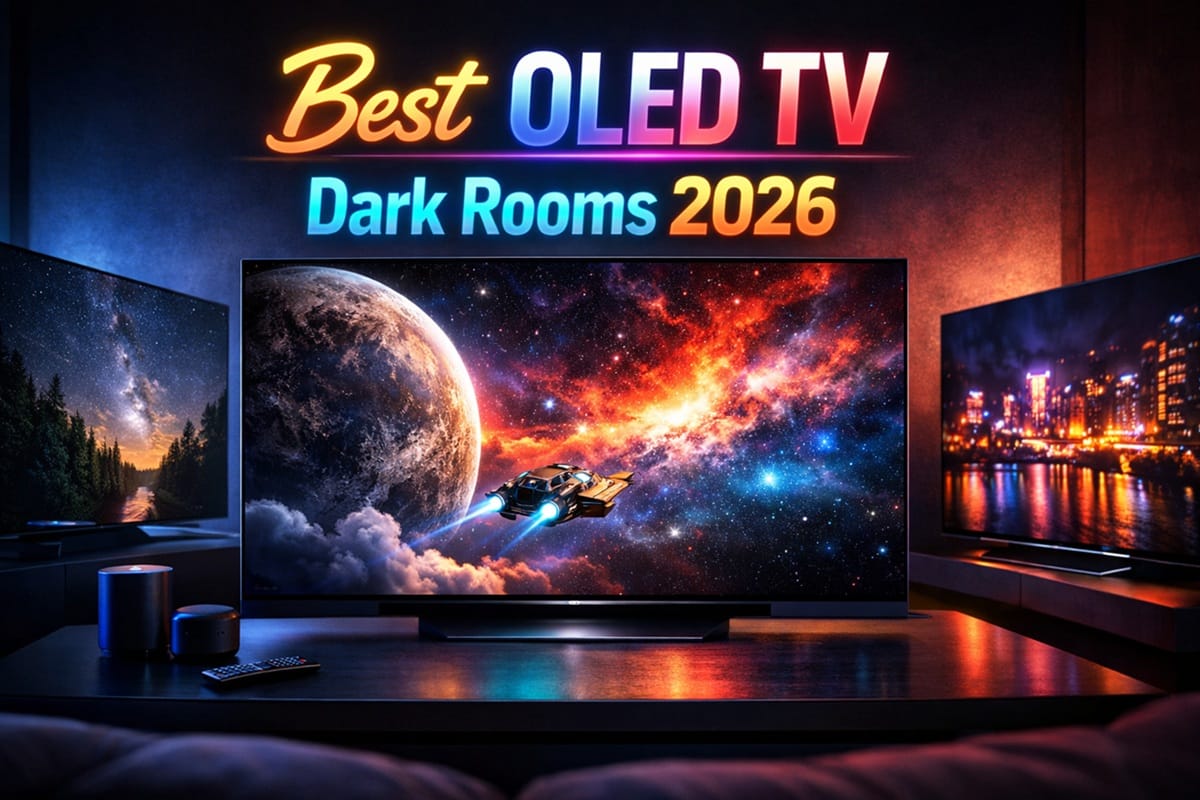
Best OLED TV for Dark Rooms: Ranked by Black Level, Near-Black Detail, and HDR Contrast
Last updated: June 2026
🕒 9 min read
Disclosure: As an Amazon Associate I earn from qualifying purchases. This article contains affiliate links — we may earn a small commission if you buy through them, at no extra cost to you.
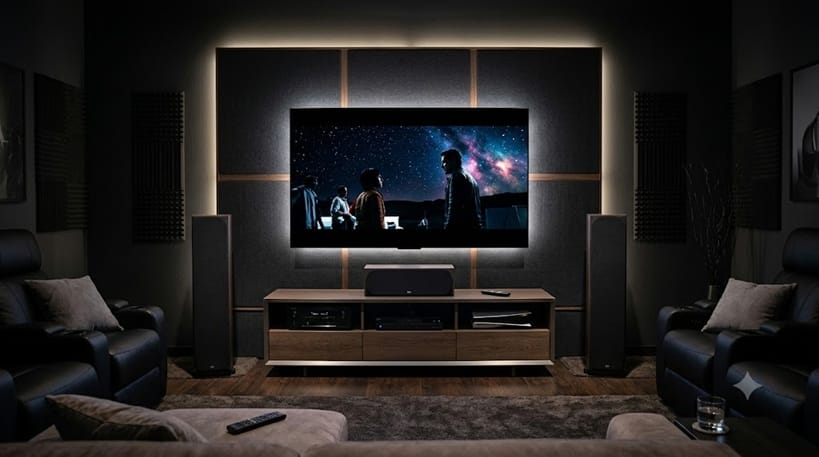
You finally got the blackout curtains up, the soundbar wired in, and the lights dimmed — now the only thing standing between you and a real home theater is picking a TV that disappears into the dark instead of fighting it. That’s a different job than picking a TV for a sunlit living room, and not every “flagship” OLED handles it the same way. If you’re still pulling together the rest of the room — seating, sound, layout — our best OLED TVs for home theater guide covers the bigger picture; this one zooms in specifically on which panel actually handles true black the best.
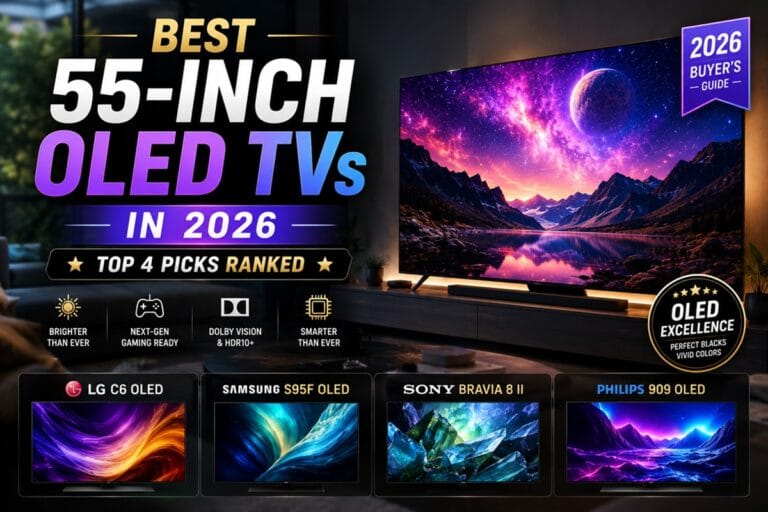
This guide covers four 65″ OLED TVs we’d actually put in a light-controlled room, picked specifically for how they handle black level, near-black detail, and HDR contrast once the lights go down. Our top pick overall is the LG G5, but if your priority is color accuracy over raw brightness, the Samsung S95F deserves a serious look too. If your room still gets some daylight or lamp light instead of going fully dark, our best OLED TVs for bright rooms guide is the better starting point.
Table of Contents
Best OLED TV for Dark Rooms: Quick Comparison
| Pick | Model | Panel | Best For | Price |
|---|---|---|---|---|
| Best overall | LG G5 (65″) | WOLED | Deepest blacks, brightest HDR pop | Amazon ↗ |
| Best value | LG C5 (65″) | WOLED | Same contrast as the G5, lower cost | Amazon ↗ |
| Best QD-OLED | Samsung S95F (65″) | QD-OLED | QD-OLED color with virtually no glare | Amazon ↗ |
| Best Sony | Sony Bravia 8 II (65″) | QD-OLED | Cinema-grade picture and built-in sound | Amazon ↗ |
↻ Prices change frequently — click through for current pricing.
✓ Scores reflect our independent assessment, not Amazon customer reviews.
Best Overall OLED TV for Dark Rooms: LG G5
The G5 sits at the top of LG's 2025 OLED lineup, and the spec that matters most for a dark room is its 4th-generation RGB Tandem panel — two stacked layers of organic material instead of one, which is how LG pushes both peak brightness and shadow detail higher than the standard WOLED panel in the C5 below. According to RTINGS' testing, that extra headroom shows up in HDR specular highlights — the kind of bright, punchy detail that still reads clearly even with the rest of the room pitch black.
It isn't flawless in the dark. The same RTINGS review notes some diagonal banding and noise in a handful of very dark scenes when viewed up close, which is worth knowing before you commit to a front-row seat. For most normal viewing distances in a dedicated theater room, though, it's a minor tradeoff against some of the best contrast available right now. LG's official spec page confirms the Tandem panel and processor details behind that extra headroom.
Best Value OLED TV for a Dark Room: LG C5
The C5 uses LG's standard WOLED evo panel rather than the G5's Tandem design, but the part that matters in a dark room — true per-pixel black — is identical between the two. LG's own spec page lists the C5 as UL-verified for the same Perfect Black standard the G5 carries, just paired with a less powerful processor and a lower brightness ceiling. RTINGS' testing confirms that real-world near-black performance holds up despite those tradeoffs.
That tradeoff matters far less once the room lights are off. Specular highlights won't punch quite as hard as on the G5, but black levels, off-angle viewing, and near-black shadow detail land in the same neighborhood. For anyone building a theater room on a tighter budget, the C5 is the pick that gets you 90% of the dark-room experience without paying for brightness you won't use with the lights down anyway.
Best QD-OLED for Dark Rooms: Samsung S95F
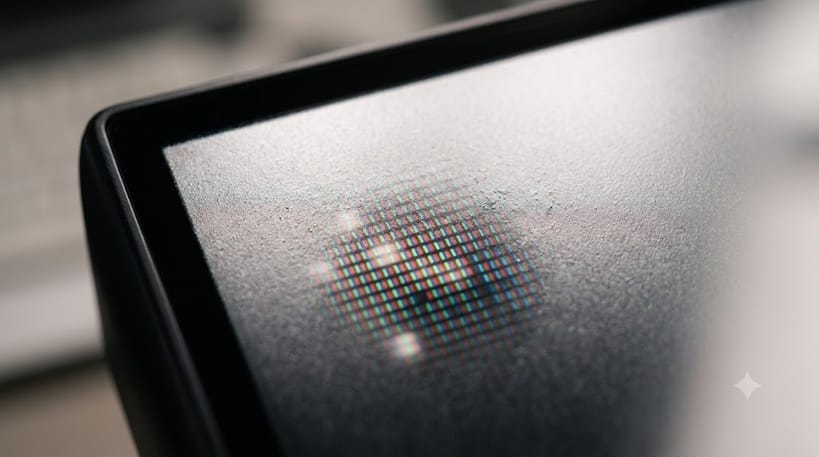
The S95F is the one pick here built around Quantum Dot OLED rather than LG's WOLED, and that shows up most in color — Samsung's official product page credits the NQ4 AI Gen3 processor and Glare Free coating for keeping color volume consistent at low brightness, which is exactly the situation a dark-scene movie puts a TV in. RTINGS' testing backs this up, with near-black performance and off-angle consistency in line with the Sony pick above. The matte screen is normally marketed for bright-room use, but it's a quiet bonus in a dark room too — it stops a phone screen, console LED, or doorway sliver of light from turning into a distracting reflection.
If you're still weighing QD-OLED against LG's WOLED lineup more broadly, we break down whether Samsung's OLED TVs are worth it in more depth.
The tradeoff is HDR format support: Samsung still doesn't license Dolby Vision, so you're relying on HDR10+ for the dynamic metadata that LG and Sony offer through Dolby Vision instead. For most streaming libraries that's a non-issue, but it's worth knowing if your collection leans heavily on Dolby Vision titles.
Best for Cinematic Sound in a Dark Room: Sony Bravia 8 II
The Bravia 8 II earns its spot here on more than picture quality. Sony builds its Acoustic Surface Audio+ system directly into the panel, using actuators behind the screen so dialogue and effects come from wherever the action is happening on screen — a detail that matters more in a quiet, light-controlled room where you actually notice it. According to RTINGS' review, the QD-OLED panel delivers black levels and off-angle consistency on par with the other picks here, with Sony's XR Contrast Booster adding extra punch to highlights against those blacks.
The Bravia 8 II's official spec sheet confirms 120Hz as its native refresh ceiling, a notch below the LG picks' PC-gaming headroom — worth flagging if this TV will double as a gaming display, less relevant if it's strictly a movie-night setup.
All four of these are OLED, and for good reason — if you're still weighing OLED against QLED before you commit to a dark-room setup at all, our OLED vs QLED comparison breaks down exactly where each technology wins.
What to Look for in an OLED TV for a Dark Room
Black Level and Contrast
Every OLED panel can turn individual pixels fully off, which is why black level isn't really a differentiator between OLED models the way it is between OLED and LED-based TVs. The bigger differentiator in a dark room is what happens around those blacks — how a TV handles a bright object against a near-black background without blooming or haloing. That's the exact weakness Mini LED TVs still have in a dark room, since their backlight zones can't isolate small bright objects as cleanly as a self-lit OLED pixel can. Our OLED vs Mini LED comparison goes deeper on exactly where that gap shows up.
Near-Black Detail and Banding
The flip side of perfect black is that any flaw in a TV's near-black performance becomes obvious in a dark room in a way it never would in daylight. Dithering noise, posterization, and faint banding in dark gradients — the kind of thing you'd never notice on a sunlit screen — can be distracting on a true home-theater setup. This is exactly why we cite independent dark-scene testing for each pick above rather than just trusting a spec sheet; on-paper contrast ratios don't tell you how a panel actually behaves three shades above black.
Peak HDR Brightness in the Dark
It sounds counterintuitive, but brightness still matters in a dark room — just for a different reason than in a bright one. A dark room doesn't need a TV to fight ambient light, but it does let small, very bright highlights (an explosion, a streetlamp, direct sunlight in a daytime scene) stand out with more apparent punch against the surrounding black. That's the gap between the LG G5's brighter Tandem panel and the standard WOLED panel in the C5 — both go equally dark, but the G5's highlights have more headroom to separate from that black.
None of that headroom matters much if the picture settings aren't dialed in correctly — our best OLED settings for movies guide walks through the calibration tweaks that get you there.
Screen Coating and Reflection Control
A fully dark room still has light sources — a console LED, a phone left face-up, a sliver under the door. A glossy panel like the ones LG and Sony use here will mirror those small lights back at you if they land at the wrong angle; Samsung's matte Glare Free coating on the S95F is built to scatter that light instead. It's a smaller factor than black level or near-black detail, but worth weighing if your "dark room" isn't ever going to be a true blackout.
Is OLED Actually the Right Choice for a Dark Room?
Short answer: yes, more than any other display technology currently sold for the home. OLED's self-emissive pixels are the entire reason it can produce true black, and a dark room is the one environment where that advantage is on full display every single time you turn the TV on. The honest tradeoffs — lower peak brightness than the best Mini LED sets, and a small risk of long-term burn-in with static content — matter far less here than they would in a bright family room. For a complete rundown of where OLED falls short as well as where it wins, our OLED TV pros and cons guide covers both sides honestly.
That same fully dark, light-controlled room is also the one scenario where a projector becomes a genuine alternative to any TV — if you haven't ruled that out yet, our OLED TV vs projector comparison walks through when a big-screen projector setup actually wins out over even the best OLED panel.
How We Picked These TVs
We started from each brand's current 2025 OLED lineup and narrowed to the four 65" models with the strongest published case for dark-room use, cross-checking every spec against the manufacturer's own product page before including it. For independent performance data — black level, near-black uniformity, and HDR brightness — we relied on RTINGS' published test results for each exact model rather than a predecessor or a different screen size.
We'll revisit this list as 2026 OLED lineups roll out and as RTINGS publishes new test data, updating picks and specs whenever something material actually changes rather than just refreshing the date.
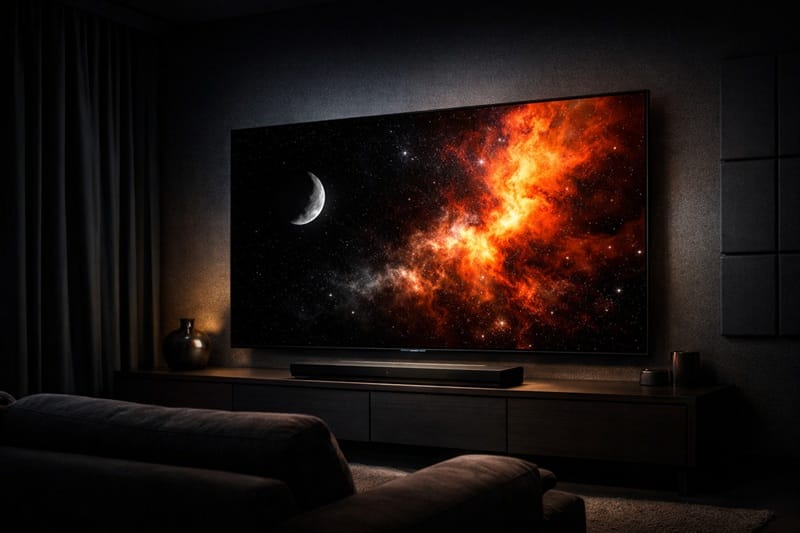
📍 Not sure a fully dark room is your main priority? See how every category stacks up — gaming, bright rooms, dark theaters, and more — in our best OLED TVs of 2026 roundup.
Best OLED TV for Dark Rooms FAQs
Which OLED TV is best for dark rooms in 2026?
The LG G5 is our top pick for a fully dark room, thanks to its 4th-gen Tandem OLED panel's extra brightness headroom for HDR highlights against true black. The Samsung S95F is the better pick if color accuracy and a glare-free screen matter more to you than outright brightness.
Is it worth paying more for a flagship OLED if I'll only watch in the dark?
Not always. Black level itself is essentially identical across current OLED panels, so a flagship's main advantage in a dark room is brighter, punchier HDR highlights rather than deeper shadows. If your room is going to stay fully dark every time you watch, a step-down model like the LG C5 gets you most of the experience for considerably less.
Will an OLED TV show banding or noise in really dark scenes?
It can, on some models more than others. Near-black banding and faint dithering are real, documented weaknesses on a handful of current OLED panels, which is exactly why we call it out as a con above rather than assuming every OLED behaves identically once the lights go down.
Should I get QD-OLED or WOLED for a dark room?
Both technologies produce genuine per-pixel black, so neither has an inherent advantage in pure dark-room contrast. The real difference is color volume and screen coating — QD-OLED models tend to hold color better at low brightness, while WOLED panels here are generally less expensive at the same size. Our QD-OLED vs WOLED comparison covers the full picture.
Does screen size matter for a dedicated dark home theater?
It matters more for seating distance than for contrast. A larger screen makes OLED's black level and near-black detail more visible simply because it fills more of your field of view, but the underlying panel performance doesn't change with size — pick the size that fits your room and seating distance first.

iYaiii
Editor, GearPulse360
iYaiii is the editor and founder of GearPulse360, specializing in TV reviews and consumer electronics. He researches every recommendation before publishing.
✅ Based on spec analysis and LG's, Samsung's, and Sony's official data plus RTINGS — last verified June 2026