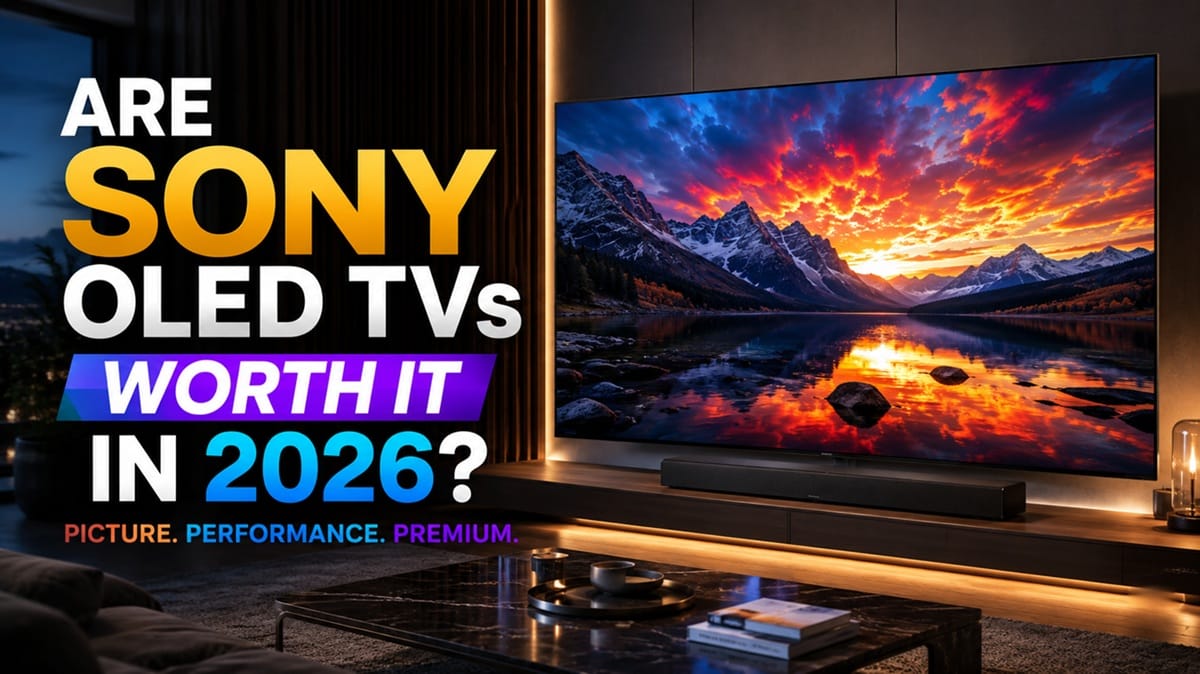
Are Sony OLED TVs Worth It? What the Sony Premium Buys You in 2026
Last updated: July 2026 | 🕒 8 min read
Disclosure: GearPulse360 participates in the Amazon Associates Program. This particular article contains no affiliate links; other content on our site may.
Sony OLED TVs typically cost meaningfully more than a comparable LG C-series at the same screen size. That’s a real gap, and it’s a fair question whether what you get in return justifies it.
The short answer: Sony OLED TVs are worth it if you watch a lot of movies and care deeply about out-of-box picture accuracy. For gaming, general streaming, or anything in a bright room, the LG C6 at a lower price is the smarter buy for most people.
If you’ve already decided Sony is the right brand for you, we cover every current model in our Sony OLED roundup. If you’re still deciding between brands, our full Sony OLED vs LG OLED comparison goes deeper on the head-to-head. This article focuses on the specific question of whether the Sony premium is worth paying — and when it isn’t.
Table of Contents
Is the Sony OLED Premium Worth It? It Depends on This
The Short Answer: Are Sony OLED TVs Worth It
Sony OLED TVs are worth it for dedicated movie watchers who want accurate, cinema-grade picture quality and don’t mind spending time in the settings menu on other brands to get close. They are not worth it for gamers, casual viewers, or anyone watching in a bright room — the LG C6 delivers a better price-to-performance ratio for those use cases. The rest of this article explains exactly why.
What You’re Actually Paying Extra For
Part of the price gap is genuine hardware: the BRAVIA 8 II uses a Samsung-sourced QD-OLED panel, while the LG C6 uses LG’s own WOLED panel — two different OLED technologies, not the same panel under a different badge. QD-OLED generally delivers higher peak brightness and wider color volume on paper. But panel technology alone doesn’t explain the full price gap — the rest of what you’re paying for is everything Sony layers on top of that panel.
XR Cognitive Processor — Picture That Looks Calibrated Out of the Box
Sony’s Cognitive chip is a core reason the BRAVIA 8 II costs more than the LG C6, on top of its different QD-OLED panel. It handles color rendering, motion processing, and upscaling differently to competing chipsets — with a specific focus on reproducing the way human vision perceives natural scenes rather than maximizing peak measurements.
In practice, this means skin tones look more natural, shadows retain texture rather than crushing to black, and motion in film content looks fluid without the artificial soap-opera effect that plagues most TVs on their default settings. You’ll notice it most during darker, slower cinematic content — a film like Dune or Oppenheimer is where the XR processor earns its keep. Whether that difference justifies the extra cost is a personal call, but it’s a real and visible difference — not a spec sheet distinction.
Out-of-Box Accuracy — Less Calibration Required
Most TVs ship with picture modes designed for showroom floors — overblown brightness, pumped-up color saturation, and sharpening that makes everything look artificially crisp. Sony designs its Cinema mode specifically to track the D65 white point and Rec.709 color standard out of the box, which is a different priority than LG and Samsung’s default Standard modes take. Independent measurements on this vary by outlet and specific review unit — some reviews rate Sony’s out-of-box accuracy ahead of rivals, others find LG’s or Panasonic’s default picture comparably close to reference.
What’s consistent across reviews is that Sony’s Cinema mode requires less manual adjustment to get there — RTINGS’ own testing of the BRAVIA 8 II reflects that same pattern.
For most buyers this is invisible — they’ll either leave the TV on Standard mode or spend time dialing in settings anyway. But if you want a picture that’s close to accurate without hiring a calibrator or spending an evening with test patterns, Sony’s Cinema mode is the more forgiving starting point. That matters if you care about seeing films closer to the way directors intended them. You can see the underlying QD-OLED panel technology explained in our QD-OLED vs WOLED comparison.
Acoustic Surface Audio — Sound That Comes From the Screen
Sony’s Acoustic Surface Audio technology vibrates the panel itself to produce sound, rather than relying entirely on downward-firing or rear-mounted speakers. The practical result is that dialogue sounds like it’s coming from the actor’s mouth on screen rather than from below the TV — a subtle effect that becomes obvious the moment you switch back to a conventional set.
It won’t replace a dedicated soundbar or surround system. But for viewers who watch without external audio, the localization improvement is real and it’s one of the only hardware differentiators Sony has that competitors can’t replicate by adjusting settings. If accessibility is part of what you’re weighing here — say, getting TV audio into hearing aids over Bluetooth — that’s a separate compatibility question from anything covered above, and we’ve broken it down in our guide to Sony TV audio output and hearing aid connectivity problems.
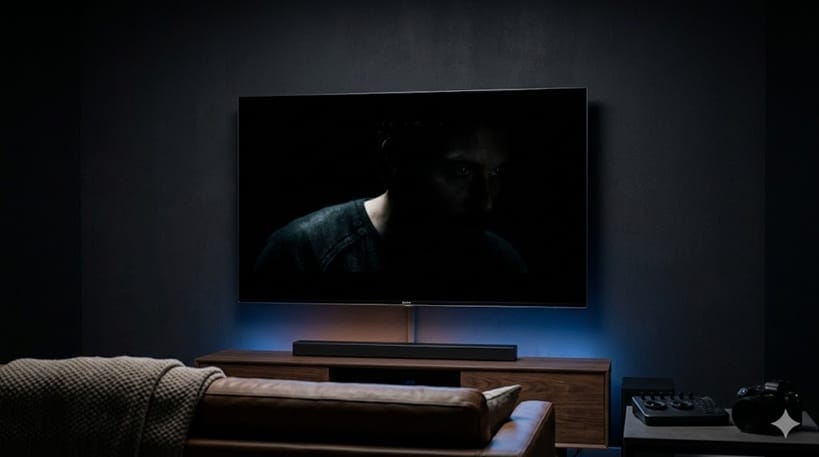
Scenarios Where Sony OLED Is Absolutely Worth the Money
Dark-room movie watching
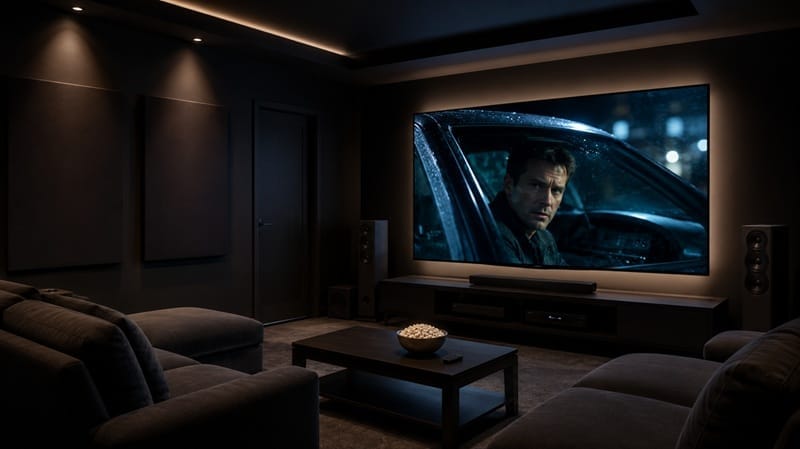
This is where Sony earns the premium back most convincingly. The XR processor’s handling of shadow detail and natural color is most visible in exactly these conditions — cinematic content like streaming films, Blu-ray, and 4K HDR is where the BRAVIA 8 II is at its strongest against WOLED-based rivals like the LG C6. For a wider look at how other movie-focused OLEDs stack up, see our best OLED TVs for movies roundup.
Buyers who never touch the picture menu
Enthusiasts know that a properly dialed-in LG or Samsung can close much of the gap with Sony’s picture quality — but most people set up a TV once and never return to the settings. Sony’s factory calibration is a more forgiving starting point for that majority, right out of the box.
A dedicated home theater setup
This is where the full Sony package clicks into place: accurate picture, Acoustic Surface Audio locking dialogue to the actor’s position on screen, and build quality that rewards close inspection. Watch a dialogue-heavy scene — Denis Villeneuve’s Dune, for instance — and voices track the character’s position across the screen. Switch to a standard soundbar and that center-channel lock disappears. It’s a cohesive design philosophy built around film reproduction, and it shows.
Where Sony OLED Doesn’t Justify the Extra Cost
Tight budgets
If your budget is tight and you’re choosing between a 65-inch Sony OLED and a 65-inch LG C6, the LG wins the value argument. The Sony premium doesn’t buy you a better panel — it buys processing and out-of-box calibration. If you’re willing to spend 30 minutes adjusting picture settings on the LG, you’ll close most of the gap. See our LG OLED roundup for current LG pricing and model comparisons.
Bright rooms
If you watch in a bright room, the Sony advantage largely shrinks. The BRAVIA 8 II’s QD-OLED panel does have a real peak-brightness edge over the LG C6’s WOLED panel on paper, but the XR processor’s strength is built around dark-scene nuance — which matters far less once ambient light is washing out the image. In bright viewing conditions, the LG C6 holds up well enough that most viewers won’t feel the gap is worth paying more for.
Sony OLED vs LG C6: The Real-World Difference
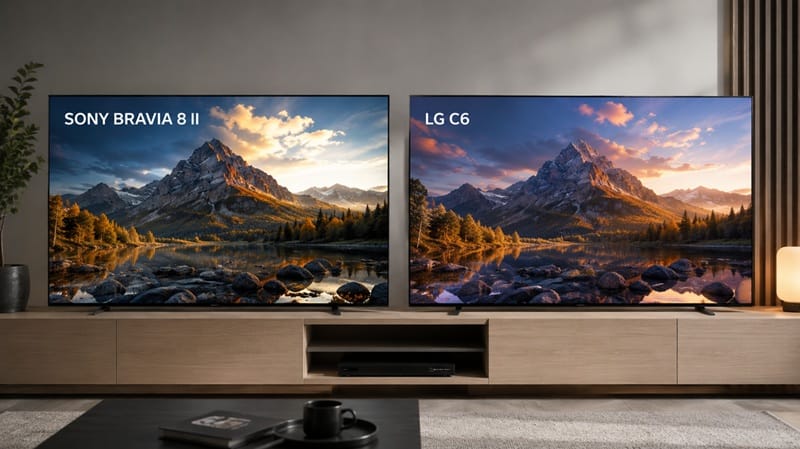
Put the Sony BRAVIA 8 II next to the LG C6 and the panel hardware itself is genuinely different — QD-OLED versus WOLED, not the same source under a different badge. Both still deliver true OLED black levels, wide viewing angles, and 4K/120Hz support. The differences that matter most, though, show up in specific content types and conditions — not just in which panel technology is inside.
Where the panel and processing gap shows up
On a dark film with complex shadow gradients, the BRAVIA 8 II renders mid-tone transitions with noticeably more texture in some independent reviews. Faces in low light can look three-dimensional where the LG trends toward a flatter rendering in the same passage. On sports, bright streaming content, and gaming, the gap narrows to the point where most viewers won’t notice a difference.
Independent reviews are genuinely split on out-of-box accuracy: some outlets rate the BRAVIA 8 II’s factory calibration ahead of LG’s equivalent, while others found LG’s default picture falls short of Sony’s on paper but comparably watchable in practice. Where reviews agree consistently is that LG wins on gaming-specific metrics like input lag and VRR implementation.
These are two different OLED technologies with two different price points attached. In a dark room with a film playing, many reviewers do report a visible gap — and that gap, panel and processing combined, is what Sony is charging for.
Who Should Buy Sony OLED
The BRAVIA 8 II is the right TV if movies are your primary use and you watch in a dim or dark room. The factory calibration and XR processing are real advantages in that context — it’s one of the few sets you can take out of the box, select Cinema mode, and get a close-to-accurate picture without touching another setting. People who set up a TV once and walk away get the most from Sony, since the gap between Sony’s default picture and LG or Samsung’s Standard mode is significant, not subtle — if you’re not the type to spend an evening in the picture menu, that difference shows up every time you sit down to watch.
Audio matters more than most buyers expect, too, and Sony’s Acoustic Surface Audio is one hardware differentiator competitors can’t replicate with a firmware update — for anyone watching without a soundbar, the center-channel effect is a genuine upgrade over down-firing speakers. For the full testing breakdown, see our full Sony BRAVIA 8 II review.
Who Should Consider LG OLED Instead
Gamers get more from the LG C6 at a lower price. LG’s Game Optimizer is faster and more accessible than Sony’s equivalent — when you’re mid-session and want to toggle VRR or check input lag mode, LG gets you there faster, while Sony buries the same settings deeper in its menu system. See our best OLED TVs for gaming roundup for more gaming-focused picks. Mixed-light living rooms close the gap between these two TVs faster than any spec sheet suggests:
the LG C6’s WOLED panel doesn’t match the BRAVIA 8 II’s QD-OLED panel on paper, but the Cognitive processor’s strength is in dark-scene nuance, which ambient light washes out entirely — if your room gets afternoon sun or you watch with lights on, the LG C6 performs comparably and costs meaningfully less.
Value-focused buyers within the OLED category should look at LG first. The price gap at 65 inches is real — enough to buy a decent soundbar, an extra year of streaming, or simply stay in budget. A calibrated LG closes much of Sony’s picture quality lead, and that’s a trade worth making for most households.
Our Verdict: Are Sony OLED TVs Worth It in 2026?
Yes — for the right buyer. If you watch films in a dark or dim room and want a picture that’s close to accurate without calibrating, Sony OLED TVs are worth it and the BRAVIA 8 II is the specific model to buy. The Cognitive processor and factory calibration are real advantages that show up every time you sit down to watch a movie.
For everyone else — gamers, casual viewers, bright-room watchers, and value-conscious buyers — the LG C6 delivers strong OLED performance at a lower price with better gaming support, even with a different panel technology under the hood. The Sony premium buys a different QD-OLED panel plus Sony’s processing and calibration layered on top of it. That’s worth it for a specific viewer, and not worth it for the majority.
If you know Sony is the right fit, our Sony OLED buying guide will help you choose the right model for your room and budget.
Sony BRAVIA 8 II vs LG C6: Spec Comparison
📍 Not sure which brand is right for you? Our full 2026 roundup covers LG, Samsung, and Sony at every price point, ranked by picture, gaming, and value — see the Best OLED TVs of 2026
Sony OLED TVs — Common Questions
Are Sony OLED TVs worth it over LG OLED?
Sony OLED TVs are worth it over LG OLED if movie watching in a dark room is your primary use — the XR processor is built around producing more natural color and shadow detail in that content. For gaming, general streaming, or bright-room viewing, LG OLED at a lower price is the better choice. The BRAVIA 8 II uses a QD-OLED panel while the LG C6 uses a WOLED panel — genuinely different underlying panel technology, on top of a real difference in processing and calibration approach.
What’s the real-world difference between Sony OLED and LG OLED?
In practice, the biggest difference is in dark cinematic content: shadow rendering, skin tone accuracy, and film-like motion handling are where Sony’s XR processor is designed to stand out. In gaming, sports, and bright-room conditions, most viewers won’t spot a meaningful difference. Independent reviews are split on out-of-box color accuracy — some favor Sony’s calibration, others rate LG’s default picture comparably — while LG’s edge in gaming metrics is consistent across reviews.
Is OLED burn-in a risk with Sony BRAVIA TVs?
Burn-in risk with modern Sony OLED TVs is low for typical mixed-use viewing. Sony includes pixel refresh cycles and panel care features that run automatically. The risk only becomes meaningful if you display static content — like a news ticker or HUD element — for many hours per day over months. For movie watching, gaming, and general streaming, burn-in is not a practical concern with the BRAVIA 8 II. We cover the broader OLED burn-in question in detail in our guide to is OLED worth it in 2026.
Who makes the best OLED TV for the money in 2026?
LG makes the best OLED TV for pure value in 2026 — the C6 delivers full OLED performance at a lower price than Sony’s equivalent. Sony is the pick if picture accuracy and processing matter most to you. Samsung’s QD-OLED is the pick for gaming and brightness.
Will Sony OLED TV prices drop later in 2026?
Sony OLED prices typically ease most around Black Friday and major sales events in Q4. Exact timing and discount depth vary by year, so we can’t promise a specific number — if you’re not in a rush, late Q4 is a reasonable point to start watching. If current pricing already fits your budget, there’s no guarantee a meaningfully better deal arrives before year end.

iYaiii
Editor, GearPulse360
iYaiii is the editor and founder of GearPulse360, specializing in TV reviews and consumer electronics. He researches every recommendation before publishing.
✅ Based on spec analysis and LG’s and Sony’s official data plus RTINGS — last verified July 2026